Categories
Financial, Stock Investment

A ‘Bad Trip’ Down Memory Lane

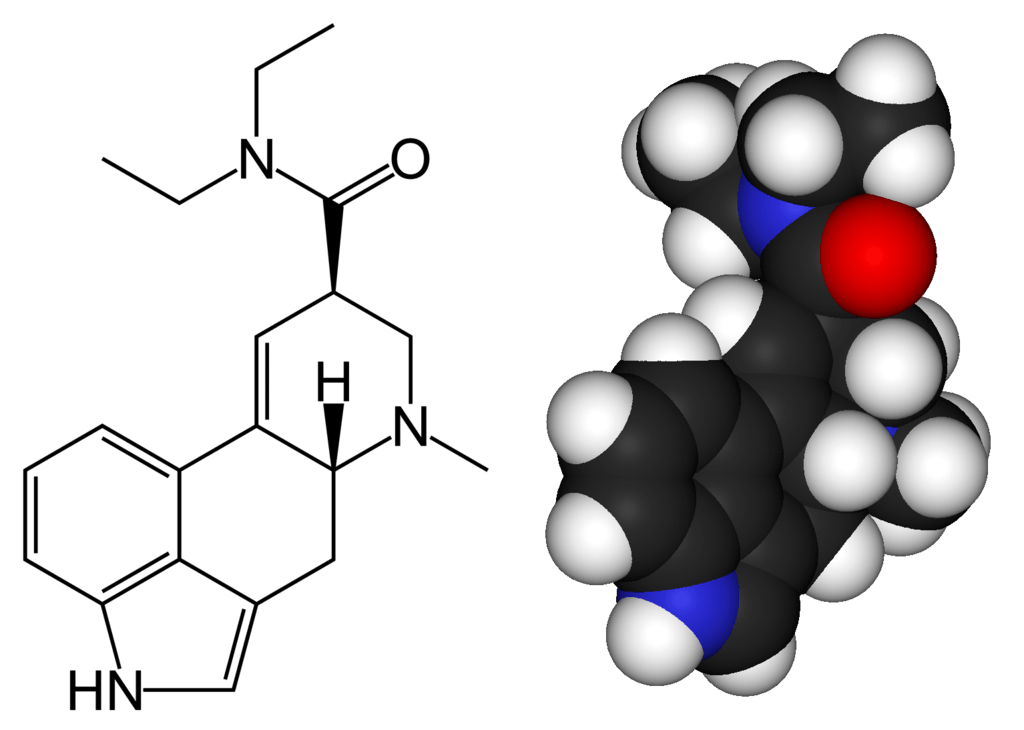
LSD 2D & 3D

The ‘bad trip’ I’m alluding to in my title was the type some substance experimenters used to get from self-administered  hallucinogenic drugs like LSD (Lysergic Acid Diethylamide). This was the preferred trip-inducing substance of Harvard psychology professor Dr. Timothy Leary who thought it might have great potential in psychotherapy.  “He used LSD himself and developed a philosophy of mind expansion and personal truth through LSD”. As such, he became an icon of the hippie counterculture of the 1960’s along with his catchphrase, “turn on, tune in, drop out.” Anyone ingesting LSD was said to be going on a trip. I guess for the most part these trips were pleasurable, mind-expanding voyages. But sometimes they went bad and became terrifying horrible experiences.

Last week was flashback to a bad trip (in the market) I took in the summer of 1974

Richard Nixon circa 1968

Only I was not on drugs. January, 1973, the S&P 500 peaked at 119.87. Twenty-one months later (Oct., ’74) it bottomed at 62.28, down 48%. It was a slow, awful bleed. By the time we got to the summer of 1974 you could not give common stocks away, let alone sell them to people. It was even a struggle to get people to buy electric utility stocks yielding 10%, 11%, 12% because their debt laden balance sheets were so terrible. This was a major problem because, unlike today with the 10-yr US Treasury note yielding 2.9%, back then that note was yielding nearly 8% (on its way to 15% in 1982). Consumer price index inflation was 11.01% in 1974 (on its way to 13.5% in 1980).

Richard Nixon had just resigned in disgrace in the wake of the Watergate break-in and coverup. And after trading between $2.50 and $3.00 barrel for the previous 32 years the price of crude oil spiked as a result of the 1973 Arab Oil Embargo. In 1974 crude averaged $12.52 per barrel. I humbly submit things were a mess. It was THE BOTTOM, born in fear and total distrust of the market. It was the bottom, even though interest rates would almost double over the next seven years and inflation would continue to rip. Keep this in mind the next time you hear a pundit or read an article about the scourge of higher rates and inflation. Also, history would indicate, in the stock market ‘bad trips’ always turn into ‘good trips’ eventually.

What about our current ‘bad trip?’

Yikes!

It reminds me of that time long ago. Like the summer of ’74 we have a president under extreme duress. In the summer of ’74, sitting at our desks in the main office of K.C. based H. O. Peet & Co., Inc., colleagues across aisle and I would comment on how cheap certain stocks had gotten only to come in the next day, or the next week, as the market probed for a bottom to see those names even lower.  Cheap doesn’t make any difference when emotions take over. Don’t confuse me with the facts. Nobody wanted to own stocks.This is eerily similar (to a much smaller extent) to what we are seeing in today’s market. There is no panic. It just goes down every day. The end of last week felt very similar. Even the 2%+ drop in the Dow and S&P seemed calm and orderly. Regardless, it scares people even though there is nothing in the current fundamentals remotely as frightening as those we saw in the summer of 1974.

The pain, however, is real. It has been most prevalent in small cap stocks as evidenced by a 19% drop in the Russell 2000 index since September 1st. Though the S&P 500 is down 10% since September, there are many stocks in the index down over 20%.

 So, what is scaring the market? (perspective in order here)

  • Growth concerns: US growth will slow. It should. A significant part of the growth in corporate earnings this year came as a one-time benefit from the tax cut. There will be NO additional tax cut in 2019
  • Global Growth Concerns: China, OMG! Chinese November retail sales miss estimates by 2/10ths percent coming in at 8.6%. Chinese GDP grew at 6.5% 3Q ’18 over 3Q’17. 6.6% was the so-called consensus. Another metric, November industrial production came in below expectation at 5.4%, 1/2% below consensus. I mean, give me a break! We are dealing with the 2nd largest economy in the world ($13+ Trillion vs. the US near $20 Trillion in 2018). Despite the sackcloth and ashes (see link above) donned by the prognosticators these are not bad numbers considering the size of this economy. Oh yeah, it’s the Trade War.
  • Worry about Fed policy and rates . Fed says we are almost there. According to the Wall Street Journal ... “Still, many investors say that, even with the possibility of a more gradual rate path, they remain cautious heading into 2019. The yield curve, the gap between two- and 10-year Treasury yields, has continued to flatten in the fourth quarter. Historically, that has signaled trouble ahead for the U.S. economy.” (you need a subscription to access). I would advise anyone in this quandary to reread paragraphs two and three of this post.
  • Political uncertainty: Regardless of the outcome of Mueller investigation we will have a divided government, remember gridlock is good. They can’t do anything to hurt us!
  • Government Shutdown. this too will pass if it happens at all.
  • Falling oil prices. It is not about demand. Demand is growing. It is about supplies which look like they are being reeled in by Saudi Arabia and Russia. falling oil prices, while they last, are a good thing.

Turning a ‘bad trip’ into a good one (maybe)

I seldom make recommendations in Kort Sessions (not my mission), but sometimes I see a ‘fat pitch’ I just can’t resist. The trigger for this recommendation came from this week’s edition of Barron’s and an article covering their “Top 10 stock picks for 2019.” One of the top 10 is Energy Transfer Partners (ET).(you need a subscription to view). The Barron’s article talks about the group, which has been very much out of favor for several years: “Master limited partnerships in the U.S. have been getting their act together by setting sustainable distributions (equivalent to dividends) rather than maximizing them, and by ending investor-unfriendly structures that hurt MLP holders and made institutions reluctant to buy.”  I completely concur with the premise of the article. The way I have chosen to participate is through a closed-end, leveraged fund that invests in the MLP sector, the Tortoise MLP fund fund (NTG-$12.77-NYSE). The fund sponsor/manager is Tortoise Capital Advisors. Oh yes ET is NTG’s largest holding.

Caveat Emptor. I own this fund and view it as a long-term income alternative. My most recent purchase was at $13.75. From time to time I may trade around this position, buy more or lighten up as the position moves up or down in the market. I will not be publishing on any of my buys or sells.  Also, as we’ve seen over the past couple of weeks, this stock and may get cheaper. Consider your temperament and suitability for this investment … investigate before you invest.

Thank you for your readership. I hope my ‘bad trip’ will give some perspective and comfort in what has been a pretty difficult market.

bk

The information presented in kortsessions.com represents my own opinions and does not contain recommendations for any particular investment or securities.  I may, from time to time, mention certain securities for illustrative purpose, names where I personally hold positions.  These are not meant to be construed as recommendations to BUY or SELL.  All investments and strategies should be undertaken only after careful consideration of suitability based on the risks, tolerance for risk and personal financial situation. 


Categories
Financial, Stock Investment

Please! Don’t confuse me with the facts!

Questions, questions ...
Confused?

In an era when playing fast and loose with the facts seems de rigueur, not only for the newsmakers but the media covering them, you are bound to get some carryover to the mundane world of economic and financial news. But in financial media what you get is opinion and speculation about assumed facts. The reporting on Friday’s market was based on this process, with zero real analysis or perspective.

Assumed Fact: When the Fed moves to raise rates, this market is toast!

On December 18, 2013 the S&P 500 stood at 1810.65 and the US Treasury 10-year note was in the process of spiking to a 3.0% yield. This is a fact! Why is this important? It marked the official beginning of the tapering of Quantitative Easing (QE), which would take eleven months to complete. This was the Dreadful End of Quantitative Easing (QE). We wrote about it at length. At the time the media had it pegged as the beginning of the end of the bull market that had commenced in March 2009.

What actually happened? QE ended October 29, 2014. Fear of economic weakness brought in a ton of  “safety trade / risk-off” buyers to the 10-year Treasury. The yield dropped to 2.39%. During the same period the S&P 500 rose to 1983 (almost 10%). (another verifiable fact)

December 15, 2015, almost 14 month after the end of QE, after many fits and starts, the Fed finally took action raising the Fed funds target rate by 1/4 point to 0.5%. The 10-year was trading around 2.25%, again lower than the rate at the end of QE. (FACT)

With oil on its way to $26.00 per barrel, as a result of a ‘supply glut’ and not slowing demand, and with other commodities collapsing, the punditry was at DEFCON1. The flight-to-safety trade was in full force as we moved into February with the 10-year trading below 1.7%. On the Brexit vote in late June, at the height of the panic, the safety trade took the 10-year yield to 1.37%. (Another Fact).

As of the market’s close, Friday September 9, the 10-year yield stood at 1.66% with the S&P 500 close at 2128. The 10-year yield is about half of what it was when QE ended. The market is up roughly 10% during that same period (FACT). 

I'm Scared!
About to make a flight-to-safety trade

So, what have we learned?  It would appear that fear in the market is so powerful that it trumps greed. When the Fed raises rates, or threatens to raise rates, market participants, fearing a move in rates might bring on an economic slowdown, race to the safety of long-date treasury securities and gold, thus negating the effect the move in short-term interest rates might have had on the long end. Also, because these moves on  theFed funds rate are so minuscule and far-between, it would appear that they hold little or no negative implications for the economy.

The only other thing that I can fathom for these sharp spikes down on Fed pronoucements is that trading in today’s market is so dominated by computer-algorithmic forces it fails to recognize the nuances in these small moves. In other words, please don’t confuse my computer with the facts.

In the case of the media the formula is the same. Please don’t confuse my writers, bloggers, on-air personnel or pundits with the facts. We know what markets do when rates go up! They continue to ‘saw the same old sawdust.’

What’s your take?

The information presented in kortsessions.com represents my own opinions and does not contain recommendations for any particular investment or securities.  I may, from time to time, mention certain securities for illustrative purpose, names where I personally hold positions.  These are not meant to be construed as recommendations to BUY or SELL.  All investments and strategies should be undertaken only after careful consideration of suitability based on the risks, tolerance for risk and personal financial situation. 


Categories
Financial, Stock Investment

Apres le deluge, Le Summer Rally?

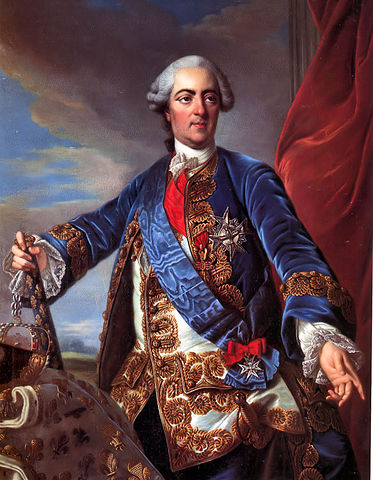
King Louis XV
King Louis XV

My apologies to the French and the late King Louis XV, for slightly reworking a phrase attributed to him, “Apres moi le deluge” (After me the deluge).  The king had it right.  Within 18 years of his death the French Revolution erupted.  A better word for “deluge” might be “cataclysm.”

Apres “Brexit” le deluge?

Based on the deluge of pundit commentary and the associated media freak-out surrounding the British referendum vote to exit the EU, one might have gotten the impression that it was a cataclysmic event.


Mr. "irrational exuberance?"
Mr. “irrational exuberance?”

Alan Greenspan (Friday June 24, 10:12 ET –DJII -400): “This is the worst period I can recall since I’ve been in public service.”  According to Greenspan, the only comparable was October 19, 1987 when the market plunged 23% in one day.  I am guessing the last half of 2008 was so traumatic that the former Fed Chair has developed a mental block (minus 57% in 0ne year, the precursor to a cataclysmic financial crisis–a bubble that inflated on his watch).  “Alan Greenspan says the British break from the EU ‘is just the tip of the iceberg’.”

Lawrence Summers
Lawrence Summers

Former Secretary of the Treasury Lawrence Summers was also very concerned about the possibility of the “Brexit” bringing down the order and stability Europe has seen since WW II and the creation of the economic union.  However, the folks at CNBC put up a headline on the attached article and videos that was a total hyperbole and misquote … “Brexit worst shock since WWII and central banks are out of ammo”  (7:08 ET, 6/28/16).

George Soros
George Soros

And then we have another bomb thrower.  George Soros, renowned hedge fund manager, weighed in Sunday, June 26, with a letter stating, “The consequences for the real economy (from brexit) will be comparable to the financial crisis of 2007-2009.”   What a cheery thought to take into the  opening on Monday morning.  Do you think Mr. Soros may have used Friday to get short the market?  By Thursday of last week it seems Soros had a change of heart: “The Brexit vote was a negative shock but the tragedy no longer looks like a fait accompli.”   Ya think he’s long again?

Enough of this deluge, this flood of  misguided opinion and misinformation.  Let us move on to a more pleasant prospect and question.

Could we be setting up for a summer rally?

Who knows?  Based on the recent action in the market responding to and recovering from the brexit surprise. anything seems possible.  Market sentiment continues in the dumper, regardless of the news, good or bad.  A strong summer rally, maybe to new highs, would be totally unexpected.  Here are a few thoughts from others on the subject:

Mark Hulbert
Mark Hulbert

Going into the brexit vote market sentiment was absolutely horrid, even though the S&P 500 was again knocking on the door of a new all-time high.  According to Mark Hulbert (Hulbert Financial Digest) negative sentiment as measured by his HNNSI (Hulbert Nasdaq Newsletter Sentiment Index) has turned extremely negative … “Stock-market timers turn shockingly bearish — and that’s good for the bulls.”  Hulbert’s index records and measures the recommended invested position carried by a series of short-term, market-timer letter writers.  It was reported the HNNSI was at a minus 55.6% reading as of last Friday (6/24).  That is a recommended 55.6% short allocation.  As of the close this Friday, even after a strong three-day rally, that recommended short position had INCREASED 8%.  This article is worth your time.  Also worth a look are the extremely hostile reader comments that follow it.

Jeff Miller NewArc Investments, Inc.
Jeff Miller
NewArc Investments, Inc.

Also worth your time is Jeff Miller‘s weekly post to SeekingAlpha (http://seekingalpha.com): “Weighing the week ahead: Seasonal strength ahead?”  I am a regular reader of Miller’s work, as it represents a balanced compendium of the reasoned opinions of others, market themes and Miller’s educated thought process.  Here are Miller’s  brief thoughts on the potential for upside:

“What about a summer rally? It is a good guess about the theme for the week. As is often the case for the weekly theme, I don’t know the answer and neither does anyone else. That said, I rate the possibility higher than most, and therefore another good contrarian play. We have had a long-time tight trading range, so a breakout would be meaningful for many. Rightly or wrongly, much will depend on the employment report.’

A final thought

Over time, the market has been a great wealth creator. In the short-run it is in the business of confounding most of the participants most of the time. While we have had a great run since the low in 2009, based on sentiment, it still seems most of the players are totally flummoxed. My perception is that with the current level of pessimism we might find ourselves in a really decent market as we move into the second half of 2016.

What’s  your take?

The information presented in kortsessions.com represents my own opinions and does not contain recommendations for any particular investment or securities.  I may, from time to time, mention certain securities for illustrative purpose, names where I personally hold positions.  These are not meant to be construed as recommendations to BUY or SELL.  All investments and strategies should be undertaken only after careful consideration of suitability based on the risks, tolerance for risk and personal financial situation. 

Categories
Financial, Stock Investment

Beware of Pundits Bearing Wet Blankets, or …

The Proverbial Silk Purse

How to take a silk purse and turn it into a sow’s ear in one easy lesson. I give the prize to CNBC … more specifically Bob Pisani and Art Cashin (with runner-up honors going to Barron’s Magazine). This exercise might be especially instructive for kortsession followers with short attention spans. You may have forgotten how strong the dollar was (until it wasn’t). In fact, some of the residual weakness in 1Q earnings might be laid at the feet of the strong dollar. On November 18, 2o15 it took almost 124 yen to buy one greenback. Friday 4/8/16 it only took 108 yen to buy the same dollar. Back in November the bears were growling about how the strong dollar was killing multi-national corporation earnings, putting the US at a competitive disadvantage. Ergo, you would think that the recent weakness in the dollar versus the yen and euro would have had them placated. Not so.

120px-CNBC_logo.svg

Believe it or not, these guys have quickly turned this PLUS to a MINUS. What was touted as a positive has now become the potential sign of global economic weakness, as Japanese and European goods would become more expensive on world markets, putting a further impediment in front of their already-struggling economies. Here is the clip:

Cashing: Funny things about to happen in Japan

Art Cashin 'Somethin' Funny ...
Art Cashin
‘Somethin’ Funny …

Here is an article from MarketWatch, 4/7/2016 (same message): “S&P 500 Lower, erases 2016 gain on global economic worries.” And, of course, the ever-prescient Randal Forsyth had to add his two cents in this week’s edition of Barron’s magazine, “How the Yen’s Rise Could Effect the Stock Market” (link only available to WSJ/ Barron’s Subscribers). Forsyth quotes one source, BCA Daily Insights:

The yen’s rise could be a “canary in a coal mine for global risk assets,” according to BCA Daily Insights. Japanese currency and stock markets tend to be leading indicators for the US equity market having peaked ahead of the major top in the S&P 500 index in 2000 and 2007.

Canary sans coal mine

Hmm, just like the peak in January of 1987 at nearly 160 yen to the Dollar (yen / dollar Historical prices). By January of 1995 the yen had strengthened to 84.25 to the Dollar. During that same period the S&P 500 ran from 264.5 to 465, up 75%. Of course, the yen continued to weaken and strengthen over the ensuing 5 years as The S&P continue to more than triple in value by 2000. During that same period the Japanese, Nikkei 225 fell from a peak of nearly 39,000 (12/1/1989) to a low of 13,406 (9/1/1998). Clearly, in the bright light of history, using strength or weakness in the yen or Japanese market as a ‘canary’, would not have been a very profitable strategy. Ergo, beware of pundits bearing wet blankets. Their message could be hazardous to your investment fortunes.

Again, it seems to me the bears continue to have it both ways: Heads you lose, tails you lose.

What do you think?

The information presented in kortsessions.com represents my own opinions and does not contain recommendations for any particular investment or securities.  I may, from time to time, mention certain securities for illustrative purpose, names where I personally hold positions.  These are not meant to be construed as recommendations to BUY or SELL.  All investments and strategies should be undertaken only after careful consideration of suitability based on the risks, tolerance for risk and personal financial situation. 

Categories
Financial, Stock Investment

Finally, I think I get it!

I have been puzzled for many weeks over the apparent, lock-step action in the stock and oil markets. Whenever the price of oil dropped, equities would immediately follow. I questioned this, because I felt lower oil prices were a major benefit to every consumer and industrial user, even if it might create hardships for certain segments of the economy. The basic takeaway was this was good for us and all the energy-dependent economies around the world (India, China, Japan, Europe, etc.).

Jon Najarian
Jon Najarian

Thanks to a comment by Jon Najarian, who called out oil-producing countries’ sovereign wealth funds as the culprit. He indicated these funds, which include all types of investments (stocks, bonds, real estate, private equity, etc.) were liquidating US stocks (very liquid, very broad markets) to offset budget revenue shortfalls brought on by plunging oil prices. All of a sudden, I think I get it.

Of course, when the big stocks in the S&P can’t get a bid, with prices continuing to drop, this brings in selling on small and mid-cap issues, selling just because the market is going down. These are stocks that the wealth funds would never own because of liquidity concerns. Ergo, you get overall market weakness, not related to any real fundamental or economic weakness.

What is the magnitude of the sovereign wealth fund equity overhang?

Hard to say…according to the Sovereign Wealth Fund Institute, there is a little over $7.0 trillion in assets in Sovereign Wealth Funds (SWFs). Of the $7T, approximately $4T sits in the funds of oil producing countries. These funds are highly diversified. I am speculating and don’t know the exact composition of these portfolios, but it would be hard to imagine, as much as $1t being in US equities. But a Trillion is still big money. Although $1T sounds like a big number, if you take it in the context of trading in the US equity market, it is not. Last week (Jan 11.), according to The Daily Market Summary, nasdaqtrader.com, total dollar value of trading on all markets, where any nasdaq securities trade, was nearly one half trillion dollars. Nonetheless, it does represent a headwind, as long as crude prices are declining or remain low.

What’s Next?

Unfortunately, the market’s gonna do what the market’s gonna do.   Although the S&P and Dow closed virtually unchanged yesterday, the small and mid cap sector, as represented by the Russell 2000, took another hit, down 1.28% (at 994.87) on the day and 23% from its June, 2015 all-time high of 1296. This beating continues today, with the panic that was going on under the surface, emerging in full force throughout the market. All of this is happening in the face of fundamentals that do not seem to be falling apart. It is not surprising to see a decline like this end in an overall panicky sell-off… a washout.

Everybody has been looking for a correction of the huge move we have had the past three years. We are getting it in spades. Corrections are normal and painful. Keep the faith!

What is your take?

The information presented in kortsessions.com represents my own opinions and does not contain recommendations for any particular investment or securities.  I may, from time to time, mention certain securities for illustrative purpose, names where I personally hold positions.  These are not meant to be construed as recommendations to BUY or SELL.  All investments and strategies should be undertaken only after careful consideration of suitability based on the risks, tolerance for risk and personal financial situation. 


Categories
Financial, Stock Investment

The Market’s Gonna Do What The Market’s Gonna Do

Be careful what you wish for!

320px-Genie_Lamps_007

In May of 2015, all the popular averages had tripled off their lows. There was a great clamor among the media and punditry that we needed a correction. A retracement of at least 10% had not happened in 18 months. In August of last year we got the correction, and it was a beauty. The downturn came about, in part, due to a Chinese currency devaluation and falling oil prices (“deja vu all over again”). This kinda reminds me of Greece, the end of Quantitative Easing, the ‘lift-off’ (first increase in short rates in nearly a decade) and the junk bond meltdown. All of these issues continued to pop up, rattle the market, then fade into the background.

Of course, these drops are normal, scary, but seldom the end of the world. Sometimes they become a harbinger of something considerably worse, like 2008. Because of institutional memory, many having experienced that horror show seem to think that the next event of this magnitude is just around the corner. In many respects, that is why the overall cautious, to down-right bearish sentiment has continued to grip many market participants and observers. In the final analysis this prevailing lack of enthusiasm for stocks is a major positive. .

  “Bull Markets are born on pessimism,

grow on skepticism, mature on optimism

and die on euphoria.”

Sir John Templeton

Sir John
Sir John

Unfortunately, many of the savants offering up investment advice these days have either forgotten about this sage investor, don’t even know of his record or existence; or they don’t care what he had to say, because he was an investor and did not try to game the market with sophisticated algorithms and high powered computers. You know, it is just not relevant to today’s market. On the contrary, I believe legendary investors like Templeton and Buffett (“Be greedy when others are fearful and fearful when others are greedy.”) have it right.  As such, this Bull is not close to over, regardless of the potential short-term pain we have to endure.

What are the pressure points?

I guess this depends on how you cypher the health of the US economy, the impact of lower and potentially, prolonged-lower oil prices and the fate of the Chinese economy. As it pertains to the last item, I heard one talker on Bloomberg opine that some are beginning to view the current Chinese economic situation to be akin to Japan 1990. Not sure how they get there, but that is the kind of rhetoric that is out there in the media. By the way, in case you don’t remember, Japan is still out there and we had one of the best decades in the market as Japan began its melt down in the nineties. Remember, too, the Japanese, like the Chinese up until recently, were viewed as a threat to US economic supremacy in the 1980s. They were the power to beat.

The Frighteners

A Frightener

Let’s look at the boogiemen that haunted the market last week, starting with tumbling crude prices. Every time the price of oil goes down, the market follows, indicating the market believes demand is shrinking. As we have said before this does not seem to be the case. It is all about Saudi Arabia and their massive overproduction, designed to drive shale oil out of the market and punish their enemies in Russia and Iran. According to the International Energy Agency (IEA), “Early indicators for 4Q15 show growth easing to 1.3 million b/d year-over-year, from a 3Q15 peak of 2.2 million b/d. The resulting annual growth of 1.8 mb/d for 2o15 is led by CHINA, the US, India and – somewhat surprisingly – Europe.” BTW, the IEA 2016 forecast is for continued growth at a 1.2 mb/d. This assumes further slowing in world economic growth, but no Global recession.

Low price is a boon to all who consume oil, a huge tax cut for all peoples that use more petroleum than they produce. But, what about the producers, including the United States? 

The impact on energy sector employment. 

Yes, low prices will cause painful unemployment in the energy sector, which could damage our economy. What is the risk? According to the Bureau of Labor Statistics, as of December 2015, total employment in the United States stood at 157.9 million. At the same time the oil and gas exploration and extraction segment stood at 184.5 thousand individuals (management and labor). If the entire sector shut down (a ridiculous construct), total employment would be cut a fraction of one percent. Save the very small population who made hay while the sun shined as energy employees, the huge majority of us win big on lower prices. Yet the market still drops like a stone every time oil takes a header. I DON’T GET IT.

I guess one other risk to my bullish stance is the potential of unrest in those countries around the world dependent on oil and gas to balance their budgets. The US is now the number ONE producer, followed by Saudi Arabia and Russia. The latter two, as “The Donald” might say, ‘have not been very nice to us.’ A pox on both of their houses (could be a good Trumpism). I just don’t see how this does not make us stronger in the long-run.

Back to China.

China-flag-snd.svg-2

What if things really get bad over there? First of all, they probably won’t. Even though the Chinese government has proven itself to be somewhat inept and ham-handed in their recent attempts to control their equity market, make no mistake they are into stability. They do not need an act of Congress to get things done. Also, remember the slowdown that is in progress was instigated by the Chinese government. Economic policy is not a game of ‘perfect’. It is conceivable the slowdown could be a major overshoot. What happens then? They would not be buying as much from us as they have in the past. What’s the worst case?

According to the US Census Bureau (for some reason they keep track of our foreign trade balances) for the first ten months of 2015,  the US exported $106 billion to China. If all our export business with China went away, it would amount to less than a 7/10 of 1 percent hit to our GDP. What the right number is, I don’t know. My call is  that it is unlikely that China won’ t continue to grow at some rate; and, that in the unlikely event of the worst case being realized the impact would be de minimis.

Finally, the US economy ‘stinks.’

Western_spotted_skunk
The Economy?

I continue to hear this or variations on the theme (the economy is weak, the economy is struggling or the economy is ‘expletive deleted’). The only reason that I can come up with for someone saying this would be political, the OUTs trying to make the INs look bad. I guess if you say it often enough, people begin to believe it. There has be a choir of pundits and politicos making this claim since the 2009 bottom, much to the chagrin to those unlucky souls who took them seriously. This was in the face of continually improving economic and market data.

Another term making the round is earnings recession. An earnings recession occurs when you have down earning for the S&P, while the economy (GNP) continues to grow. This is very misleading. According to institutional analytics provider, FactSet, and their November report, “When you remove both the energy sector and those companies whose foreign sales account for more than 50% of sales, the rest of the S&P is on track to rise 10.1% y/y.”

The truth is the economy is doing ok. It could be better, but it does not stink. The recovery has not been as rapid as some other post World War II recoveries, in part because of the hole we had to dig out of, and because we have a totally dysfunctional government providing equally dysfunctional fiscal policy. Globalization has also played a role, too, with the Eurozone pursuing austerity when stimulation would have been called for.

We closed last week with GDP still growing at a 2% clip, unemployment at 5%, the PE on the S&P 500 at 16Xs, super-bearish sentiment and, oh yes, a 2.3% yield on the S&P, all of this vs. 2.11% on a 10-year US Treasury (which does not appear to be going anywhere fast). I like those stats. None-the-less, The Market’s Gonna Do What The Market’s Gonna Do !

What’s your take?

BTW, if you’d like some good extracurricular reading on the topic, check this post out from “Fear & Greed Trader”, “The S&P 500 Drops 6% This Week – ‘Irrationality’ Isn’t Always Associated With ‘Exuberance’ And Euphoria.”

http://seekingalpha.com/article/3800206-the-s-and-p-500-drops-6-percent-this-week-irrationality-isnt-always-associated-with-exuberance-and-euphoria

The information presented in kortsessions.com represents my own opinions and does not contain recommendations for any particular investment or securities.  I may, from time to time, mention certain securities for illustrative purpose, names where I personally hold positions.  These are not meant to be construed as recommendations to BUY or SELL.  All investments and strategies should be undertaken only after careful consideration of suitability based on the risks, tolerance for risk and personal financial situation. 

Categories
Financial, Stock Investment

“OMG!!!”

images-37


It is obvious from Friday’s market action that the end is nigh, or we are on the “eve of destruction”: or better yet, stock market Armageddon has arrived. What tripped this all off? A well-respected value manager, Marty Whitman and his firm Third Avenue Management got themselves a little bit too far out over their skis with the high-yield (junk) bond assets they run, including Focus Credit Fund (FCF). The firm, which at one time boasted assets under management (AUM) of $3.5 billion, had not performed well and was suffering redemptions … so-much-so, AUM had declined to $800 million. Because of liquidity issues in the high yield market, Third Avenue took the unprecedented action of halting redemptions in FCF… a real shocker.

Martin Fridson, chief executive officer of Fridson Investment Advisors, speaks at the Reuters Restructuring Summit in New York September 23, 2008. REUTERS/Erin Siegal

According to Martin Fridson, CIO Lehman, Livian, Frisson Advisors, LLC., the portfolio was at the very top of the risk spectrum; ergo, very illiquid. Third Avenue has decided that it is in the best interest of all its investors to put a moratorium on redemptions for the time being to allow for the extra time it will take to dispose of these one-of-a-kind, high-risk  assets. Remember, this is not like buying a stock, where every share of General Motors is exactly the same as the next. Each one of these bonds has a set of unique covenants and characteristics that may have appeal to only specific buyers. There may not be a buyer there when an institution wishes to sell. This is obviously very problematic for mutual funds, even more-so for the sponsors of exchange traded funds (ETFs) that specialize in high yield securities…because the sponsors would be responsible for warehousing the bonds in the absence of active bidders in the street.

Fear of Contagion–Systemic Risk

Fear of Contagion
Fear of Contagion

To the point, Blackrock, for example, has over $4.5 trillion in assets under management. As part of this, they sponsor mutual funds and ETFs that invest in high-yield securities. What would be the impact of Blackrock and others having to eat (or even value for sale) a portfolio of illiquid, highly-levered securities? What would be the potential collateral damage? It is hard to speculate on this, but the media is working hard to spin this into the mortgage-backed securities crisis of 2008. This appears to be a real stretch.

According to HighYieldBond.com, the high-yield/junk bond segment of the $8.1 trillion corporate bond market is about 15% or $1.2 trillion in size. According to Morgan Stanley, approximately 13.5% ($162 billion) of the $1.2 trillion is energy related. Admittedly energy is a disaster. At $35.36/barrel on West Texas intermediate (WTI) there is tremendous stress on that part of the market. The most stressed part of energy would be the debt of independent producers and oil field service providers (about 2/3 of energy or $110 billion). If all this goes under (which is unlikely) it represents less than 1.5% of total corporate debt. If Blackrock owned all of these assets, it would hurt: but, again, if it were a total write off it would amount to less than 2.4% of their AUM … taxing, but hardly systemic in my view.

What about the rest of High-Yield?

Interestingly, after all the fear and angst generated about the high-yield market in the last 24 hours, one needs to ask what is really happening in terms of defaults — is this a major credit event in the making? Interestingly, defaults are running well below normal at 2.9% (normal = 4.6%). According to high-yield maven, Fridson, the high-yield market appears to be discounting a 6% default rate, while Moody’s is forecasting only 2.7% defaults in the next 12 months. Fridson explains this disconnect as an increase in risk premium required because of the lack of liquidity in the market. He believes you need a recession, which he does not see, to get defaults up to 6%. One inane conclusion of the media is that next week’s potential 25 basis point increase in the Fed Funds rate might drive high-yield and the economy off the cliff…ridiculous. For a really good explanation of what is going on in the the high-yield sector of the debt market, I’m providing links to two excellent clips from a CNBC interview with Martin Fridson. They are worth your time. (Fridson I) (Fridson II)

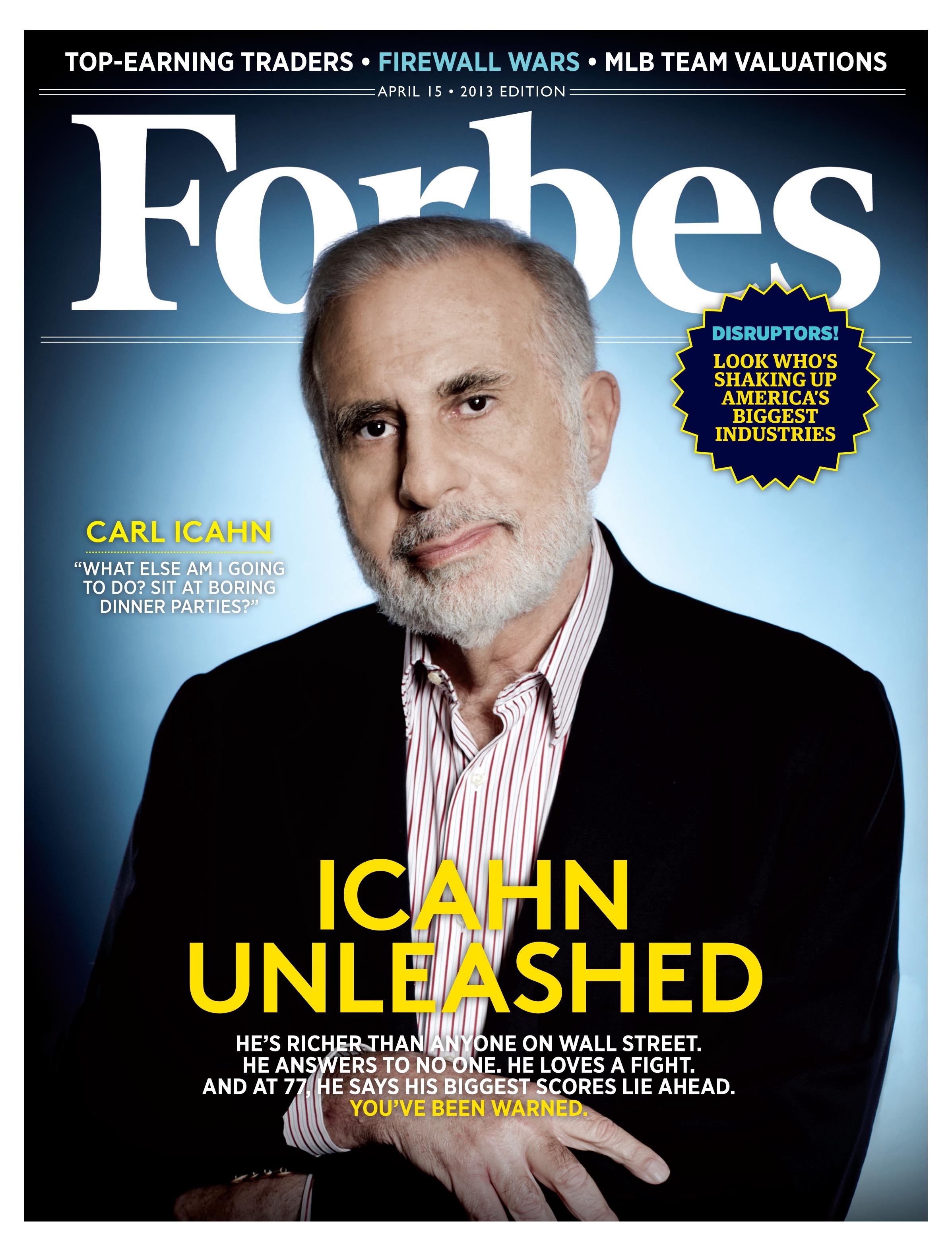
Carl Icahn must be big-time net short

Icahn.Cover_2

He always appears to show up on days when the market is in extreme stress and the viability of high yield is in question with something like this little gem: “The high-yield market is just a keg of dynamite that sooner or later will blow up.”  He did the same thing back on October 1, when he issued his “Danger Ahead” video (I commented in “Help! Plus more piling on”)

A few thoughts as we approach Fed-Day

  • The 10-year UST yield peaked in December of 2013 at 3% (the announced beginning of the “tapering” of Quantitative Easing). Recently with the threat of a potential rate increase it has been no higher than 2.5%. It closed at 2.13%, Friday December 11, as the “fear” trade was clearly in place. A quarter point bump in the FF rate at this point will only reinforce the fear trade. It is, therefore, very unlikely that this increase will have any major negative effect on long-term interest rates. WHEN THE MARKET FIGURES THIS OUT, AND IF THE STATEMENT IS “ONE AND DONE” / “SLOW AND LOW”, I BELIEVE THE ENVIRONMENT FOR STOCKS BECOMES VERY POSITIVE.
  • The dollar was supposed to strengthen when the Fed raised rates… making U.S. goods more expensive in international markets. Now, with this increase being viewed by many as a fait accompli, the dollar has declined over 4.5% from its recent high, even in the wake of Janet Yellin’s hawkish commentary two weeks ago.
  • The absolute positive that $35/$40 a barrel oil brings to everyone, but the producers, has been totally missed in the rhetoric. It is there and working for all individuals and the energy consuming economies they live in. Remember, the prices of oil and many other commodities are down because of oversupply, not because the global economy has ceased to grow.
  • Tax selling, some of which has been panic selling, has created significant opportunities in levered sectors of the market–MLPs, BDCs, REITs, Utilities and even Distressed Debt (don’t confuse illiquidity with viability).
  •  Since I began this post, another fund, a hedge fund Stone Lion ($1.3 billion in AUM, $400 million distressed debt), has suspended redemptions. This is not likely to play well Monday morning. It is important to remember the message in Fridson I and II. Default rates on high yield bonds are extremely low at present (2.9%). It would take a recession (which does not appear to be in the cards right now) to get to 6%, which means at a historical worst-case, 94% of the credits do not default. Ergo, this collapse may be setting the table with some real opportunities.

What Could Go Wrong?

Please Janet Don't disappoint us Janet
Please Janet
Don’t disappoint us Janet

If the Fed delays the rate increase because of the craziness going on in the high yield and commodity markets, we have a real problem. It will signal that the Fed thinks our economy and the world is too weak to withstand even a minor financial dust-up. Even worse, it will mean that the financial media and pundits with their fear mongering will have gained control of U.S. monetary policy. Please, Janet, say it ain’t so.

What are your thoughts?

The information presented in kortsessions.com represents my own opinions and does not contain recommendations for any particular investment or securities.  I may, from time to time, mention certain securities for illustrative purpose, names where I personally hold positions.  These are not meant to be construed as recommendations to BUY or SELL.  All investments and strategies should be undertaken only after careful consideration of suitability based on the risks, tolerance for risk and personal financial situation. 

Categories
Financial, Stock Investment

Conventional Wisdom Undone


Community_Noun_project_26111.svg

  • When rates do rise, the dollar will soar vs. other currencies, making U.S. goods more expensive in global markets and imports more affordable, thus further damaging the U.S. economy. This already happened and may be in the process of reversing, just as a Fed fund rate increase seems to be a fait accompli. The dollar actually took a significant hit on Janet Yellin’s recent comments before Congress, which appeared to indicate a strong inclination to raise rates at the December meeting. European Central Bank President, Mario Draghi, reinforced the move by stating Europe did not seem to be needing greater quantitative easing at this time. Of course, he is ready to intervene further, if conditions deteriorate. 

106px-500-Million-Dollar-Series-1934-Federal-Reserve-System-Federal-Reserve-Certificate-for-Bond-numbers

  • Bond prices will collapse causing yields to soar on ‘lift off’. Ergo, mortgage rates will soar, killing the U.S. housing market. On the eve of an increase in the funds rate this does not appear to be the case. December 18, 2013, the Fed announced they would begin to taper the bond-buying program ($86 billion per month) we all grew to love and fear as Quantitative Easing. The 10-year U.S. Treasury (Tsy) yield spiked to a bit over 3% (and has not been that high since). The 10-year closed 2013 at 2.88%. The S&P closed 2013 at 1848.36 (with a 1.9% yield). On Friday, December 4, 2015, the 10-year Tsy closed at a 2.27% yield. 30-year mortgages closed 2013 at a 4.46% yield. As of December 4, 2015, 30-year mortgages are available at a 3.63 % rate. It is doubtful the potential bump in the FF rate will take this rate anywhere near the previous two-year high. BTW, the S&P closed 12/4/2015 at 2191.61 (+18.3% over the two year period, still yielding about 1.9%).

93px-Child_labour_cartoon_Hine_no_3497

  • Finally, because of expected higher rates, investors need to avoid companies that use high degrees of debt in their capital structures (REITs, BDCs, MLPs, Utilities and high-dividend payers),  because debt will be more expensive in this rising rate environment. As it pertains to dividend stocks in general, higher fixed income rates will make fixed income more compelling versus stocks. Oh yes, Banks will be the big winners because higher short rates will allow them bigger interest spreads, much better earning power. Though the rate increase, de minimis as it may be, has not yet happened, a big downward move in the leverage plays has already taken place. Meanwhile, everybody loves banks. This creates a mismatch, which coupled with year-end tax-selling, could provide some real opportunities.

One Last Point on Interest Rates

They are going up. The question for many is, “How much?” Because sovereign 10-year rates in most of the major developed countries are very much lower than in the U.S. 10-year, the U.S. Tsy 10-year is the best house in a so-so neighborhood. If you check the table below, you will see why there should be a good, strong international demand for our debt, again keeping a lid on the potential upward move in long rates.

Ten-year Sovereign Debt rates (as of 12/4/2015–Source, Wall Street Journal)

US Tsy                 2.276%

France                 1.009%
Germany             0.682%
Italy                      1.551%
Japan                   0.332%
Spain                    1.730%
Portugal               2.470%
Hard to believe as it might seem, Portugal, with all its problems, only has to pay 20 basis points more in rates for 10-year money than the United States Treasury.
Hopefully this undoing of conventional wisdom helps you feel more comfortable with the market going into the new year.
How are you feeling?
The information presented in kortsessions.com represents my own opinions and does not contain recommendations for any particular investment or securities.  I may, from time to time, mention certain securities for illustrative purpose, names where I personally hold positions.  These are not meant to be construed as recommendations to BUY or SELL.  All investments and strategies should be undertaken only after careful consideration of suitability based on the risks, tolerance for risk and personal financial situation.
Categories
Financial, Stock Investment

“Eve of Destruction”

No 5 Army Film & Photographic Unit, Wilkes A (Sergeant) - This is photograph BU 8604 from the collections of the Imperial War Museums (collection no. 4700-30) Scene of destruction in a Berlin street just off the Unter den Linden. Permission details This artistic work created by the United Kingdom Government is in the public domain. This is because it is one of the following: It is a photograph created by the United Kingdom Government and taken prior to 1 June 1957; or It was commercially published prior to 1965; or It is an artistic work other than a photograph or engraving (e.g. a painting) which was created by the United Kingdom Government prior to 1965. HMSO has declared that the expiry of Crown Copyrights applies worldwide (ref: HMSO Email Reply) More information. See also Copyright and Crown copyright artistic works. Deutsch | English | suomi | français | italiano | 日本語 | македонски | മലയാളം | Nederlands | português | slovenščina | Türkçe | 中文 | +/− View more Public Domainview terms File:Destruction in a Berlin street.jpg Uploaded by Hohum Created: 3 July 1945
Berlin 1945
Apres Destruction
No 5 Army Film & Photographic Unit, Wilkes A (Sergeant) –Imperial War Museum

Eve of Destruction

“Eve of Destruction ” was the cheery title of Barry McGuire’s chart-topping single of September 1965, words and music by P. F. Sloan. This war protest song shot to the top of the charts almost overnight. Take a listen, and I bet you have to agree the more things change the more they stay the same … at least in the past 50 years (the past 75 years considering the visual above).

We had one of those “Eve of Destruction” moments Monday, August 24 (the recent low). In fact, things were so grim I felt compelled to post a counterpoint August 23, (though the title may not confer that intent), “Abandon All Hope Ye Who Enter Here.” It had appeared that on Friday, August 21, many had abandoned hope when panic set in, as oil had collapsed (breaking briefly below $40.00) and China melt-down fears erupted after a slight devaluation in the Yuan.  The Dow Jones Industrial Average is up nearly 15% from the panic low it hit that Monday. My final thought in the post:

Maybe I am missing something, but I am have trouble seeing the current situation as dire and warranting the panic that has surfaced in the market. Regarding everything that I know to be true and holy, bull markets do not end in panic. They are born in PANIC (which is what we have been seeing the last few days). Bear markets are bred and born in EUPHORIA, of which we have seen little, or none, since 2008/2009.

Ergo, I am not Abandoning hope. I am embracing it!

My Friend Allen

My friend Allen, who does me the honor of reading these posts, continues to puzzle over the lack of any long-term commentary on the part of the media, especially encouragement to those, not necessarily investing for growth, but those investing for income. He suggests that in the absence of good fixed income alternatives or the prospect of a strong resurgence in inflation (in this slow growth world) that there are many great income oriented equities out there.

These offer relative safety, modest growth in income and superior yield…stocks you don’t plan to trade…stocks that anyone with a long term outlook would be happy to hold. Who cares about $30. oil, a weak China or a quarter point bump in the Fed Funds rate when you are sitting on a domestic REIT with a 6% or 7% yield ? These events are just not material to their rent collections. Same holds true for master limited partnerships (MLPs) that do not produce energy (just transport it) yielding 7%+. And, there are scores of utility and good general equity names yielding way-in-excess of the 10-year treasury (whose dividends should also grow over time). All you have to do is be willing to accept volatility and hold over time.

My Answer (and Allen’s): It’s the media and their constant micro focus on the next big trade, inane news items speculated to be affecting the market, and what’s hot and what’s not… totally unproductive babble.

The stocks I listed above are just too dull to merit their attention. But, for investors looking for income, they are truly interesting.

My advice: Think about my friend Allen’s puzzlement. It presents you with an opportunity. 

What is your take?

The information presented in kortsessions.com represents my own opinions and does not contain recommendations for any particular investment or securities.  I may, from time to time, mention certain securities for illustrative purpose, names where I personally hold positions.  These are not meant to be construed as recommendations to BUY or SELL.  All investments and strategies should be undertaken only after careful consideration of suitability based on the risks, tolerance for risk and personal financial situation.

Categories
Financial, Stock Investment

HELP! Plus more piling on.

images-52

Help Me Understand this Market.

Maybe I’m missing something, but the way certain interest sensitive sectors of the market are acting, especially those with leverage (MLPs, REITs, Utilities and BDCs), you would think a major bump in interest rates (maybe even tightening by the Fed) is imminent. Can you tell me from whence this is coming? The Fed is not delivering this message. The economy is fine, but not red-hot. Inflation seems to be under control.

OK. If you can’t answer my first question, how about this one? What harm would a quarter point increase in the Fed Funds rate (from essentially zero) do to the economy? Or, for that matter, what damage would further gradual rate increases do, if taken over the next 12 to 18 months? Historically, a one or one and half percent fed fund rate would still be way below the level of Federal Funds that we have endured and prospered under over the past 6 decades. For those that doubt the veracity of my assertion, please check out this report from the St. Louis Fed on Effective Fed Fund Rates since 1954.  BTW, the Dow Jones Industrial Average closed out 1954 at 404.39. It closed Friday, October 2, at 16,472.37.

Another way to address these questions might consideration of two more questions:

1) What would be the impact of a 1.5% FF rate increase on longer bond rates (10-year U.S. Treasury rates)?

Based on recent history, a worse case estimate might be a one-to-one increase in the 10-year. Say to  3.50%. More likely, it would be much less than that (maybe even lower), due to the pervasive fear that exists in the market. There are those that believe even a small move in rates would throw us into a recession or worse (see comments below from Carl Icahn). Many are fearful that we are on the cusp of another 2008 event, even if they can’t exactly explain why … a flight to safety. Ergo, rates on the long-end could remain low for a long time.

2) Another looming question–What is the potential impact of higher rates on business capital spending, individual consumption and housing?

The impact of moderately higher interest rates, as it pertains to capital spending, should be de minimis. If you are operating on that tight a tolerance (i.e. where the additional 1.5% would make the project uneconomical), maybe the project should not be undertaken anyway. Also, as it pertains to capital projects and home ownership, maybe the threat of rising rates moves those who are ‘on the dime’ to take action … do it now before rates go up.

3) Finally, would 3.5% rate on a 10-year bond be stiff competition for a stock yielding 3%, a stock where dividends and earning might grow over time?

From a purely competitive standpoint, you don’t need fast growth to make the stock compelling. Four or five percent will do quite nicely. So, the answer to the bond being stiff competition for a stock would be,  probably not, especially as we hold the view that rates will not move up that rapidly (again, they could easily go lower).

So, why are we so obsessed by this?

It is because the media and punditry are obsessed. Of course, they do not provide history or perspective, except when they say this will be the first time in nine years that the Fed will raise rates! And, then they will leave you with the distinct impression that raising rates is a bad thing, and that the fate of the world hangs in the balance. This is how they get paid! If you go back, even in recent history, and see how many times they got it wrong, you will be appalled. Remember these world-ending events?

  • Passage of The Affordable Care Act (AKA, Obamacare)–It would put a lot of companies out of business and people out of work,
  • The Sequester–numerous government shutdowns and the dreadful end to Quantitative Easing. 

The market made new all-time highs after each of these, much-hyped events! The new ‘worse thing’ that could possibly happen is Lift Off, the Fed raising the Fed Funds rate 1/4 point. Give me a break, or as I requested earlier, “Help!” me understand why this time it will be different.,,why the media might have it right.

‘Piling on’ part II

Icahn.Cover_2

Jeffrey Gundlach T
Jeffrey Gundlach

With the market on the ropes earlier last week, two well-known pundits (hedge fund operators), Carl Icahn and Jeffrey Gundlach, tried to give it their best shots to take the market lower. Mr. Icahn is seeing “danger ahead”, the potential of another 2007 bubble bursting, was out warning about the evils of debt, financial engineering (something he is expert at). He has great things to say about Apple (a very large Icahn position), while badmouthing others using similar policies. So, he likes AAPL and must be short other equities and junk bonds. This is ‘talking your own book’ in the highest order. William Watts, a contributor to MarketWatch, takes Icahn to task in “Why Icahn’s Danger Ahead video is funny, not scary.” Then there is Doubline Capital’s Jeffrey Gundlach, essentially out doing the same thing in this little piece, “Doubleline’s Gundlach: Expect ‘another down wave’. “ This is not new news. It is just a couple of guys with big reputations talking their own books … piling on.

What’s your take?

The information presented in kortsessions.com represents my own opinions and does not contain recommendations for any particular investment or securities.  I may, from time to time, mention certain securities for illustrative purpose, names where I personally hold positions.  These are not meant to be construed as recommendations to BUY or SELL.  All investments and strategies should be undertaken only after careful consideration of suitability based on the risks, tolerance for risk and personal financial situation.