Categories
Financial, Stock Investment

Session 106–What’s up with the ten-year U.S Treasury Note?

BillWell, for one thing, the price is up.  Conversely, the yield is down.  As of 9:30 PM CDT, 5/8/14 the yield stood at 2.61%, down from 3% at the end of 2013.  This, according to the media wonks and pundits, was not supposed to happen.  Rates were supposed to go up as people fled the safety of bonds on the tapering of Quantitative Easing (QE).  I mean QE was why rates had gotten so low, right? Not so fast, it may be just as much about fear… the fear of a double-dip recession two years ago, Europe imploding, a Chinese bust and geopolitical concerns (Session 53–“Hyper Low Interest Rates: Was it QE or just plain fear?”).  And, now of course, the ever-present fears; we have gone too far, too fast, the economy is weaker than we imagined and that we have created another bubble on the verge of bursting.  Recent market action correcting the bubblet (a mini-bubble) in tech, social media, biotech and a score of momentum plays, has reinforced this fear. Although the precipitous drops in some of these names are very scary, it is important to note that it is not the whole market being kicked to the curb, just a small (and maybe deserving) subset.

The Dow Jones Industrial and S & P 500 continue near record highs

This fact also scares a lot of people who watched the meteoric rise off the lows of 2009.  And, many think this, too, will end badly (a crushing bear market).  I might point out to the fearful that the first time the S & P 500 approached the 1550 level was in March of 2000.  It briefly broke through that level closing at 1565.15 , October 9, 2007.  In 2013 it finally broke out to new all-time highs in the 1885 area. We closed on May 9th at 1875, up 325 points in 14 years (compounding, ex-dividends at a whopping 1.37%). What may to some look like a bubble off the bottom in ’09, looks to me like severe/ below-trend-line performance in the last 14 years.  Oh yes, the index PE is 40% below the March 2000 peak and the dividend yield has almost doubled vs. a ten-year yield that has more than halved.

The Media piles on the fear fest

Maria Bartiromo reuters

Here are a few examples from yesterday (5/8/2014):

1)  From our friends at Fox Business Channel and that legendary, groundbreaking broadcaster, Maria Bartiromo (A.K.A “The Money Honey”), we give you an interview with one-shot-wonder, Nouriel Roubini–“We are at the very beginning of a great bubble.”  Roubini called for a market collapse several years before the 2008 blow-up, but never got positive as we moved out of the crisis.

Nouriel Roubini
Nouriel Roubini

2)  From MarketWatch Paul Farrell presented us with this headline–“Ten peaking mega-bubbles signal impending stock market crash,”which for a large part of yesterday was the #1 most popular story sourced on their website. It remains in the top 5 today. This shows you where people’s heads are.

Paul Farrell
Paul Farrell

3)  Finally, from CNBC, perma-bear, Marc Faber, provided this: “I’m worried about a crisis bigger than 2008.“
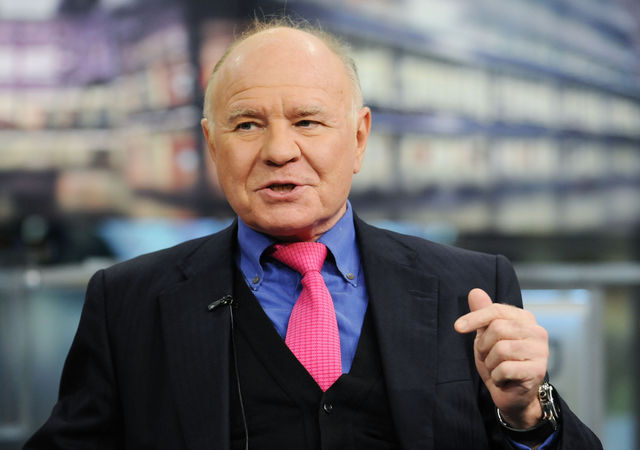
Marc Faber
Marc Faber

You never see the bubble that takes you down

A Bubble
A Bubble

Ergo, all of the above may not be helpful guides to the next big disaster.  Rest assured there will be a next big disaster.  There always is.  I would temper this by saying 2008 and 1929 were financial panics and panics like this are few and far between.  Bear markets will happen and they will be scary, but they won’t be near-death experiences such as we just went through.

On a lighter note

Mark Hulbert in MarketWatch (May 7, 2014) gives us a ray of hope–-“Investors get bearish, suggesting stocks will rise. ” Hulbert contends that contrarian analysis of sentiment would suggest an upturn might be eminent.”

In the final analysis the strong 10-year points me to the idea that a healthy fear and skepticism exists in the market and that is a good thing.

What do you think?

The information presented in kortsessions.com represents my own opinions and does not contain recommendations for any particular investment or securities.  I may,  from time to time, mention certain securities for illustrative purpose, names where I personally hold positions.  These are not meant to be construed as recommendations to BUY or SELL.  All investments and strategies should be undertaken only after careful consideration of suitability based on the risks, tolerance for risk and personal financial situation.   

Categories
Financial, Stock Investment

Session 105–It’s Demographics, Stupid!

It’s Friday May 2, 2014 and we get good news on the employment front.  The unemployment rate has dropped to 6.3% from 6.7%…the lowest since the fall of 2008.  The bad news is that one of the reasons for this precipitous drop is that there was a big jump in the number of people who just stopped looking (i.e. they have stopped participation in the labor force)…they have given up the ghost. This, of course, conjures up the reasoning that the economy is more feeble; ergo, the market is more vulnerable.  The markets were lackluster to negative in response to the numbers (although in the case of the, Dow and S & P 500 still hovering very near their respective all-time highs).

Typical lack-of-depth media reaction

The Face of Fear
The Face of stunned

“Seemingly terrific April job’s report poses strange puzzle”–May 2, 2014, Capital Report, MarketWatch

This is from MarketWatch’s Jeffry Bartash:

Typically a shrinkage in the labor force occurs when people become so discouraged about finding a job that they give up looking for work. Yet the April surge in hiring would suggest that more jobs – not fewer – are available. “You have drastically different messages offered by the establishment and household surveys,” said Stephen Stanley, chief economist of Pierpont Securities. He called the report “puzzling.”

The big drop in April – to 62.8% from 63.2% – drove the participation rate back down to a post-recession bottom and matched a 35-year low. The rate tells us the percentage of Americans 16 or older who have a job or want one.

 It’s Demographics, Stupid!

None of this should be surprising to anyone with just the most cursory grasp of history and demographics. It is the post World War II “Baby Boom” reaching retirement age, the leading edge of which is turning 68 this year.  Three hundred thousand plus “boomers” are reaching retirement age every month.  Though they will not all retire at that same time, significant portions will as time progresses, maybe leading to the lumpy numbers we have been seeing in the labor force participation rate.  Because the “baby boom generation” is so large and somewhat front-end loaded, the participation rate is likely to be depressed for some time.

I am not Pollyanna.  There is structural unemployment in our economy.  I get it.  But, my guess is the labor force participation rate is significantly more effected by demographic issue than the structurally unemployed.

Want something to worry about?

Old Codger
Old Codger

How are we going to pay for all the Social Security and Medicare these old codgers (of which I am one) are going to require in the next 20 or 30 years?

What do you think?

The information presented in kortsessions.com represents my own opinions and does not contain recommendations for any particular investment or securities.  I may,  from time to time, mention certain securities for illustrative purpose, names where I personally hold positions.  These are not meant to be construed as recommendations to BUY or SELL.  All investments and strategies should be undertaken only after careful consideration of suitability based on the risks, tolerance for risk and personal financial situation. 


Categories
Financial, Stock Investment

Session 103–“Investors double down on dumb idea”

BillBefore I decipher my title, I need to give well-deserved credit where credit is due.  As you know kortsessions.com is all about going after the media on the fear, distrust and misinformation that it continually sows.  Sometimes, however, they get it right.  One columnist, who seems to pop up often on the right side (as I define it) of pressing investment issues is Chuck Jaffe, a frequent contributor to MarketWatch.  His work today, “Investors double down on dumb idea” (MarketWatch-4/27/2014), is worth your attention. The article discusses the possibility that those seeking too much safety might find themselves worse off than those who are too aggressive with their investments.  Jaffe posits that taking no risk at this juncture may be worse than piling on risk at market tops…classic individual investor behavior.

Is this the classical pattern?

Glen_Plaid_aka_Prince_of_Wales_check_pattern-2

According to Jaffe’s piece and surveys conducted by Bankrate.com this week and in 2012 and 2013, the answer is NO.  Bankrate’s most recent survey (this week) states, “…nearly three quarters of Americans said that they were not inclined to invest in the stock market right now…,” regardless of the fact 0f it having produced great returns since 2009 vs. paltry returns on cash and fixed income investments.

Jaffe reports, “Those numbers held across all ages and income groups, and mirror results from surveys done in 2012 and 2013, where 76% of Americans said they were not inclined to increase their stock market exposure.”

The good news and the bad

good news and bad news

That’s the good news.  This type of risk aversion is not indicative of a “Bubble” or “Market Top.”  The bad news for the risk-averse according to Jaffe is “…money kept on the sidelines does not face principal risk…it runs headlong into purchasing power risk (inflation) …and longevity risk, when current returns are insufficient to make their money last their lifetime.”

In the final analysis, I think that, long-term, inflation is the major risk we all face.  What even makes me more certain about this, is the current lack of concern or belief that most have that this will be the real issue.  It is a topic that is really not on most people’s radar screen, accept those on the fringe, like Peter Schiff.  Schiff has been a perma-bear and goldbug to such an extreme and for so long, he has lost all credibility.  He is a stopped clock that is likely to be right someday.  Ironically, Schiff’s latest post (“Reckless Fed may push gold to $5000.00”) is one of the most sourced articles on MarketWatch today.  Jaffe’s article did not even place.  I guess fear sells.

Inflation can be a good thing, if you own assets

500px-Cifrão_symbol.svg

In an inflationary time it is good to own assets, which will generally increase in value vs. devalued currency.  You do not want to be a lender as your repayment will be in devalued currency.  I am agnostic as to what type of asset you prefer.  I happen to be very comfortable with common stocks as a way to protect purchasing power.  I detailed what I think is a pretty compelling case for a resurgence of inflation back in February of last year in Session 7 (“My Biases…”).  Session 7 does not predict when inflation comes back (impossible), but it makes a compelling case for it to rear its ugly head.

Good article, Jaffe.  I like it when people agree with me!

What do you think?

The information presented in kortsessions.com represents my own opinions and does not contain recommendations for any particular investment or securities.  I may,  from time to time, mention certain securities for illustrative purpose, names where I personally hold positions.  These are not meant to be construed as recommendations to BUY or SELL.  All investments and strategies should be undertaken only after careful consideration of suitability based on the risks, tolerance for risk and personal financial situation.

Categories
Financial, Stock Investment

Session 95–Keep it simple stupid

KISS-The Early Years

These four words, often referred to as the “KISS Theory,” should be a mantra for many investors who have neither the skills nor time to manage their own investments.  I have a very credible ally in this thought process, Warren Buffett, who is advising his own heirs to “Keep it simple…”, to invest their inheritance in index funds (“Warren Buffett to heirs: Put my estate in index funds”)MarketWatch, Ma.rch 13, 2014).

Warren_Buffett_KU_Visit

“My advice to the trustee couldn’t be more simple: Put 10% of the cash in short-term government bonds and 90% in a very low-cost S & P 500 index fund. (I suggest Vanguard’s.) I believe the trust’s long-term results from this policy will be superior to those attained by most investors — whether pension funds, institutions or individuals — who employ high-fee managers.”–Warren Buffet.

Buffett’s rationale: “Both individuals and institutions will constantly be urged to be active by those who profit from giving advice or effecting transactions. The resulting frictional costs can be huge and, for investors in aggregate, devoid of benefit. So ignore the chatter, keep your costs minimal, and invest in stocks…”  These sources of noise, encouragement and urgency, include the media and an army of consultants who make money on fear, complication and confusion.  In fact, if Buffett had to hang out his shingle today, he might have a difficult time raising and keeping money under the barrage of such scrutiny and short-term focus.

Since Warren Buffett hung out his shingle in 1965, Berkshire Hathaway produced a 20% compounded return, the S & P 500 9.4%. Since less than 20% of money managers routinely beat their benchmarks, you have an 80% chance of hiring one that underperforms the market and paying significant fees for that underperformance. So if you don’t have the “Buffett skill set”, and don’t know an advisor or manager that does, a long-term (very tax efficient) 9.4% doesn’t appear so bad.

Caveat

Past results offer no guarantee of future performance; but, according to Professor Jeremy Siegel, on the long, long, long-term (1802 to 2006) stocks have offered a compounded real return (adjusted for inflation) of 6.8% (a double on your money about every 10 years) vs. bonds at 3.5% (adjusted for inflation, but not taxes on the income).

My apologies to the 20%!

The points I have made on Mr. Buffett’s advice to his heirs do not give credit the pros that I have met during my career that do provide year-in, year-out superior results.  There are other great managers, analysts and advisors out there. In this day and age their jobs become incrementally more difficult in the face of the NOISE, 24/7 media and unrealistic client expectations. Working with these individuals require an effort on the part of the client to understand and accept their disciplines, to be long-term payers and to put on blinders to the nonsense from the street. This requires leaving your emotions and preconceived, media-shaped notions at the door….or you can keep it simple and follow Mr. Buffett’s advice.

What do you think?

The information presented in kortsessions.com represents my own opinions and does not contain recommendations for any particular investment or securities.  I may,  from time to time, mention certain securities for illustrative purpose, names where I personally hold positions.  These are not meant to be construed as recommendations to BUY or SELL.  All investments and strategies should be undertaken only after careful consideration of suitability based on the risks, tolerance for risk and personal financial situation.


Categories
Financial, Stock Investment

Session 93–“10 things the gun industry won’t tell you”

BillInterestingly, this was the “Number 1″ searched article in this morning’s (March 8, 2014) edition of MarketWatch.com, followed closely by:

2. ” 7 signs we are near a market top”

3.  “How to prepare for the next bear market”

The banner headline was:

“How the S&P 500 gets to 2500 next year”

What struck me the most about the “Most Popular” list, was that a non-financial article was getting the most hits; confirming the notion that Americans love their guns (maybe even more than money).  By the way “10 things…” continued to be the number one article the rest of the day.

Also striking were the other two articles, warning investors of the potential for a downturn and telling them how to prepare, continued to trend in the top five.  The banner headline, regarding the S&P at 2600 in 2015, never made it to the top five.

This all leads me to believe much of the rhetoric in “7 signs we’re near a market top” may be a bit premature. If  we were at a significant bull market top with irrationally exuberant investors,  this article would have at least made it to the “Top Five” list. It was nowhere to be seen.

Correction coming?

You bet, sooner or later, and it may not be the garden variety five-to-six percenter we’ve become accustomed too.  I can guarantee it. I just can’t predict the when and why.  It may even morph into a cyclical bear market (with the onset of significantly higher interest rates).  Whatever happens it will be scary; likewise it will be normal and to be expected.

Importantly, the continued focus on the bearish outcomes highlighted in the pecking order listed in the MarketWatch “Most Popular” list, would argue against the market being at a secular top right now.

What to do 

You do need to make sure that your equity allocation and risk level of those assets will allow you to sleep at night in the event of a worse-case 30% or 40% correction in a cyclical bear market.  Why do I use the 30/40% range?  In the last secular bull market (1982 to 2000) we had one such very scary drop, 36% in 1987. We had gone up about 168% from the breakout in ’82. The sharp drop in ’87 shaved 56% off the gain.  But, at 1739, we still were 65% above the level of the breakout 5 years earlier, and we were on our way to Dow 11497 December 31, 1999.

Interestingly, from its breakout above 1055 in 1982 until it reached 1205 later in that year (up 14%), nobody imagined the Dow would hit the 2722 level a few short years later.  Like the breakout in 1982, we are now 16% above the 2007 all-time high on the Dow Jones Industrial Average, and like in 1982, few can imagine a 100% gain from current levels in the next five years,

Air pockets like 1987 are rare, but anything can happen.  It is best, however if, you think about that possibility when assessing the risk you can stomach.

This is all consistent with my approach in past posts on kortsessions.  So pardon the pun, I’m sticking to my guns, which brings me back to my title, “10 things the gun industry won’t tell you.”

Guns vs. Money

Kalantak_Micro_Assault_Rifle_5.56mm500px-Cifrão_symbol.svg

You would think in a financial publication, such as MarketWatch, financial stories (especially negative ones) would trump a negative, slanted story about the firearms industry.  Not so my friends, America’s love of the gun, trumps money issues.  If only the founding fathers had been more specific in crafting the Second Amendment, maybe to read “the right of the people to keep and bear (flintlock muskets) shall not be abridged.”

What do you think?

P.S. “10 Things…”continued to be the number one “Most Popular” article the next day (March 9,2014), followed by three negative articles cautioning on the stock market’s long run being near an end. Amazing!!!

The information presented in kortsessions.com represents my own opinions and does not contain recommendations for any particular investment or securities.  I may,  from time to time, mention certain securities for illustrative purpose, names where I personally hold positions.  These are not meant to be construed as recommendations to BUY or SELL.  All investments and strategies should be undertaken only after careful consideration of suitability based on the risks, tolerance for risk and personal financial situation. 

Categories
Financial, Stock Investment

Session 90-In StockMarket Land, the difference between apples and oranges is often hard to discern

Bill“Markets flooded with cash, should Fed prep to stamp out risk(Reuters via CNBC 2/21/2014)?”  First of all, this is a stupid question as their mandate deals with unemployment and inflation.  They are only the ‘risk police’ when it comes to risk of inflation. They can warn about “irrational exuberance”, but it is not their job to stop it, unless it is the indirect result of steps taken by the Fed to cool inflation (i.e. raising rates).  As inflation is rather muted and unemployment still a concern, Fed tightening does not seem very likely at this point.

Back to apples, oranges and other false equivalents…

488px-Czigány,_Dezső_-_Still-life_with_Apples_and_Oranges_(ca_1910)

The “Market flooded…” article tries to compare fed policies in the run-up to the ’08/’09 market collapse to their policies post-crash, and concludes we may be headed for a similar outcome.  The policies were easy money and low rates.  The outcome, according to the Reuters story, was the subprime mortgage debacle.  They forgot to mention Congressionally-mandated lower lending standards and Wall Street’s creation and proliferation of derivatives (“financial weapons of mass destruction”) used to package, insure and market them.  Oh yes, there were the banking and SEC regulators that were asleep at the switch.  Also, we must not forget the profound effect of the removal of Glass, Steagall restrictions on banks being in the securities business. These restrictions that had been in place since the Great Depression.

I think that this piece, lacking perspective (not untypical of most financial reporting), really failed to present an accurate picture of why the Fed kept rates low for so long in the first half of the decade.  The market and the economy were stunned by the ferocity of the bursting of the ‘Tech Bubble’ in 2000.  Ergo a more relaxed Fed policy was called for.  Then we were confronted by the 9/11 terror attacks. These really spooked the market and the economy.  Finally, we entered into two wars.  During the next few years the economy was limping along while oil and gasoline prices spiked to new all-time highs, acting as a counter to the loose monetary policy.  Many worried that the U.S. was becoming the next Japan (economic stagnation) with China ascendant.  Comparing now to then is comparing apples to oranges.

A follow-up on Session 89–From silly to really ridiculous.

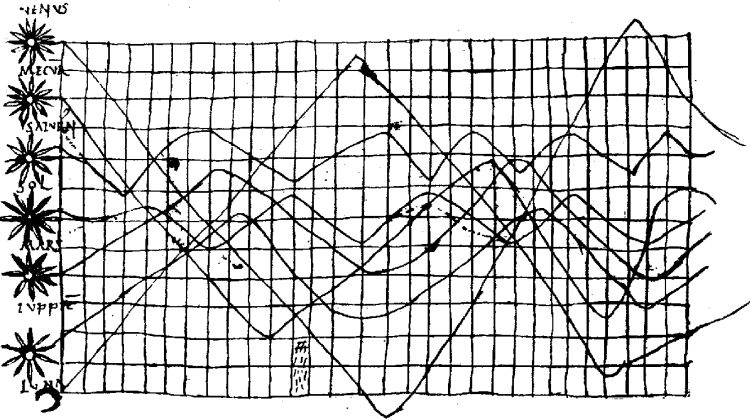
Planetary_Movements

We featured a story in our last post (Session 89–Waiting For The Other Shoe To Drop) about a chart of the current Dow Jones Industrials, which eerily resembled the Dow in September of 1929.  This chart and considerable media commentary about it had raised significant fear and concern in certain circles (you know, “deja vu all over again”).  Well, not to worry, one of the eminent technicians focusing on the chart, Tom McClellan (McClellan Market Report–Chart) sounded the ‘all clear’.  Says McClellan in a column written February 11 (Ironically the same day Mark Hulbert posted a story indicating the chart correlation was drawing eerily more similar), the market had to stop going higher if the comparison were “to keep working.  Continuing higher from here would be a break from that pattern, and would constitute evidence that the analog was breaking correlation.”  Of course, the market did go up… spell broken. No matter, lots of people became overwrought about this as demonstrated in Jeff Saut’s comments in last week’s Barron’s(Dow-pocalypse Now).

Now, I don’t totally dismiss the usefulness of charts.  They are one tool, which coupled with fundamental analysis, can be helpful; but, from my perspective, they should not be used in a vacuum.

What do you think?

The information presented in kortsessions.com represents my own opinions and does not contain recommendations for any particular investment or securities.  I may,  from time to time, mention certain securities for illustrative purpose, names where I personally hold positions.  These are not meant to be construed as recommendations to BUY or SELL.  All investments and strategies should be undertaken only after careful consideration of suitability based on the risks, tolerance for risk and personal financial situation.


Categories
Financial, Stock Investment

Session 87–One Foot Out the Door, One Finger on the Panic Button

BillI think this describes the mindset of many market participants, suspicious of how far we’ve come since the crash of 2008.  The ghost of that era still haunts investors; so much so, many cut their equity holdings dramatically or totally avoided stocks (sideline money=buying power).  The recent mini-correction has reinforced this skepticism and the media has seized upon this to continue to foment fear and trepidation.  It keeps eyes on the paper, the web sites and, of course, the tube…corrections being a gift that jars investors from the easy complacency of a gradually up-trending market.

Recently, I spotted a couple of particularly egregious reports, specifically designed to draw investors closer to the panic button. Pieces, that if you did not know the background or track record of the presenter, could be very disconcerting.  One of these features the always convivial, always ranting, always negative and never right, CNBC ‘Bond Maven’, Rick Santelli.

The Chartist

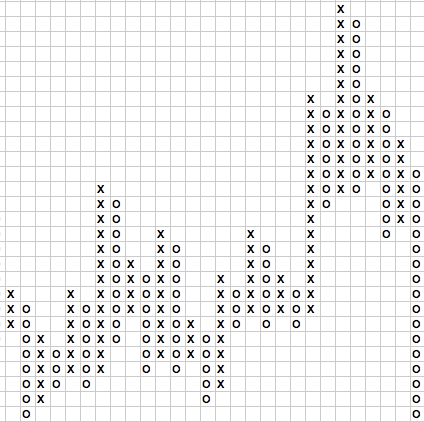
SamplePNFillustration1

Even though Santelli is supposed to be the ‘Bond Maven’, his commentaries and guests range far afield (including heavy political overtones).  On January 27, Rick’s guest was technician, Tom DeMark.  Chartist DeMark is well-known and a consultant to many high-powered institutional investors and he has had some good calls in his long career.  Having said this, his methods are extremely complex and require many things to fall into place before he makes a call (not always correct).  The reason Santelli had him on was that DeMark recently published a negative piece comparing the chart formation of 1929 to that of 2013.  You see where Santelli is going with this.  The market is down 5% or 6% after a great run and, all of a sudden, we are looking down the barrel at a 40% correction.  This is scary stuff.  Get ready to hit the exits!  Then again, maybe it is just ‘fair and balanced’.  But, wait a minute, Santelli is always negative. (DeMark clip)

800px-Panic_button

The Old Timer

Art Cashin epitomizes the class guys who used to populate the floor of the non-automated New York Stock Exchange.  Although Art has been a cautionary voice for the past few years, he usually is a moderate voice and a voice of market wisdom and experience.

It was very disappointing to me when, at the height of Monday’s (2/3/2014) sell off, Art decided to compare the recent ‘flight to safety’ demonstrated by the strong upward move in the 10-year U.S. Treasury Note to the moves we saw in 2008/2009.  That he made this analogy was bothersome, and that he did while the market was under severe selling pressure was even more disconcerting.  Methinks he’s been hanging with the CNBC crowd too long.

Art’s concern was that rates were supposed to go up after the Fed began its taper of Quantitative Easing.  Instead, they were going down.  Ergo, something really bad was happening under the surface.  What Art seems to have forgotten or may not know, is that QE, even at its height, was just a small part of the daily trading in long-dated treasuries; and, oh by the way, they are still buying $65 billion per month (1/2 treasuries, 1/2 AMBS).  We detail this in session–52.  Anyway, Art was overwrought.  He cautioned if we broke 2.6% on the 10-year it might signal real problems ahead. We did break to 2.58% later that day and closed today (2/5/2014) 2.67%.  It is the safety trade Art, not Armageddon!

I still believe that most investors are not, nor have they been euphoric, that they have one foot out the door and one finger on the panic button. This is a constructive psychological backdrop for the market.

What do you think?

The information presented in kortsessions.com represents my own opinions and does not contain recommendations for any particular investment or securities.  I may,  from time to time, mention certain securities for illustrative purpose, names where I personally hold positions.  These are not meant to be construed as recommendations to BUY or SELL.  All investments and strategies should be undertaken only after careful consideration of suitability based on the risks, tolerance for risk and personal financial situation.


Categories
Financial, Stock Investment

Session 75–“Double, double toil and trouble, fire burn and cauldron bubble.”

Bill“Double, double toil and trouble” is an apt descriptor of what the average hedge fund manager has been going through the past couple of years. To be hedged in a roaring bull market is indeed a witches’ curse.  According to the Business Insider the average hedge fund was up 6% the first nine months of 2013, while the S & P 500 scored a 25.3% gain with even the average mutual fund up 24.8%.  This makes the average hedge fund’s 2% of assets/ 20% of profit fee structure a bit hard to defend. “The Tragedy of Macbeth” has nothing on this tale of woe.

  A Most Foul Witches' Brew

A Most Foul Witches’ Brew

 “Fire burn and cauldron bubble.” 

Did someone say, “bubble?” Oh yes, thanks to a front page article on MarketWatch.com Monday morning we were peppered with “bubble” references the rest of the day.  The article quoted Nobel Laureate, Yale Professor Robert Shiller, who is “most worried” about the “boom” in the U.S. stock market.  Now, Shiller did not actually say the market was in a bubble (he still owns stocks), but he hinted around the edges.  The door was opened.  MarketWatch, CNBC and others took the opportunity to remind us of professor Shiller’s outstanding record of calling bubbles…the housing bubble (he wrote a book about it prior to its bursting–”Irrational Exuberance”) and the “Dot.com” bubble.  Ergo, Shiller knows BUBBLES and he may have another spotted.

Now, it really did not take a Nobel Laureate to spot either of these bubbles. The tech bubble was a no-brainer.  Most experienced investors saw that one coming long before it hit.  Remember economist/ Fed Chair, Alan Greenspan, he coined “Irrational Exuberance” back in 1996, four years be fore the actual bubble burst.  By 2000, “John Q. Public” was all in…you know ‘stocks for the long-term.’  Greenspan was eventually right, but if you pulled up stakes when he first sounded the alarm, you would have left a lot on the table. Well a stopped clock is at least right twice a day.

The bursting of the “Dot.com” bubble was not a life threatening event for portfolios where investors had not guzzled the ‘Cool-Aid’.  The “Housing Bubble was also pretty predictable.  It was the pervasive nature of that bubble and the mass destruction that it would wreak on the U.S and World economies most (including Dr. Greenspan) totally missed.  Those conditions do not seem to exist today.  Now, many see bubbles around every corner and the public is, shall we say, “twice burned.”  The bubbles that are plainly seen by the masses are not the ones that usually get us.

 The Dueling Economists (a great audio clip).

“What’s A Bubble?”: Planet Money, NPR is a short interview segment featuring Nobel Laureate Shiller and his co-Nobel Laureate,  University of Chicago Professor, Eugene Fama.  Fama is a polar opposite to Shiller believing Bubbles are impossible to predict and that the two Shiller is given credit for are basically flukes. In the interview, he says he’d give Shiller’s case more credence, if Shiller would predict another 10 bubbles successfully.  Shiller seemed to balk at this  challenge.

Interestingly, a third economist, Lars Peter Hansen will share the Nobel Prize with Shiller and Fama.  Supposedly Hansen has mathematical formulas that are designed to settle arguments between the likes of his co-laureates.  Hmmm,  wonder if Lars is using “fillet of fenny snake…the eye of a newt and toe of a frog” in his formulation?…What A Hoot!

What’s your take?

P.S. It is now Wednesday December 4, 2013.  The cauldron continues to bubble with bubble mania and today’s surprisingly strong ADP employment data (report commentary).  Of course, good news is bad news because, as you know, a strong economy indicates an end to Quantitative Easing (QE) and the beginning of  “TheDreaded Taper.”  Since Monday, in light of all of this, the Dow Jones Industrial Average has lost a tad over 1% with the ten-year U.S. Treasury jumping up a mere eight basis points in yield from 2.75% to 2.83%…Ho-Hum.

The information presented in kortsessions.com represents my own opinions and does not contain recommendations for any particular investment or securities.  I may,  from time to time, mention certain securities for illustrative purpose, names where I personally hold positions.  These are not meant to be construed as recommendations to BUY or SELL.  All investments and strategies should be undertaken only after careful consideration of suitability based on the risks, tolerance for risk and personal financial situation.


Categories
Financial, Stock Investment

Session 74–“Buying Stocks at Record Highs: Will You Be Sorry?”

Did you see this front page story in Saturday’s Wall Street Journal (11/23/2013)Bill?  The article posits: “…whether stocks are overvalued or fairly valued isn’t the question investors should be asking.  Instead, what you need to answer is this: how much can I stand to lose before I bail out?”  This is very cautionary stuff, considering the fact we have just just finished two all-time high days for the S&P 500 and Dow Jones Industrial Average (after breaking out of a thirteen year trading range). This is something that should be creating some excitement, but it is being met with total distrust.  It was not just the WSJ.  Here is a sampling from several other outlets:

–This Saturday’s (11/23/13) Headline on MarketWatch read: “If  Bubbles Are Out There These 10 Sages Will Warn Us.”

J.P. Morgan as Bubble-Blowing Bull

(note the above cartoon, dating from 1901, points out the never-ending propensity of bankers to ‘step in it’, create bubbles.  This has been the case long before John Pierpont Morgan walked this earth and will be the case for future generations.) 

IMPORTANTLY, this was the lead and there was no mention of the breakout to new highs, just more ‘bubble’ talk.

–The “Sunday Business” section of the New York Times contained NO mention of these market milestones.

–Sunday’s Barron’s also contained no headline mentioning the new highs, but we were treated to the following in a prominent position on the front page.–

“A Turning Point for Stocks”—“U.S. stocks are starting to look expensive, especially given Corporate America’s meager profit growth, but investors are still drinking from the punch bowl the Federal Reserve has spiked with easy money.” 

Punch Bowl of Easy Money


–CNBC did mention the New All-Time Highs Saturday in the number eight position on its headline menu.  In a more prominent position we found, “Stocks enter the holiday season with a tailwind .”  Reading further in the piece, it becomes clear the author may have meant “headwind” as he then reeled off the negatives.

The media continues to do what it does best, spin fear and reinforce the idea that investing at this time is dangerous. They have be doing this since the lows of 2008/2009!

What is really important is none of this remotely resembles “Irrational exuberance.”

Should we correct? Yup.

Can we correct? Sure.

Is a Bear Market right around the corner? At the moment the prevailing caution, the ‘wall of worry’ would not indicate that to be the case.

What is your take?

In Memoriam

Maria Bartiromo reuters

Farewell, adios, adieu, auf Wiedersehen Maria Bartiromo.  The “Money Honey” as she was known early in her broadcast career is leaving the world of CNBC to join the FOX network.  Maria’s misinformed opinions, editorial comments and the asking & answering of her own questions will not be missed.  It is my fervent hope that CNBC will not be able to find a replacement and that she will add as much credibility to FOX as she did to her last employer.

The information presented in kortsessions.com represents my own opinions and does not contain recommendations for any particular investment or securities.  I may, from time to time, mention certain securities for illustrative purpose, names where I personally hold positions.  These are not meant to be construed as recommendations to BUY or SELL.  All investments and strategies should be undertaken only after careful consideration of suitability based on the risks, tolerance for risk and personal financial situation.