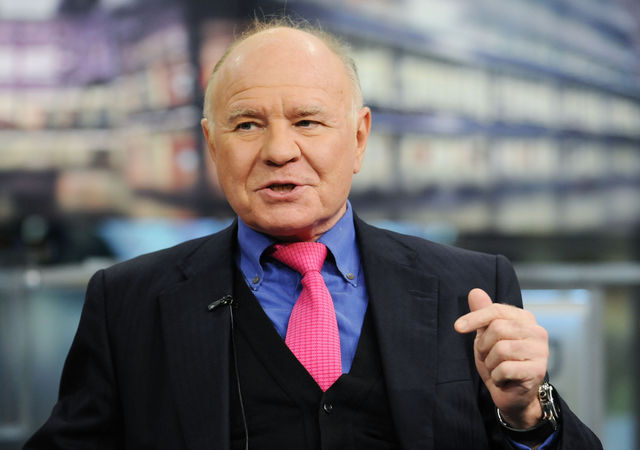
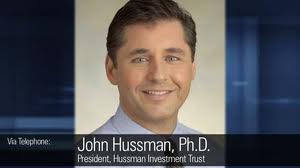
By the word “we” I mean equity investors. And, if we are on the iceberg, it may just be the tip of this bull market’s magnitude that we are seeing above the water line. To continue the analogy, those left on the ill-fated Titanic are the bears, including such notables as Marc Faber, Harry Dent, Jim Rodgers and John Hussman.

Speaking of John Hussman …
Professor Hussman gave me the title of one of my most viewed posts back in 2014 … This bubble is “beyond 1929 and 2007”. At the time of Hussman’s dire warning the S&P 500 stood at about 1950. Subsequently, the market made several unsuccessful attempts to break below 1800 (i.e. less than 8% corrections from the dire warning level). Of course, we got slapped soundly in January/ February of last year … a very tradable move, but most of us are not adept traders. However, if you had bought the “bubble” article, your principal was never much at risk. Staying the course for the 2 1/2 years would have netted you about 17% before dividends … significantly better than a CD, money market fund or the 2.5% yield on the UST 10-year note available at that time. Right now, the yield on the 10-year stands at 2.36%, despite warnings by many that the market would be “toast” once the Fed started raising interest rates. In the sad case of Hussman, he has been bearish on the market since 2009. Ergo, his former titanic reputation has slammed into the iceberg.

Is there a catastrophic iceberg in our future?
Absolutely. This is a given in the course of market events. However, these icebergs are few and far between. They form as the result of extreme leverage, over-extension of credit (to less-than creditworthy borrowers) and speculation … the stuff 1929 and 2007 were made of. We have to forget the hard lessons in the previous debacle. If you lost your shirt in the “tech bubble,” I’m sorry, but that was not “catastrophic.” The speculation was there but the scope of the bubble was very narrow. From March 2000 until September 2001 (pre 9/11/2001) the tech-laden NASDAQ composite index dropped 70% (5132 to 1499) with the S&P 500 33% (1550 to 1040). After September 11, 2001 (the psychological coup de grace for this cyclical bear) the NASDAQ dropped another 7% (1499) with the S&P down 17% (775). This was a true “Black Swan” event. As bad as this was, it was not the life-threatening event that blew up in 2008. We had recovered all the way back to 1550 on the S&P, up 100%. That is when all of the above-mentioned ingredients (extreme leverage, over-extension of credit and speculation) kicked in. Without proper policy intervention, we could have been in for Great Depression II. Fortunately, timely and proper measures were taken. The end result is that we have all been chastened. New policies (Dodd -Frank) have been put in place to counter these excesses in the future, just as they were after the 1929 crash. It only took us 66 years to forget the lessons learned from that disaster (the Congress gutted Glass-Steagall in 1999). Do not be confused. We will forget again. There will be another crisis. As many have waited, a lot of potential market profits have have been forgone. It just may take some time to erase the 2008 tapes … tapes that are still keeping many out of the market, cowering on the sidelines.
A final note–by 2007 the NASDAQ more than doubled from its lows (2800), it never came close to its previous speculative peak (5132). It would take nine more years to eclipse that number.
As we enter the New Year the media and punditry continue to look backward.
Accept for the hoped-for bonanza supposedly coming from the soon-to-be Trump administration, we enter 2017 with the same Big Concerns as we parted 2016 with … Fed policy–how many rate increases and when, a long-in-the-tooth tepid economic recovery (is a recession lurking?) and valuation which seems high to some. Add to this list a corollary to the new administrations proposed dose of fiscal stimulus, equating to a resurgence of inflation and higher interest rates and you have some real potent market killers in the road ahead. As you can see, not much has changed. We have been hearing these concerns for years. I’ve been writing about them since February of 2013 (S&P 500 1514), 50% ago.

As the worries haven’t changed, neither has the sage cautionary advice
One such sage, Mohamed El-Erian has been showing up a lot lately. Here’s a little something from Mohamed while he was still CEO and co-CIO along with Bill Gross of PIMCO (Growth is not coming fast enough–“Pull back from risk.” (June 4, 2013). The entire kortsession.com post, “Be afraid, very afraid” might be worth your attention. It is a heaping portion of bad advice being given by so-called savvy investors. This has pretty much been El-Erian’s approach (and that of former partner Gross) since that time. Both have been very cautious, to negative, on the market for years. This is a mid-year 2016 El-Erian (now Chief Economic Advisor at Allianz-PIMCO’s parent company) commentary from kortsession.com post, “El-Erian’s Warning to The World.” (May 12,2016)
My lead was as follows:
“Mohamed El-Erian, Allianz’s Chief Economic Advisor, thinks that most investors, institutions and retail, are operating under the assumption that there will be no more Fed Fund rate increases this year.
His take is that there are likely to be two more in calendar 2016. OMG! Of course, my reaction is, who cares?”
Here’s the latest, “El-Erian: It’s time to reduce risk, …” (just like it was time to reduce 3 1/2 years ago). Oh well, maybe like a stopped clock he will be right this time. Oh yes, please listen to the questions. These people (CNBC staffers) know his track record, yet they ask El-Erian questions as though he might actually have the right answers … Amazing! Again, reliance on the financial media and so-called experts can be, and usually is, hazardous to your financial health.
But I have digressed. Back to my initial question. I believe the market is the iceberg. Icebergs calve (corrections and cyclical bear markets). I believe the secular bull market to be intact. We become the Titanic when we forget the lessons about extreme leverage, over-extension of credit (to less-than creditworthy borrowers) and speculation.
What’s your take?
The information presented in kortsessions.com represents my own opinions and does not contain recommendations for any particular investment or securities. I may, from time to time, mention certain securities for illustrative purpose, names where I personally hold positions. These are not meant to be construed as recommendations to BUY or SELL. All investments and strategies should be undertaken only after careful consideration of suitability based on the risks, tolerance for risk and personal financial situation.