Categories
Financial, Stock Investment

Gridlock is Good!

Gridlock good?

Gridlock is good because when Congress is tied up in knots they can’t do anything to hurt us. This idea has been verified by the market many times over the past 25 years.

The Clinton Administration 1993-2001

William Jefferson Clinton

Mr. and Mrs. Clinton got off to a rocky start, even with a Democratic Congress in place the first two years of their administration … Mrs. Clinton as the non-elected person in charge of President Clinton’s healthcare initiative and the President over the issue of gays in the military (on both issues they were ahead of their time). After the Republicans regained control of Congress in 1995 most everything they sent to the President, especially anything that required additional spending, was vetoed. Essentially, Clinton out-Republicaned the Republicans as a fiscal conservative. The economy roared. Interest rates fell. We ran a surplus and the S&P 500 ended the decade with an 18% compounded rate of return. Just one small problem … at the end of the decade they found common ground in banking reform. Gramm, Leach, Bliley (1999) replaced Glass–Steagle (1933) and the table was set for the 2007/2008 financial crisis.

The George W. Bush Administration 2001-2009

George W. Bush

Mr. Bush had a Republican controlled Congress for his first term in office. After a justifiable attack on al-qaeda in Afghanistan the administration turned its attention to Iraq. Republicans and Democrats alike went along with that invasion. We are still sending our young men and women into harms way in both countries.

Last, but not least–the Obama Administration 2009-2017

Barack Obama

With the Democrats in control of both houses in 2009 and 2010 President Obama was able to push through the Affordable Care Act (A.K.A. – Obamacare). This was a boon to 2o million Americans, who otherwise could not afford insurance or were disqualified due to pre-existing conditions. Many other Americans, however, faced higher premiums, shrinking insurance and provider options. To those on the short end of the stick, I’m certain gridlock would have been their preferable form of government.

We’ve been in a state of continuous gridlock in this country since the 2010 mid-terms (including the first 117 days of the Trump administration) and it has not been so bad. Since November 2011 the S&P 500, as a proxy for the economy, has risen more than 90%. 

So, why the fuss over the most recent revelations in Trump vs. Comey?

Donald Trump

I’m not sure. Obviously it is not, or should not be, about postponement (due to investigation preoccupation) of the Trump agenda. If that were the case, it should have hit the market months ago, as it was very apparent that this administration’s own actions and distractions had become the biggest impediments to any potential legislative progress.

So, why the fuss? The pundits and talking heads, for some reason, always have to have a reason for any drama in the market (today’s a 1.8% drop in the S&P and 2.57% drop in the NASDAQ). They are here to engage, not to inform. Today’s market drama really isn’t dramatic. These declines are tiny moves off record highs. Sure, it may be the beginning of a more significant correction. That would be normal, too.

Importantly, you should not be setting your market course based on the latest political news or based on your own reaction to partisan political commentary, commentary designed to make points versus the opposition rather than enlighten and get at the truth. 

“If Trump resigned tomorrow, the Dow would go up 1000 point.” (Jeremy Siegel)

Jeremy Siegel

This header and link is to a quote from professor Jeremy Siegel, University of Pennsylvania, Wharton School of Finance. I’m not sure about the prediction (the market is hard to predict, period) but I would not disagree with a conclusion that it would be a positive for the market. Stay tuned and don’t panic.

What is your take?

The information presented in kortsessions.com represents my own opinions and does not contain recommendations for any particular investment or securities.  I may, from time to time, mention certain securities for illustrative purpose, names where I personally hold positions.  These are not meant to be construed as recommendations to BUY or SELL.  All investments and strategies should be undertaken only after careful consideration of suitability based on the risks, tolerance for risk and personal financial situation.
Categories
Financial, Stock Investment

2016–Parting Thoughts + Trump vs. Coolidge


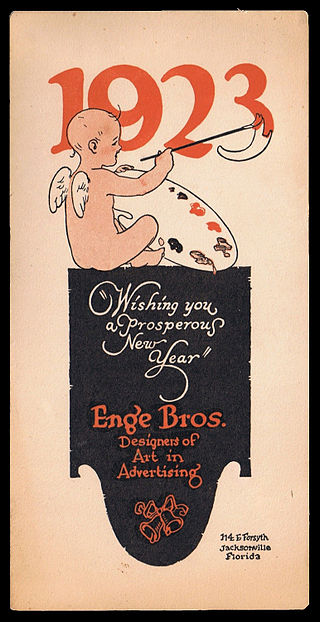
Year one of the Coolidge era
Year one of the Coolidge presidency

As we approach the end of 2016, we’ve seen another year of record highs for the market and continued questions on the part of many as to why this is happening. With each passing day there continued to be warnings from the media and pundits that the market was on the verge of a correction or, worse yet, a major bloodletting. Reasons given included the fact that our economic expansion (over six-years-old) is one of the longest in recorded history, valuations (including Shiller’s CAPE PE) are stretched and the animal spirits (speculation) are back up–everyone is buying with abandon. Of course, none of this squares with what we have observe except the age of the economic expansion. Regarding economic expansions they normally do not die of old age.

Another constant is the media’s effort to sell us on the bad news–bad news that they sometimes cook up via obfuscation, conflation and misrepresentation. The glass is never close to half-full. One such attempt came last week in an interview with professor Robert Shiller on the topic of his often cited  (by the bears) cyclically adjusted price earnings ratio (CAPE). Try as they might, CNBC interviewers Carl Quintanilla and Jon Fortt could not get Shiller to really be negative on the market, even though his CAPE ratio was in excess of its red-light level ( a CAPE of 27). You may find a more complete discussion of the value (or lack thereof) of CAPE in “CNBC–“Market indicator hits extreme last seen before plunges in 1929, 2000 and 2008.”

Also in the interview, Shiller said he would not be substantially reducing his equity exposure at this time. That was not mentioned in the story below that summarizes the interview  —  “Trump rally could be like Coolidge’s roaring ’20s before depression, … “  They completely cut out the section of the video interview that talked about the Coolidge administration, the roaring twenties and subsequent Great Depression. Why? Because, it was not that negative. Yes, Shiller compared the incoming Trump administration to the Coolidge years. They are philosophically very attuned. Yes, it did end badly. But he also pointed out we are very early in the game for Mr. Trump. It took eight years for the Coolidge bull market to come to its bad end. There was no warning in this video.

Calvin Coolidge
Calvin Coolidge

What were the similarities Trump vs. Coolidge?

It was all about policy, not personality. Coolidge was a man on the quiet side who was reputed to have a wry wit.

The Warren Harding (Harding died in 1923)/ Calvin Coolidge ticket in 1920, ran on the slogan:

“Less government in business, more business in government”

As can be seen in the Wikipedia quote below, Harding and Coolidge had a great deal in common with current Republican proposals to “fix” our lethargic economy.

“Harding’s Treasury Secretary, Andrew Mellon, ordered a study which demonstrated historically that, as income tax rates were increased, money was driven underground or abroad. Mellon concluded that lower rates would increase tax revenues.[147][148] Based on this advice, Harding cut taxes, starting in 1922. The top marginal rate was reduced annually in four stages from 73% in 1921 to 25% in 1925. Taxes were cut for lower incomes starting in 1923. The lower rates substantially increased the money flowing to the treasury. They also pushed massive deregulation and federal spending as a share of GDP fell from 6.5% to 3.5%. By late 1922 the economy began to turn around. Unemployment was pared from its 1921 high of 12% to an average of 3.3% for the remainder of the decade. The misery index which is a combination of unemployment and inflation had its sharpest decline in U.S. history under President Harding. Wages, profits, and productivity all made substantial gains as well real GDP average at over 5% during the 1920s. Libertarian historian Thomas Woods contends that the tax cuts implemented by President Harding ended the Depression of 1920–21 and were responsible for creating a decade-long expansion. Historians Larry Schweikart and Michael Allen argue that, ‘Mellon’s tax policies set the stage for the most amazing growth yet seen in America’s already impressive economy.’[149]”

How did the market roar in the ’20s?
Between March 1, 1921 and September 1, 1929 the S&P move from 6.88 to 31.3, a gain of 355%.
I’m not sure how much we can draw from comparing now to the 1920s. There were only 120 million Americans at the time. We were starting on an unprecedented era of economic growth, on our way to becoming the “arsenal of democracy” during World War II. We were becoming a manufacturing powerhouse.
However, I never expected Donald Trump had an ice-cube’s chance in hell of becoming president. And, I was stunned by the market’s reaction to his election. By the same token I have felt, and have been espousing, the last few years that this market had legs. The post election price action has reinforced that belief. Maybe this look back at the Coolidge years can give some clarity as to why it may have further to go.
The Donald
Donald J Trump
In the meantime, Mr. Trump and Dr. Yellen, if you are listening we know why it ended so badly … Smoot-Hawley (1930) protectionism and free and easy credit, 10% margin on stock purchases. That free and Easy credit always seems to be the end of us.
Dr. Yellen--Is she losing patience?
Dr. Yellen
Bottom line: I still think we have further to go, not without mishap and not straight up, but we still have upside.
 
On that note, thank you so much for your readership. Best wishes for a Happy, Healthy and Prosperous New Year!!
Bill Kort

The information presented in kortsessions.com represents my own opinions and does not contain recommendations for any particular investment or securities.  I may, from time to time, mention certain securities for illustrative purpose, names where I personally hold positions.  These are not meant to be construed as recommendations to BUY or SELL.  All investments and strategies should be undertaken only after careful consideration of suitability based on the risks, tolerance for risk and personal financial situation. 


Categories
Financial, Stock Investment

I Need New Glasses–That Black Swan Was White!

Never look a white swan in the mouth!
Never look a gift swan in the mouth!

I also need to ignore the emotion of the political arena, not allowing it to color my thought process on investing.  This was clearly a problem for many investors after the election of President Obama in 2008. The fear that he would not have the experience, intellect or chops to deal with the financial crises kept many investors away from the market then and for many years after, even though (in hindsight) a great secular bull market began just weeks after his inauguration … a bull that has seen all the major stock indices eclipse their former all-time highs.

My knee-jerk reaction, late election night November 8, was to assume that a Trump victory would be a bad thing for the market because it would create uncertainty (“Ladies and Gentlemen, We have a Black Swan”). We did not know which or how many of the things he had promised he might actually  try to do; but, Trump the candidate appeared erratic and unpredictable. I believed uncertainty about the candidate would create market weakness. Was I ever Wrong!

450px-Museum_of_Lincolnshire_Life,_Lincoln,_England_-_DSCF1724

Au contraire mes amis

It did create weakness early Wednesday morning, about two hour’s worth, down no more than about 250 Dow points before it turned and roared upward, finishing the week at a new all-time high for the Dow. Clearly the market participants have taken the president elect at his word on promises, believing that certain of his economic proposals are going to happen — tax reform, corporate repatriation of $2+ trillion in cash held overseas (taxed at very modest rate), major infrastructure spending, decreased regulatory burden (no more Dodd-Frank) and an end to the Affordable Care Act. The street seems not to believe that trade barriers will be erected. Oh yes, and all of the bad things that might happen had Mrs. Clinton been elected would be avoided (pharma took off, as did financials).  The way the market acted last week all of this appears to be a fait accompli (not).

Of course, no one really knows how all of this will evolve in that great sausage factory known as Washington D.C. However, we might just be getting a glimmer from from Seeking Alpha quoting a Wall Street Journal article on bank regulation (Trump team tempers expectation on Dodd-Frank) or this item from The New York Times, “Donald Tump Says He May Keep Parts of Obama Health Care Act.” Here’s one more from Sunday’s New York Times that might help explain last week’s rally: “Calamity to Charm: Trump Rally Explained.”

Finally, for those of you fretting about the impact of Federal Reserve rate increases (a subject we’ve dealt with many times in this Blog), the yield on the ten-year U.S. Treasury note ballooned 32 basis points last week (up 17.6%) closing at 2.138%. The low was 1.37% and was hit after the Brexit vote, just four months ago.  Last week the Dow Jones Industrials had their best week since 2011. Obviously, the market believes Mr. Trump equals accelerating growth for the U.S. economy and growth trumps higher rates.

Whether or not the acceleration comes at the pace forecasted by the Trump people, I am not going to argue with the market, nor am I going to let my political biases get in the way of making money.

What is your take?

The information presented in kortsessions.com represents my own opinions and does not contain recommendations for any particular investment or securities.  I may, from time to time, mention certain securities for illustrative purpose, names where I personally hold positions.  These are not meant to be construed as recommendations to BUY or SELL.  All investments and strategies should be undertaken only after careful consideration of suitability based on the risks, tolerance for risk and personal financial situation. 

Categories
Uncategorized

Our ‘Long Day’s Journey Into Night’ is near an end

gilbert_stuart_williamstown_portrait_of_george_washington

I believe this election cycle to be a nightmare and the end result of the extreme partisanship the has taken over the political landscape in the United States. The “Father of our Country” and first President George Washington had some very prescient things to say about political parties and partisanship in his farewell address 1796. I believe it to be a must read as the country approaches this most important decision.

… “I have already intimated to you the danger of parties in the State, with particular reference to the founding of them on geographical discriminations. Let me now take a more comprehensive view, and warn you in the most solemn manner against the baneful effects of the spirit of party generally. 

This spirit, unfortunately, is inseparable from our nature, having its root in the strongest passions of the human mind. It exists under different shapes in all governments, more or less stifled, controlled, or repressed; but, in those of the popular form, it is seen in its greatest rankness, and is truly their worst enemy. 

The alternate domination of one faction over another, sharpened by the spirit of revenge, natural to party dissension, which in different ages and countries has perpetrated the most horrid enormities, is itself a frightful despotism. But this leads at length to a more formal and permanent despotism. The disorders and miseries which result gradually incline the minds of men to seek security and repose in the absolute power of an individual; and sooner or later the chief of some prevailing faction, more able or more fortunate than his competitors, turns this disposition to the purposes of his own elevation, on the ruins of public liberty. 

Without looking forward to an extremity of this kind (which nevertheless ought not to be entirely out of sight), the common and continual mischiefs of the spirit of party are sufficient to make it the interest and duty of a wise people to discourage and restrain it.” …

George Washington

Respectfully submitted,


Bill Kort

P.S. Sorry about getting political again. I know this is a diversion from our normal work on the stock market a the media. I just could not help myself.

Categories
Financial, Stock Investment

Nightmare on Pennsylvania Avenue

fbi_badge

To be exact, 935 Pennsylvania Avenue NW, Washington, D.C. (FBI Headquarters), the location from which this nightmare emanated. It is the Clinton Presidential Campaign’s nightmare, a late October surprise– 11 days before the general election. It sucked the air out of every other piece of news on Friday, including some very good news on the economy and third quarter GDP. This was a twist in the plot that even  Stephen King or Rod Serling might not have cooked up.

The Dow Jones Industrials swung from a positive 87 points to a negative 85 point reading (a 172 point swing) before closing down 8.49. This letter from FBI dDirector James Comey to members of the House and Senate Republican committee leadership is what put the breaks on:

“The FBI has learned of the existence of emails that appear to be pertinent to the investigation (of former Secretary Clinton’s email server)… “Although the FBI cannot assess whether or not this material may be significant and I cannot predict how long it will take to complete this work, I believe it is important to update your committee …” (FBI Director, James Comey). 

As my mother-in-law would say, “Bog-Minding.”

So, what did we miss?

magnifying_glass_cc0-svg

We missed a 2.9% jump in third quarter GDP … The largest increase in the past two years and above the 2.5% estimate. The naysayers will point out that this report follows several quarters of pretty punk performance in that number, but that is what naysayers do … even as their continuing negative pronouncements fail to materialize.

One of the reasons for dire predictions is the potential that the Federal Reserve will move to raise interest rates again this year, which all know would be a disaster (NOT). Even before Friday’s return to ‘Clinton email Hell’, rate concerns were weighing on the market accentuated, of course, by media speculation the next move might come as early as this week … “How the Fed could pull a November surprise”–Patti Dom, CNBC, Weds. October 26,2016.

The stock market has been drifting lower over the past month in part because of this concern, and the bond market has been on its heels as prices have fallen and rates are up. In the case of the 10-year U.S. Treasury note the rate is up some 30 basis points (1.55% to 1.85%). So, when the market was rallying on the GDP news of Friday, the ten-year was falling again, yielding almost 1.87% when news of Mr. Comey’s letter hit the tape. This upward action in the market while rates were on the uptick gives credence to the idea that rising rates in a stronger economy would not spell curtains for the bull market. This is a theme I’ve been highlighting for some time (most recently– “Rising Rates–A Knockout Blow?”). For further examination of this question you may want to check out this piece, “A Century of Stock-Bond Correlations.”

What about earnings season? How are we doing?

500px-cifrao_symbol-svg

As of Friday, October 28, according to FACTSET EARNINGS INSIGHT, 58% of S&P companies have reported. Of those 74% have reported earnings beats with 58% reporting revenue beats. The blended earnings growth of those already reporting comes in at 1.6%. “If the index reports growth in earnings for the quarter, it will mark the first time the index has seen year-over-year growth in earnings since Q1 2015 (0.5%).” Remember, at the beginning of this quarter many were forecasting down earnings for the S&P and a continuation of the earnings recession (which was largely due to losses in the energy sector and the impact of a strong dollar rather than widespread economic weakness).

Finally, I try to avoid politics with kortsessions, but …

The market winced last Friday on the revelation of more potential email trouble for Hillary Clinton (the nightmare). It winced on the prospect that Donald Trump might, again, have an opening, a small but potential opening on a path to the Presidency. For those of you on the lookout for a Black Swan, something that would really roil the markets, I believe a Trump victory November 8th, would definitely be such an event. Trump is viewed by his supporters as a ‘change’ candidate.Part of the attraction is his unpredictability, which may be refreshing to some but not to Wall Street. In the eyes of many he ‘chaos’ is the ‘chaos’ candidate. Chaos breeds uncertainty and uncertainty is bad for the market.

Bottom Line: The economy and market both appear to be doing OK, despite Friday’s “Nightmare on Pennsylvania Avenue” and the fright it sent through the market about the possibility of a Trump Presidency.

What is your take?

The information presented in kortsessions.com represents my own opinions and does not contain recommendations for any particular investment or securities.  I may, from time to time, mention certain securities for illustrative purpose, names where I personally hold positions.  These are not meant to be construed as recommendations to BUY or SELL.  All investments and strategies should be undertaken only after careful consideration of suitability based on the risks, tolerance for risk and personal financial situation.