— Media fright fest … This week they turned up the volume on old news, sawing sawdust again.
— Inflation … Should it really be making us and the market crazy?
— War in Eastern Europe … What’s the impact on iPhone demand?
Media Fright fest
If I were the head of a major media empire last week I would have told myself that, finally, I have reached a state of perfect happiness, nirvana. What could be better … blow-out CPI numbers and concomitant fear of the Fed, the dogs of war about to be released in Eastern Europe and the continuing nagging concern about a pandemic going endemic. Bad news sells!
The news seemed to grab everyone’s attention Friday with the bond market taking the US Treasury 10-year yield up to 2.063% after a so-called hot CPI number (up 7.5% year-over-year). Then there were reports of the the United States, UK and Israel warning their citizenry to leave the Ukraine immediately in fear of an imminent Russian invasion.
Everybody wanted to get into the act, especially on the inflation front. Two well-know economists, Joy Reid and Tucker Carlson gave us the bad news. Reid’s take, “prices will keep going higher and higher until the consumer says ‘enough!’” She also blames corporate greed. Carlson’s point of view is “the reality of inflation is much worse than the Consumer Price Index suggests.” He lays the blame at the feet of a certain political party. Of course, all of the above is opinion and not necessarily based on a strong grasp of (or desire to state) the underlying causes of our current inflation dilemma.
Should inflation really be making us and the market crazy?
No … it should not. I’ve discussed this many times before in kortsessions.com. We are coming out of a secular period of low inflation driven by globalization (moving production to lower cost markets) into a period of increasing inflation driven by newly-minted consumer classes around the world, shifting of supply chains to more secure venues, underinvestment in commodity production and significant money printing. This is also likely to be secular.
However, the current spike in prices comes from a different source supply chain disruptions caused by the pandemic that are still not resolved. One of my favoritereads is the work of Steve Wells (aka–The Fear and Greed Trader). Steve sees the problem differently than many who advocate for tightening on the part of the Fed. He believes and I think correctly,
Another really good source that I have used over the years is Scott Grannis (aka Califia Beach Pundit), chief economist 1979-2007 at Western Asset Management (Wamco). Scott’s take may give you the opportunity to breath a little easier after last week’s broadside of negativity. He believes that a “Fed tightening is not a near-term threat.”
When considering market impact on hefty issues like this I like to ask myself “What’s the worst thing that can happen with the Russo-Ukrainian conflict?” The worst case is that it boils down to a nuclear conflagration. If that’s the case, it will not matter if you pull money off the table now or later. Either way the money will be of little use in the aftermath. In terms of the worst thing that could happen to Vladimir Putin, he could end up like “Le Petit Corporal”(Napoleon) or the “Bohemian corporal” (Adolph Hitler). My sense is that the Ukrainians (backed by Western arms and sanctions) will not make the Russians army or the Russian people feel very comfortable.
My question to investors is how will this impact the sale of iPhones, Ford F150s or Boeing (supplier to many militaries of the tools of the trade)? There are about 7.8 billion potential customers for these goods on planet Earth. The entire population of both Russia and Ukraine would represent only 2% of this total. Can we grow and prosper while they are at each other? Methinks yes.
Friday afternoon the market seemed to disagree with the above assessment on news that the Brits and Israelis were warning their nationals to leave Ukraine. The S&P 500 was down 1.9% and Nasdaq off nearly 2.7%. The bond market went into flight-to-safety mode as the yield on the 10-year UST, seen as high as 2.06% earlier in the day (on inflation fears), closed with the note yielding 1.918%, down 11 basis points on day (with a peak to trough swing of 15 basis points). I am still not sure what any of this has to do with iPhone demand. Apple closed down 2%.
Final thoughts
If I did not make myself clear above, much of the 7.5% year-over-year inflation we have experienced is due to supply chain disruption. Auto prices were the largest component in last year’s inflation rate. New car prices were up 12.2%. Because new vehicles were in short supply due to chip shortages, used vehicles went through the roof, up 40.5% year-over-year. When people were using the word “transient” to describe the spike it was thought these disruptions would have left us by now. They have not. Ford just closed their F150 production line in Kansas City due to chip shortages.
Ford is not alone in its supply issues. Importantly, this has been a big part of the 2021 inflation picture. This does not mean that we are heading back to pre-pandemic inflation numbers. We will still have to deal with wage inflation, which I believe to be a positive and not going away, and commodity inflation. The numbers just won’t be as alarming or eye-popping. The media and pundits continue to do the impossible, sawing sawdust, repackaging the same old stories and marketing them as new information. Don’t let them scare you out of your stocks.
What do you think?
The information presented in kortsessions.com represents my own opinions and does not contain recommendations for any particular investment or securities. I may, from time to time, mention certain securities for illustrative purpose, names where I personally hold positions. These are not meant to be construed as recommendations to BUY or SELL. All investments and strategies should be undertaken only after careful consideration of suitability based on the risks, tolerance for risk and personal financial situation.
Maybe I’m missing something, but the way certain interest sensitive sectors of the market are acting, especially those with leverage (MLPs, REITs, Utilities and BDCs), you would think a major bump in interest rates (maybe even tightening by the Fed) is imminent. Can you tell me from whence this is coming? The Fed is not delivering this message. The economy is fine, but not red-hot. Inflation seems to be under control.
OK. If you can’t answer my first question, how about this one? What harm would a quarter point increase in the Fed Funds rate (from essentially zero) do to the economy? Or, for that matter, what damage would further gradual rate increases do, if taken over the next 12 to 18 months? Historically, a one or one and half percent fed fund rate would still be way below the level of Federal Funds that we have endured and prospered under over the past 6 decades. For those that doubt the veracity of my assertion, please check out this report from the St. Louis Fed on Effective Fed Fund Rates since 1954. BTW, the Dow Jones Industrial Average closed out 1954 at 404.39. It closed Friday, October 2, at 16,472.37.
Another way to address these questions might consideration of two more questions:
1) What would be the impact of a 1.5% FF rate increase on longer bond rates (10-year U.S. Treasury rates)?
Based on recent history, a worse case estimate might be a one-to-one increase in the 10-year. Say to 3.50%. More likely, it would be much less than that (maybe even lower), due to the pervasive fear that exists in the market. There are those that believe even a small move in rates would throw us into a recession or worse (see comments below from Carl Icahn). Many are fearful that we are on the cusp of another 2008 event, even if they can’t exactly explain why … a flight to safety. Ergo, rates on the long-end could remain low for a long time.
2) Another looming question–What is the potential impact of higher rates on business capital spending, individual consumption and housing?
The impact of moderately higher interest rates, as it pertains to capital spending, should be de minimis. If you are operating on that tight a tolerance (i.e. where the additional 1.5% would make the project uneconomical), maybe the project should not be undertaken anyway. Also, as it pertains to capital projects and home ownership, maybe the threat of rising rates moves those who are ‘on the dime’ to take action … do it now before rates go up.
3) Finally, would 3.5% rate on a 10-year bond be stiff competition for a stock yielding 3%, a stock where dividends and earning might grow over time?
From a purely competitive standpoint, you don’t need fast growth to make the stock compelling. Four or five percent will do quite nicely. So, the answer to the bond being stiff competition for a stock would be, probably not, especially as we hold the view that rates will not move up that rapidly (again, they could easily go lower).
So, why are we so obsessed by this?
It is because the media and punditry areobsessed. Of course, they do not provide history or perspective, except when they say this will be the first time in nine years that the Fed will raise rates! And, then they will leave you with the distinct impression that raising rates is a bad thing, and that the fate of the world hangs in the balance. This is how they get paid! If you go back, even in recent history, and see how many times they got it wrong, you will be appalled. Remember these world-ending events?
Passage of The Affordable Care Act (AKA, Obamacare)–It would put a lot of companies out of business and people out of work,
The Sequester–numerous government shutdowns and the dreadful end to Quantitative Easing.
The market made new all-time highs after each of these, much-hyped events! The new ‘worse thing’ that could possibly happen is Lift Off, the Fed raising the Fed Funds rate 1/4 point. Give me a break, or as I requested earlier, “Help!” me understand why this time it will be different.,,why the media might have it right.
‘Piling on’ part II
Jeffrey Gundlach
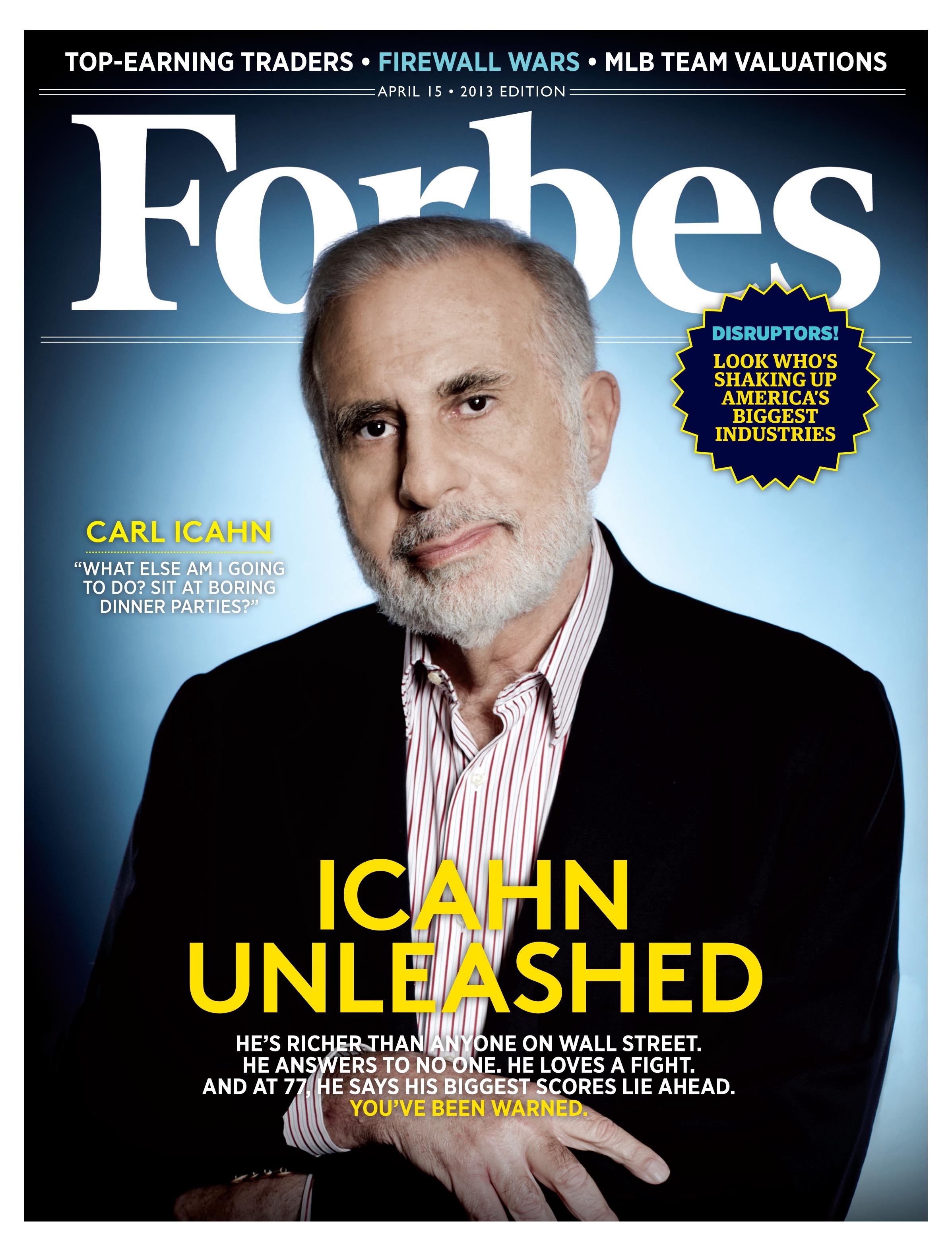
With the market on the ropes earlier last week, two well-known pundits (hedge fund operators), Carl Icahn and Jeffrey Gundlach, tried to give it their best shots to take the market lower. Mr. Icahn is seeing “danger ahead”, the potential of another 2007 bubble bursting, was out warning about the evils of debt, financial engineering (something he is expert at). He has great things to say about Apple (a very large Icahn position), while badmouthing others using similar policies. So, he likes AAPL and must be short other equities and junk bonds. This is ‘talking your own book’ in the highest order. William Watts, a contributor to MarketWatch, takes Icahn to task in “Why Icahn’s Danger Ahead video is funny, not scary.” Then there is Doubline Capital’s Jeffrey Gundlach, essentially out doing the same thing in this little piece, “Doubleline’s Gundlach: Expect ‘another down wave’. “ This is not new news. It is just a couple of guys with big reputations talking their own books … piling on.
What’s your take?
The information presented in kortsessions.com represents my own opinions and does not contain recommendations for any particular investment or securities. I may, from time to time, mention certain securities for illustrative purpose, names where I personally hold positions. These are not meant to be construed as recommendations to BUY or SELL. All investments and strategies should be undertaken only after careful consideration of suitability based on the risks, tolerance for risk and personal financial situation.
Where’s Putin? He hasn’t been seen in public for ten days!
Maybe horsing around in Crimea?
and
Will the word “patient” be removed from this week’s Fed policy statement?
Dr. Yellen–Is she losing patience?
My answer to question number one: I don’t know and I don’t care. As to question number two, my answer is a question: why should we care? As there will never be a perfect time to raise rates, which the removal of the word “patient” would indicate might be coming. Let us begin, even though there is a choir out there singing about supposed weakness (which I question) in the U.S. economy and the usual sluggishness in Europe, as reasons to continue to delay the inevitable.
Jeffrey Gundlach The ‘new’ Bond King Long live the king!
For some reason there are those who believe there will be a ‘right time,’ people like Jeffrey Gundlach (the new “bond King”). Gundlach was quoted in Barron’s this weekend, trumpeting that this was NOT that time.
But, given the growing signs of weakness at home and abroad, hiking rates in the near term would make the folks at the Fed a “bunch of blockheads,” contends Jeffrey Gundlach, the head of the DoubleLine Asset Management complex. (If you are a Wall Street Journal subscriber, you may find link to Barron’s article here —“Global Markets vs. Reality: The Great Divide” )
Bill Gross The ‘old’ Bond King
This rhetoric is reminiscent of that which a former “Bond King”, Bill Gross, used to throw at the Fed before his fall from grace at the firm he co-founded, PIMCO. It seems to me an example of the license people who have had great success (ergo, superior knowledge) feel they have to make broad pronouncements. Even though Gundlach is highly knowledgeable, his expression of opinion seemed more out there to grab a headline than provide critical guidance as to when the time would be ideal to raise rates, just a little bit. And, frankly folks, that is all we are talking about … just a smidge.
1937 Redux
In the same article referenced above, it was noted that some believe we could be headed for same fate that the U.S. economy endured when the Fed tightened up in 1937, Great Depression part II. Give me a break! We are talking about a potential fifty or seventy-five basis point rise in short-term rates from near zero, not tightening credit. Remember this was the same type of commentary that was floating around as the Fed was tapering QE; and, also when Quantitative Easing was halted last Fall. Amazing stuff, and Barron’s over the years has been viewed as a credible source on financial matters.
Does this try your patience?
The information presented in kortsessions.com represents my own opinions and does not contain recommendations for any particular investment or securities. I may, from time to time, mention certain securities for illustrative purpose, names where I personally hold positions. These are not meant to be construed as recommendations to BUY or SELL. All investments and strategies should be undertaken only after careful consideration of suitability based on the risks, tolerance for risk and personal financial situation.