If the above motto is not emblazoned over the entrance to CNBC world headquarters it should be because that is exactly what they do! Today is a perfect example. There really is not much going on save what should be the wrap up to a fairly routine Fed meeting, a meeting where no significant policy or rhetoric changes are expected.
And so it goes … Jeff Cox and the minions at CNBC continue to pander to the dark side, the side of human nature that tends to flock to bad news while ignoring the plethora of economic and business positives right before our very eyes. Again, bad news sells … if it bleeds it leads. They sow the seeds of bad news where ever they can because your attention equals dollars in their pockets. Ignoring their siren calls to the dark side will put money in yours.
Importantly, it is not just CNBC using fear and negativity to hold your attention. It is endemic to most media sources!
What’s your take?
P.S. Nothing in Mr. Powell’s comments this afternoon represented any change from the dovish Fed policy. In fact it was a reinforcement. But market participants, both human and computerized variants, love to have things to obsess about. Today that ‘thing’ could have been comments by the Fed about world economies weakening. These may have been the trigger for the late day minor selloff in stocks and they may have been reinforced by FedEx CEO Fred Smith who echoed concerns about weakening foreign markets and the potential negative impact this may have on FedEx earnings (culprits–US/China trade friction and Brexit). None of this is new news (though the media may spin it that way), and in the case of trade issues may be solved sooner rather than later. With the election coming the president needs both a strong economy and strong market to secure reelection. In the case of Brexit the vote for extension of the time period to come up with a deal would seem to move it to the back burner as a concern for the market. Then again the selloff may simply have been selling on the good news. WHO KNOWS? I believe you just need to stay the course.
The information presented in kortsessions.comrepresents my own opinions and does not contain recommendations for any particular investment or securities. I may, from time to time, mention certain securities for illustrative purpose, names where I personally hold positions. These are not meant to be construed as recommendations to BUY or SELL. All investments and strategies should be undertaken only after careful consideration of suitability based on the risks, tolerance for risk and personal financial situation.
It is September again and the perennially negative are out worrying about the calendar.
“To paraphrase Mark Twain, September is a peculiarly dangerous month to speculate in stocks (Twain goes on to posit, to also paraphrase, so is every other month of the year). Since 1950, it has been the worst month of the year for the Dow and the S&P 500, with average respective declines of 0.7% and 0.5%, according to the Stock Trader’s Almanac, with similar dismal records for the Nasdaq and the Russell 1000 and 2000 in their shorter histories. September also has seen historic events, like 9/11 and the Lehman Brothers bankruptcy in 2008, which resulted in respective declines in the Dow of 11.1% and 6%, although the worst performing September was in 2002, which saw a 12.4% drop in the dot-com bust bear market.” Randall W. Forsyth –Barron’s
For good measure I am surprised Forsyth didn’t mention September 1929, the market peak leading into the Great Depression.
According to Ed Yardeni (Yardeni Research Inc.), since 1928 the month of September has been the most unprofitable month of the year to own stocks (down an average of 1%). February and May over the same 90 year period have also been losers, down an average of 1/10 of one percent each. On the other, hand the other 8 months of the year have averaged positive results during the 90-years. The main point here is that these data points are all noise and insignificant in the context of a Dow Jones Industrial Average that has risen from its 1929 high of 381.17 to a close last Friday of 25,964.82.ALL YOU HAD TO DO WAS BE THERE! — thru wars, natural disasters, depressions, recessions, etc. — ALL YOU HAD T0 DO WAS BE INVESTED IN A DIVERSE PORTFOLIO OF STOCKS.
It is truly sad that much of the financial media spends most of its time on the potential negatives associated with owning stocks (bad news sells) and very little on the wealth-creating machine that stock ownership is.
What’s your take?
The information presented in kortsessions.com represents my own opinions and does not contain recommendations for any particular investment strategies or securities. I may, from time to time, mention certain securities for illustrative purpose, names where I personally hold positions. These are not meant to be construed as recommendations to BUY or SELL. All investments and strategies should be undertaken only after careful consideration of suitability based on the risks, tolerance for risk and personal financial situation.
Unless we are headed into a hyper-inflationary period such as that we saw in the mid 1970s and early 1980s.
Inflation and Interest Rates
This is a nuanced situation. Most people writing about inflation and rates or programming computers that implement trading programs to react to news that might change their trajectory do not get the complexity of what they are writing about. They operate with the simple proposition that both are bad. Most have not studied the issues facing the market 40 years ago. Many were not even alive. A moderate increase in rates and inflation (not runaway) would be very beneficial. If you, in your heart-of-hearts, believe that type of severe environment is on our doorstep, and if you are really good at market-timing, be my guest … SELL!. If the moon, the sun and the stars align you will save yourself a lot of pain. If, on the other hand, inflation and rates move up at a gradual pace over the next few years you could be missing out on another wonderful leg up in the current bull market.
I’m in the moderate pace camp
Why? Because I believe we are in the beginning stage of coming out of a two decade period of severe deflationary pressures caused by the advent of world-wide competitive labor and capital markets … in a word, globalization. Globalization has kept wage growth in check in the developed world and it has kept pressure on manufacturers to keep prices low to compete with foreign made goods. In the case of US corporations global competitive pressures have removed an important tool from their growth tool box … PRICING. For most of the past 20 years corporations have had to rely on unit growth and financial engineering (mergers and acquisition and stock repurchases) to move the profit ball ahead. There has been no pricing. Globalization continues to be a drag on inflation and will probably continue to be so moving forward. This would bolster the case for a measured pace on the inflation front and, as the price of money in part depends on inflation, it would seem to auger well for moderately rising rates. My sense is, based on every Fed pronouncement I’ve heard, this is where the Fed’s collective judgement is today.
In the meantime most central banks, including the Fed, have been on a mission to re-stimulate some inflation. Remember, this is a good thing if it gives corporations some pricing power. Since the United States entered the re-inflation game much earlier than most world economies, we may begin to see the benefits earlier than most. Take this headline from Monday April 30, as an example: “McDonald’s shares soar as menu price increase feeds earnings beat.” McDonald’s stock rose almost 10 points (6.3%) on that news, closing up 4.2% on the week. And it was not just the US that made ‘”Mickey D’s” numbers. The strength was global. Although McDonald’s leads with its cheap-eats menu, it seems consumers are stepping up and paying higher prices for their premium offerings. The money printing may finally be working.
The important point here, as it pertains to future earnings for many companies, is that PRICING has been a missing ingredient in the profit equation. It may be on its way back and may provide significant future earnings upside surprises.
“Schizophrenia is a disabling, chronic, and severe mental illness that affects more than 21 million people around the world. Symptoms include hearing internal voices, having false beliefs, disorganized thoughts and behavior, being emotionally flat, and having hallucinations. These symptoms may leave a person feeling fearful and withdrawn. Their disorganized behavior can be perceived as incomprehensible or frightening to others.
People with schizophrenia may not make sense when they talk. They may sit for hours without moving or talking, or may seem like they are talking to themselves.”
Schizophrenia is obviously nothing to joke about. It is a serious mental disorder. However, there are certain symptomatic traits that the schizophrenic personality may have in common with the financial media. They are highlighted above and exemplified below.
Here are 2 headlines from the CNBC web site pre-market Friday, May 5. Both reflecting a reaction to the April Jobs Report … First the headline numbers from the Wall Street Journal.
“The U.S. added 164,000 new jobs in April, missing economist expectations of 195,000. But the unemployment rate fell to 3.9%, the lowest since 2000. Wage growth remained sluggish. Join us as we dig through the numbers.” (WSJ.com)
(Last Updated May 4, 2018 at 10:00 am ET)
This prompted a negative CNBC post on the market because the numbers missed consensus by a wide margin:
“US stocks set for negative open after jobs report misses expectations”
In fact, if you had been soaking up all the sage commentary from CNBC and its minions for the past week, this should have been greeted as positive as it indicated the economy was not running as hot as some who fear inflation might have thought and this might also indicate the Fed could go easier on its path to higher rates.
Instead they jumped to a negative, incorrect conclusion (the economy is weakening) versus their previous commentary.
Here is a link to the post from Friday morning. You may notice their message and headline changed significantly by the close:
They mention the jobs report, but not in a negative way, and plow on through to explanations of why the market ended up
more than 300 points …Amazing!
At the same time the above negative post hit …
CNBC on the bond side posted this:
“US 10-year Treasury yield hits two-week low after jobs report”
The bond guys took the report in a similar vain as evidence of a potential slow-down in the economy, a flight to safety, a rush to buy bonds … prices up and yields down.
Similarly, the link attached to this post in the morning led me to this article at the market’s close –-“Treasury yields mostly higher after jobs report.”They were selling bond. It was safe to go back in the market.
Sounds Schizophrenic to me (false beliefs, disorganized thoughts and behavior … may not make sense when they talk). More importantly it sounds totally stupid.
Finally, trust me on this, despite the constant noise from the media — Inflation in moderation is a good thing for earnings and moderately rising interest rates (coming off a crisis, low base) will not kill the economy or this bull market.
What is your take?
The information presented in kortsessions.com represents my own opinions and does not contain recommendations for any particular investment or securities. I may, from time to time, mention certain securities for illustrative purpose, names where I personally hold positions. These are not meant to be construed as recommendations to BUY or SELL. All investments and strategies should be undertaken only after careful consideration of suitability based on the risks, tolerance for risk and personal financial situation.
After 65 years of an armistice (signed July 27, 1953) the Korean War looks like it maybe heading to its conclusion with a full peace treaty … that is, of course, if the they and the other parties to the armistice, China and the United States, can come to terms. The optics of the historical meeting between South Korean President Moon Jae-In and KimJong-Un at Panmunjom in the demilitarized zone between North and South Korea give me hope, hope that this may represent the cooling of the perennial Asian geopolitical hot spot and a return to normalcy on the Korean Peninsula. This would represent a major positive and a major departure from the from the status quo.
The Market Doesn’t Care
The market’s reaction to this extraordinary thaw in relations is zero. As I sit here writing this post an hour before the close on Friday, April 27, we are virtually unchanged on the day. Several months ago the market swung violently as the Twitter war between President Trump and Supreme Leader Kim flared in the wake of renewed North Korean missile and nuclear testing. Ostensibly the reason given by North Korea for resumption of its testing was fear that the South and the United States were continuing to plan and prepare to attack the North. These new peace overtures seem to dispel that eminent threat. So I think this is a big deal, and certainly in the best interest of both Koreas and the world.
“Dirty Harry” Diplomacy
“Go ahead. Make my day.” Clint “Dirty Harry” Eastwood
Clint Eastwood, as rogue San Francisco police inspector, “Dirty” Harry Callahan, is a very scary guy. He is steely-eyed and clearly does not mind killing people. After thwarting a robbery and killing two of the perpetrators he confronts a third wounded, still-armed robber:
“I know what you’re thinking: ‘Did he fire six shots or only five?’ Well, to tell you the truth, in all this excitement, I’ve kinda lost track myself. But being this is a .44 Magnum, the most powerful handgun in the world, and would blow your head clean off, you’ve got to ask yourself one question: ‘Do I feel lucky?’ Well, do you, punk?”
The felon decides to drop his weapon.
After the Trump Tweet barrage earlier this year (“Little Rocket Man,” “North Korea best not make any more threats to the United States, they will be met by fire and fury like the world has never seen,” or “my button [i.e. 44 magnum] is bigger than yours.”) China, North Korea’s patron saint, may have said this guy (President Trump) may actually be crazy enough to do something militarily against the Kim regime. Ergo, China may have told Kim, we don’t need this aggravation any more on our southern border … cool it! Obviously this is pure speculation on my part but it certainly seems a possibility.
Of course much can happen to unravel this new era of good feeling, including future presidential tweeting. For now it appears to be a great step in the right direction and I give credit where credit is due. President Trump may have gotten this one right. I don’t care if it was by accident or shrewd intent, things appear to be moving in the right direction on the Korean Peninsula. The media, general and otherwise met this news with great skepticism. I think it is an additional geopolitical tailwind that the markets should celebrate, and not by trading flat.
What’s your take?
The information presented in kortsessions.com represents my own opinions and does not contain recommendations for any particular investment or securities. I may, from time to time, mention certain securities for illustrative purpose, names where I personally hold positions. These are not meant to be construed as recommendations to BUY or SELL. All investments and strategies should be undertaken only after careful consideration of suitability based on the risks, tolerance for risk and personal financial situation.
I woke up this morning and was confronted with the following headlines (and explanations of the headlines) from the Pollyanas that run CNBC’s website, CNBC.com:
“Dow falls 100 points after Trump’s Twitter meltdown”
“Gold hits two-week low ahead of Fed Meeting but seen bouncing back”
“Japan lags peers as Asian shares close mixed before Fed meeting”
“European markets lower as Micro Focus(a UK tech giant)tanks 55%; investors look ahead to Fed meeting”
Two Questions
Questions, questions …
Other than the comment about the president’s Twitter meltdown, did you spot the common denominator in the rest of these headlines? Of course you did … The Fed Meeting! The point I make is that we are back to the same ole, same ole … the ‘same ole’ that the media has been obsessing about for years, rising interest rates … a normal and desirable happening in a much-improved economy. The dangers of a severe double-dip recession that many had feared for years is behind us. The economy is strong and soon to be bolstered by tax-cut spending and the creation of an additional estimated $1.5 trillion in deficit spending that will be coming from lower taxes. And all we (and the media) have to worry about is a measely quarter point increase in the Fed funds rate coming out of the Fed meeting on Wednesday. Give me a break! This stimulus in the short to intermediate-term is a positive, no matter how the media spins it. This is positive even if the Fed bumps the rate another 3 time over the next 12 months as a counter to the economy possibly overheating.
Second question: How do the folks at CNBC know that the reasons they give for the jiggles and wiggles of the market are correct? The market could just be getting tired after the huge run we’ve had over the past few years … people just taking a few chips off the table. Or it could all be about the president, tweets, trade and the destabilizing effect his behavior may have on investor psyches. Who knows? There are a plethora of ingredients that make up the emotion and calculus that investors (mostly traders) use to make buy and sell decisions. To try to explain the minute-to-minute fluctuation in stock prices is of little value to real investors and a fool’s exercise to boot. Most people who deem themselves investors don’t buy the market. They buy companies.
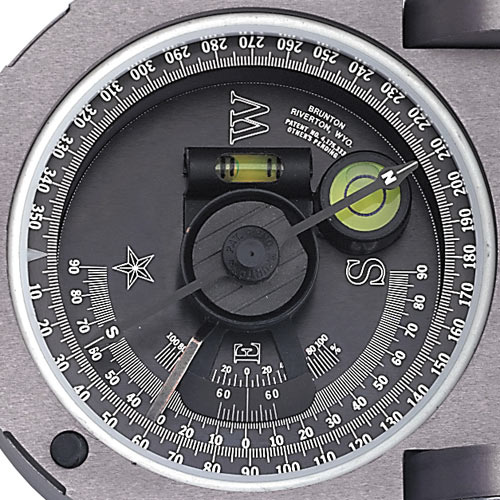
The Market Compass
Fortunately, for those of us who own stocks, the market does not have a moral compass. If we had to depend on the courage and conviction of the leadership of our country to be ethical, honest and to do the right thing, we’d be in a deep decline. With the market it is all about a profit and growth compass.
So, Happy Monday! For now, despite Fed moves to raise rates and the media’s propensity to obsess on the issue, it looks like the market compass, that profit and growth compass, is pointing in the right direction.
what’s your take?
The information presented in kortsessions.com represents my own opinions and does not contain recommendations for any particular investment or securities. I may, from time to time, mention certain securities for illustrative purpose, names where I personally hold positions. These are not meant to be construed as recommendations to BUY or SELL. All investments and strategies should be undertaken only after careful consideration of suitability based on the risks, tolerance for risk and personal financial situation.
I was stunned to see this comment. Why? After seven full months of the Trump presidency it is stunning that anyone in the media or punditry at large would believe that anyone around the president could change the direction or ability of his administration to get anything done. Gary Cohn, Wall Street maven and head of the Council of Economic Advisors, is no exception. Donald Trump was the chaos candidate and he is the chaos president. He marches to his own drummer.
For those who still believe that the Trump Trade and realization of the Trump agenda is the key factor behind the market’s recent success, I beg to differ. The Trump Trade, I believe, is (has been and will be) a dead issue until Donald Trump changes (which I don’t see as a realistic possibility), the drip, drip of the investigation leakage ends or Mr. Trump leaves office. These distractions make it very hard for any real progress on tax reform or infrastructure. As such, most players (except the sellers last Wednesday) figured this out months ago. My bottom line is that the market’s resilience is more about improving corporate earnings, global synchronized economic improvement, and the one thing Trump could effect, regulation … all of this with a backdrop of low inflation and interest rates. It appears that most of the on-air personnel and pundits appearing on CNBC have not picked up on this concept yet. (kortsession.com –May 22, 2017))
Bottom Line (s): The Trump agenda was dead on arrival January 17, 2017 all because Trump, who many believed and hoped would change, did not and will not change. Our economy is strong (except for the deregulation piece, none of the rest is to the president’s credit) … not too hot, not too cold, with low inflation and low interest rates. Meanwhile, the rest of the world is on the road to recovery after 8 years of sub-par performance, which cannot help but benefit us. Finally, corrections are normal. Use this one to your advantage.
What’s your take?
P.S. Art Cashin, Director of floor operations for UBS, suggested late in the trading day it wasn’t just a potential defection by Cohn that had the market worried but the possibility that many of the so-called smart people surrounding the president might follow suit. Then where would we be? I propose we’d be in exactly the same place we are today. Trump does not listen. Ex Steve Bannon they all seem to be impotent. On the plus side the Congress and courts will still provide the president with a check.
The information presented in kortsessions.com represents my own opinions and does not contain recommendations for any particular investment or securities. I may, from time to time, mention certain securities for illustrative purpose, names where I personally hold positions. These are not meant to be construed as recommendations to BUY or SELL. All investments and strategies should be undertaken only after careful consideration of suitability based on the risks, tolerance for risk and personal financial situation.
You may have noticed recently a total absence of kortsession posts. The reasons are twofold: one, it is hard to argue after the run we’ve had that a correction or even a cyclical bear market market might not be in the offing (it’s even got me doubting after years of bullish thought process on this site), and two, the general media and their pundit minions have not come up with any new outlandish or compelling reasons to scare the investing public. The latter is what kortsessions.com has been railing against for the past four and a half years. Yes, they continue to make their case for lower prices as the major market indices continue their almost-daily, low volatility (almost boring) climb to new all-time highs. There’s just not that much to talk about, save a really great quarterly earnings season and an economy that just won’t stop growing (even if it was only at a paltry 2.6% clip in the 2nd Quarter). Even with the war of words between Kim Jong Un and President Trump – despite the incrediblesturm und drang the Dow Jones Industrial average is down only 1.5% from its record (Wednesday 8/8) intraday high of 22,179. There seems to be little fear (a bad sign) and absolutely none of the euphoria that one would associate with a major market top … the brave new market!
Donald Trump
Maybe all the players (including the computers) are battle-hardened
They’ve seen this all before, many times over the past 30 years (including the 2008 melt-down), and they will not be panicked out of their stocks. The one thing that they have not seen before is a president like Donald J. Trump. Of course there are reasons why Mr. Trump has been a plus for stocks. His cardinal accomplishment (maybe) is that with the stroke of a pen he swept away decades worth of regulations, some that were indeed useless and, maybe, some that were very much in the public’s best interest. Either way, heavy regulatory costs, whether for the right or wrong reasons, have been shed.
Also. on the plus side of the ledger, Donald J. Trump has provided us with 6 month worth of legislative gridlock, which some may view as a positive because when Congress is handcuffed it cannot enact legislation that may roil the economy … they can’t hurt us. The market and business has a certainty over the rules as they are now and have been over the past few years – a template … “no boom, no bust” (Scott Grannis via Fear and Greed Trader) — Goldilocks!
Then there is the “Crazy factor”
A lot Crazy! Dr. Stangelove a.k.a. Peter Sellers
The market seems to have gotten comfortable withe the fact that our president will say crazy things (at least in the context of what other U.S. presidents might have said, written or tweeted in the past). The market and its participants seem to be comfortable with this for the most part because the president has also been known to bluff in the past and he has also been known as a man not likely to keep his word about most things … not a desirable trait in anyone, especially a president.
As it pertains to the current war of words between the seemingly unhinged supreme leader of North Korea and our president, maybe the “crazy” is working (regardless of the wisdom or acceptability of this tactic). According to a recent article in the Washington Post a Chinese state-owned media source (The Global Times) editorialized that China should let North Korea take the full brunt of U.S. military fury if the North Koreans land their missiles anywhere near a U.S. Territory (Beijing warns Pyongyang: You are on your own if you go after the United States) … pretty stunning, even it is not the official state mouthpiece of the Chinese Communist Party.
It’s one of those “Dirty Harry” moments, where Clint Eastwood as SFPD detective, Harry Callahan (a.k.a. the President) says, “go ahead, make my day.” The Washington Post article was published about two hours before Friday’s close.
Another hidden benefit of the perception of “crazy,” for those of you trying to determine whether or not I’ve lost my mind finding positives in the current geopolitical conflict, is the fact that it drives skittish money into so-called safe-haven investments like our 10-year Treasury note. Last week the yield on the 10-year dropped from 2.28% down to 2.18% … again keeping competition for equities from fixed income securities very low (the S&P 500 yields 2%), while at the same time keeping a lid on business debt financing costs. For those of you shaking your head at the current levitation of stock prices maybe this attempt at reason may provide some slight explanation.
Lest I give the wrong impression:
My preference is for sanity, diplomacy, morality and integrity in our national and global dealings. I do not intend with this post to be an advocate for the current administration’s policies regardless of the market’s response.
FINALLY, THIS REALLY IS NOT A BRAVE NEW MARKET. IT IS JUST DOING WHAT MARKETS FROM TIME IMMEMORIAL HAVE DONE — CONFOUND THE MOST PEOPLE, MOST OF THE TIME!
What’s your take?
The information presented in kortsessions.com represents my own opinions and does not contain recommendations for any particular investment or securities. I may, from time to time, mention certain securities for illustrative purpose, names where I personally hold positions. These are not meant to be construed as recommendations to BUY or SELL. All investments and strategies should be undertaken only after careful consideration of suitability based on the risks, tolerance for risk and personal financial situation.
Thus spoke Ronald Reagan’s OMB (Office of Management and Budget) director David Stockman (6/8/2017). Stockman has been making dire pronouncements like this for years, and for years he has been absolutely wrong. Yet the talent bookers for CNBC continue to call him back for reprises of his infamously bad calls. For years Stockman has been unable to square stock market fundamentals with valuations. Maybe this time those bookers figure the stopped-clock syndrome will come up in their favor. More likely they know Stockman’s ‘horrendous’ prediction will get eyeballs to their site. After listening to his rant about the “calm before a gigantic, horrendous storm” I’m truly beginning to question if the guy is in possession of his faculties. He terms the furor over Russian tampering in our election process as a “huge nothing-burger” and asserts that Mike Flynn did nothing wrong, even though it has been alleged that Flynn’s attorney has been shopping for an immunity deal.
To Stockman this Russia-gate business is one big distraction, with the impact being total absence of effective government, a libertarian dream-come-true. We are out of control: we can’t get anything done, it will lead to a market collapse. My take is that we have our priorities set exactly right. The economy is doing fine. We don’t need Congress doing something rash that might upset the apple cart. Focussing with laser precision on an the threat represented by the Russian hack of our body politic seems to be a much better way to spend our time. This should not be a partisan issue! Damn the tweets, full speed ahead!
Speaking of Partisan Politics, Kansas may provide a ray of hope.
One real problem that has faced our country is the extreme partisanship that has taken hold over the past couple of decades. George Washington warned against this in his 1796 farewell address. He posited that the affairs of state could get so bound up in political wrangling that the citizenry would be open to a strong man who promised to fix the broken system. Sound familiar?
I live in Kansas, just across the state line from my home town, Kansas City, Missouri. Although there is a Kansas City, Kansas, it is K.C.,MO that the natives refer to when they say they are from Kansas City. KCMO is the home of the Chiefs and Royals and some of the greatest cultural infrastructure in the United States. KCMO infrastructure keeps my property in Kansas valuable. So, I’m proud to be from Kansas City.
Thomas frank
I have had trouble admitting I’m from Kansas because the politics here have been plumb crazy-to the extent that author/historian Thomas Frank wrote a book about it, “What’s the Matter with Kansas? How Conservatives Won the Heart of America.” Since the publication of Frank’s book in 2004, Kansas has become a total fiscal basket case. Interestingly, during the first six years after the book came out, the Kansas executive branch was in the hands of the Democrats, two-term governor, Kathleen Sibelius (who resigned in 2009 to become HEW secretary in the first Obama term) and her successor, Lt Governor Mark Parkinson. During that decade the make up of the legislature became significantly more conservative as a result of grass root politicking. By 2010 the stage was set for the return of ‘favorite son’ Sam Brownback to run for governor … after nearly 20 years in Washington, first in the House of Representatives and then 15 years in the Senate. Mr. Brownback was a true believer in the proposition that if you cut taxes on the job creators prosperity would be sure to follow. After being sworn in in 2011 the Governor, with strong extremely conservative majorities in both the Kansas House and Senate, signed into law a repeal of the Kansas income tax on all pass-through businesses (lawyers, doctors, family farms, sole proprietorships–some 330,000 of them).
The governor called the cuts a “real live experiment” of the principle that slashing taxes and cutting government spending would spur economic growth that would power the state.–Kansas City Star, 6/11/2017It did not work. After five years of extreme cuts to infrastructure, education, safety net programs and dipping into the state pension funds (year-after-year one-time attempts to keep the state afloat), the Kansas Legislature, on a second attempt over-road the governor’s veto and reinstated the income tax on these businesses. According to The Hill this move could raise revenues by $1.2 billion.
Importantly, this required a bipartisan effort to meet the requirement of a two-thirds majority in both houses to accomplish the over-ride. Maybe the fever is breaking! If so, it would be a very positive development not only for the market (it should be a boost to our national psyche) but also the soul of our democracy.
Of course, thanks to the circus in Washington, this really monumental change in a very RED state was totally missed by the televised media, though it did make the front page of the New York Times -6/7/2017. Kudos to NPR who gave it a good working-over. Unfortunately, most Americans do not get their news from these sources.
What do you think?
P.S. I love this quote from Thomas Frank–“Bad government is the natural product of rule by those who believe government is bad.”
Young David
The information presented in kortsessions.com represents my own opinions and does not contain recommendations for any particular investment or securities. I may, from time to time, mention certain securities for illustrative purpose, names where I personally hold positions. These are not meant to be construed as recommendations to BUY or SELL. All investments and strategies should be undertaken only after careful consideration of suitability based on the risks, tolerance for risk and personal financial situation.
Taking my title assertion one step further, in many cases Opinion About News due to our beliefs can become our reality, whether factual or not. Yes, we are all entitled to our own opinions and beliefs. It is a free country. However, in investing, relying on strongly-held beliefs and opinions about the news can be quite risky.
First of all let me give credit to money manager and fellow blogger Jeff Miller as the inspiration for this post. I highly recommend his work to you as a regular read. Jeff has been around the market for many years and has developed many excellent sources for his own investment practice. Each week he combines the output of these sources with his own proprietary input to publish “Weighing The Week Ahead.” In one of his recent posts … ” Will earnings confirm economic strength?”, he cited an observation about education and belief by Morgan Housel (one of his trusted sources), as a Best of the week.
Miller’s Best of the Week
Jeff Miller NewArc Investments, Inc.
If I had to pick a single most important source for investors to read this week it would be Morgan Housel’s account of his dinner with Daniel Kahneman. It is a nice summary of Kahneman’s basic ideas – all worth reading. Morgan has a great sense for what is important and what you need to know about it. Here is my favorite quote:
On education changing thinking: “There are studies showing that when you present evidence to people they get very polarized even if they are highly educated. They find ways to interpret the evidence in conflicting ways. Our mind is constructed so that in many situations where we have beliefs and we have facts, the beliefs come first. That’s what makes people incapable of being convinced by evidence. So education by itself is not going to change the culture. Changing critical thinking through education is very slow and I’m not very optimistic about it.”
In other words, for many, beliefs trump facts. This is very apparent in our political discourse and the phenomenon seems to rear its ugly head in the investment process of many.
Is it just us or is there something else involved in this process?
Questions, questions …
–My answer is that, sure, it is probably a flaw in human nature, but there is a lot of additional support from today’s multi-channel media environment. If you believe strongly in anything, there is probably a media outlet that will reinforce and bolster your beliefs with tons of information, factual and otherwise.
–In reality, much of what masquerades as news today is not news but opinion about news. You can see this on CNN when a story breaks, they will trot out a team of “experts” to slice, dice and speculate about every morsel … to give opinion about the news. This is a great way to fill a 24 hour news cycle, but not much help in adding clarity. The same thing holds true for CNBC. Sadly, there will always be a news source glad to validate your position and glad to take you on as a rating point. This can be very costly when you invest.
A prime anecdotal example
(Though I work very hard to keep politics out of kortsessions.com, this example may have political overtones. Please try to ignore this while assessing my points on how opinion on the news might have adversely affected the investment results of those who let their beliefs trump fact.)
–In the face of this relatively good news, the loyal opposition countered with opinion that this was not good enough, our president was a Socialist and that he did not understand or like business. CNBC carried similar commentary from on-air personnel (Rick Santelli and Joe Kernan) and various impeccable sources, such as Home Depot co-founder, Ken Langone and Jack Welch, former CEO of General Electric. Welch even went so far as to suggest that the Obama administration had been cooking the books to come with a 7.8% unemployment rate. These are verifiable facts.
–Regardless of the facts, if one hears this misinformation repeated often enough and it is already part of their pattern of belief it becomes FACT.
–I point this out as it relates to a specific example of bad investment decision-making as a result of consuming too much opinion about news rather one’s own personal thought and reflection (critical thinking) on the news (the actual facts)…removing oneself from the echo chamber. That example fallows:
–In January of 2013, I visited a former St.Louis area money manager client of mine. We got to talking about the market and the election. He told me a story about a group of client meetings that he had held with the firm’s clients in the southeastern part of the country in October, before the election. These were basically business people and professionals, intelligent, educated people. In October their consensus was that Mitt Romney would be the next President. However, they felt that President Obama’s economic policies were so bad and his opinion and respect for business was so low that in the unlikely event he were to win re-election it would be disastrous for the economy. They had become completely indoctrinated to these beliefs. As such, they told my money manager friend if Obama won a second term they would be sellers. HE DID WIN AND IN THE FACE OF OVERWHELMING EMPIRICAL DATA COUNTERING THEIR BELIEFS THEY SOLD. They helped make the November 14, 2012 low. By January 2013, when some of those clients were calling to see if it might not be a bad idea to buy some of that stock back, the S&P had rallied 100 points from the November low. By the 16th of May of 2013 we had broken into new all-time high ground on the S&P, up 300 points from the November low (+22%). This is but one example of the harm that can be done when you let opinions about news (A Hidden Killer), coupled with deeply-held beliefs, formulate your investment strategy.
–As we end the first month of the New Year, there is still time to make a resolution that we critically examine our beliefs and biases and look for news sources (Not opinion on News) that challenge (Not Reinforce) our preconceived, entrenched beliefs. There are two sides to every coin. We need to be able to see them. It is imperative that we do this as we formulate our investment plans and as we perform our duty to inform ourselves as citizens of this great democracy.
What do you think?
The information presented in kortsessions.com represents my own opinions and does not contain recommendations for any particular investment or securities. I may, from time to time, mention certain securities for illustrative purpose, names where I personally hold positions. These are not meant to be construed as recommendations to BUY or SELL. All investments and strategies should be undertaken only after careful consideration of suitability based on the risks, tolerance for risk and personal financial situation.
In an era when playing fast and loose with the facts seems de rigueur, not only for the newsmakers but the media covering them, you are bound to get some carryover to the mundane world of economic and financial news. But in financial media what you get is opinion and speculation about assumed facts. The reporting on Friday’s market was based on this process, with zero real analysis or perspective.
Assumed Fact: When the Fed moves to raise rates, this market is toast!
On December 18, 2013 the S&P 500 stood at 1810.65 and the US Treasury 10-year note was in the process of spiking to a 3.0% yield. This is a fact! Why is this important? It marked the official beginning of the tapering of Quantitative Easing (QE), which would take eleven months to complete. This was the Dreadful End of Quantitative Easing (QE). We wrote about it at length. At the time the media had it pegged as the beginning of the end of the bull market that had commenced in March 2009.
What actually happened? QE ended October 29, 2014. Fear of economic weakness brought in a ton of “safety trade / risk-off” buyers to the 10-year Treasury. The yield dropped to 2.39%. During the same period the S&P 500 rose to 1983 (almost 10%). (another verifiable fact)
December 15, 2015, almost 14 month after the end of QE, after many fits and starts, the Fed finally took action raising the Fed funds target rate by 1/4 point to 0.5%. The 10-year was trading around 2.25%, again lower than the rate at the end of QE. (FACT)
With oil on its way to $26.00 per barrel, as a result of a ‘supply glut’ and not slowing demand, and with other commodities collapsing, the punditry was at DEFCON1. The flight-to-safety trade was in full force as we moved into February with the 10-year trading below 1.7%. On the Brexit vote in late June, at the height of the panic, the safety trade took the 10-year yield to 1.37%. (Another Fact).
As of the market’s close, Friday September 9, the 10-year yield stood at 1.66% with the S&P 500 close at 2128. The 10-year yield is about half of what it was when QE ended. The market is up roughly 10% during that same period (FACT).
About to make a flight-to-safety trade
So, what have we learned? It would appear that fear in the market is so powerful that it trumps greed. When the Fed raises rates, or threatens to raise rates, market participants, fearing a move in rates might bring on an economic slowdown, race to the safety of long-date treasury securities and gold, thus negating the effect the move in short-term interest rates might have had on the long end. Also, because these moves on theFed funds rate are so minuscule and far-between, it would appear that they hold little or no negative implications for the economy.
The only other thing that I can fathom for these sharp spikes down on Fed pronoucements is that trading in today’s market is so dominated by computer-algorithmic forces it fails to recognize the nuances in these small moves. In other words, please don’t confuse my computer with the facts.
In the case of the media the formula is the same. Please don’t confuse my writers, bloggers, on-air personnel or pundits with the facts. We know what markets do when rates go up! They continue to ‘saw the same old sawdust.’
What’s your take?
The information presented in kortsessions.com represents my own opinions and does not contain recommendations for any particular investment or securities. I may, from time to time, mention certain securities for illustrative purpose, names where I personally hold positions. These are not meant to be construed as recommendations to BUY or SELL. All investments and strategies should be undertaken only after careful consideration of suitability based on the risks, tolerance for risk and personal financial situation.