Categories
Financial, Stock Investment

Inflation / Recession Obsession Win’s the Day!

— “Where Is GDP Headed? Don’t Ask an Economist!” 

— Recent economist’s predictions on PCE inflation + .5%. It came in at +.6%

— A 1/10% miss on economist’s forecast creates negative media feeding frenzy.

— Feeding the Inflation/Recession Obsession, starving perspective

man in black suit jacket and black pants figurine

“Where is GDP heading? Don’t ask an economist.”

With all due deference to my economist friends, the prediction business is hard work. In the Barron’s article, the title of which I have stolen to head this bullet, the author could not have chosen a more inappropriate time frame with which to drive the case home, 2020.

“But how accurate are their prognostications? I recently took up that question for PitchBook. Each December from 2000 to 2021, Bloomberg News reported one-year forecasts of the change in real GDP by economists at banks, investment managers, independent research firms, universities, and other organizations. The number of economists reported as participating in this survey varied from 33 to 76. I compared the medians of their forecasts with actual GDP. On average, the median forecast was 0.99 percentage points above or below the actual year-over-year GDP change (which averaged +1.99%). It is often the case, however, that averages conceal as much as they reveal. In December 2019, for example, the median forecast for 2020 was 1.8%. The actual number was minus 2.8%, resulting in a 4.6-percentage-point overprediction.”  (Martin Fridson)

Fridson misses the point. There are a lot of moving parts here including unforeseen pandemics. “It is dangerous to make forecasts, especially about the future” (sounds like Yogi Berra but I could not find attribution). Economists in this light appear to be the dare-devils of arm-chair prognostication.

Pardon my loquacious narrative getting to the point: One needs to be very careful tying their investment policy to economic forecasts. This does not imply that we should not listen to economist’s findings and thought processes on what is going on in the economy because they can also be early on emerging trends, changes in direction and problems. Some actually do get very close on their numbers. My personal preference when choosing investments is to start at the bottom (with the individual company). If the story is right and the valuation attractive, I’m not going worry whether or not a recession is imminent before pulling the trigger.

One last item: for some reason (maybe due to the media), when thinking of recession many begin see their most recent calamitous experience (2008/2009 and 2020), as the norm. This is a mistake. These recessions were worst case anomalies. A normal recession is a business slow down, a pause to refresh and to see who’s been swimming naked. 

OMG! PCE inflation missed on the hot side by 1/10 of one percent 

BTW, personal consumption expenditure inflation is a metric more favored by the Fed as a measurement of inflation. Recent economic predictions on PCE inflation had it at +.5%. It came in at +.6%. As you can remember from my discussion above I would not be too concerned about economic predictions or forecasts that miss the mark. That is normal. Yes the number, percentage-wise was quite large. If you are splitting hairs (at .6% an extra 20% above the .5% predicted) it might be of some concern. I am not splitting hairs. This is inconsequential.

This 1/10% miss creates a negative media frenzy

For example the AP ran this headline:

“Key US inflation measure surges at fastest rate since June”

This is true but remember this is not surprising. Economists had been forecasting  half of one percent. It came in a 6/10 of one percent. This was by no means a surprise to anyone paying attention.

CNN ran this headline on a number that also should not have been a surprise:

“Inflation surprisingly rose in January, according to the Fed’s preferred gauge”

Here’s one from a Seekingalfa contributor;

“The January PCE Report Unleashes A Giant Inflation Shockwave”

A few other emotionally heated descriptors showed up like:

” … worst week of the year”

“Stocks fell sharply”

and

“Stocks Plummet”

The headlines above are outrageous overreactions.

Although the broadly based S&P 500 fell 1.02% with the more speculative Russell 2000 was down .92%. This was hardly a disaster.

Feeding the Inflation/Recession Obsession, starving perspective

As you can see from the examples above the media has little interest in providing perspective. Their aim is engagement and bad news (If it bleeds, it leads) sells. To this end they have created a dangerous obsession about a potential recession (a normal economic event) in the minds of investors. Both novice and professional might be kept from making proper moves with their money, maybe even missing a good market entirely.

Last week I attended the 2023 CFA (Chartered Financial Analyst) Forum in Kansas City. The three member panel was composed of Victor Zhang (CIO-American Century), Christopher Dillon (VP-T. Rowe Price) and Bill Greiner (Chief Economist, Mariner Wealth Advisors). Their job was to discuss their views on the 2023 investment outlook. None of the panelists were exceptionally bearish though most acknowledged we could be on our way to some sort of economic slowdown (i.e. The Dreaded “R”). Chris Dillion even raised the possibility that we might make it through this Fed tightening phase without a recession.
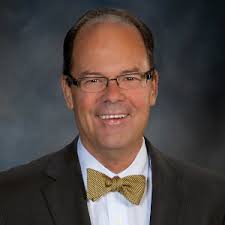
Bill Greiner, fearless forecaster

My old friend and former client, Bill Greiner, astutely pointed out (with tongue firmly implanted in cheek) that there was one sure indicator of an imminent recession and that was the inverted yield curve. It was perfect because every time that we’ve seen such an inversion a recession has occurred, on average some (if I remember correctly) 2.5 years later … not much help here. In fairness to the serious side of the recession indicator world, Bill did make a pretty substantial case for use of the Leading Economic Indicators (LEIs) as a better omen of a coming recessionary environment and they are flashing red.

Most of the questioning in the Q and A after the presentation revolved around the “R” word … Recession / Obsession. There was no interest in ‘where’ to invest. Why was this the case? The crowd (usually best avoided when investing) is constantly being fed this concern by the media. Real or imagined, the media keeps it front and center … a short term issue that has little or nothing to do with long term investing–basically a distraction that they gladly, profitably provide for engagement.

My belief is the questions on recessions (if, when and how severe) are moot. The market is a great sifting and winnowing device. It prices in a myriad of datapoints everyday. Ergo, any economic slowdown or recession has already been priced in. When and if it becomes apparent this slowdown has begun (in the rear-view mirror) it will be too late to capitalize on the information. The market will be up significantly.

Friday, Inflation/Recession Obsession Won the Day. It is unlikely to win the race. 

What’s your take?

The information presented in kortsessions.com represents my own opinions and does not contain recommendations for any particular investment or securities.  I may, from time to time, mention certain securities for illustrative purpose, names where I personally hold positions.  These are not meant to be construed as recommendations to BUY or SELL.  All investments and strategies should be undertaken only after careful consideration of suitability based on the risks, tolerance for risk and personal financial situation. 


Categories
Financial, Stock Investment

Perspective: The Key to The Market Vault!

— Perspective is the number one biggest shortcoming in the coverage of financial and market news.

— I examine perspectives on inflation, rates and recessions.

— Lack of perspective stems from two causes: The lack of (or willingness to dig for) historical comparisons or the omission of known facts that might soften the fearful impact of a headline.

— Investors with perspective have the key to the vault.

Perspective: The Biggest Shortcoming

Inflation

As stated in my biography I’ve been around the market in a meaningful way since 1970. One of my pet peeves then, as it is now, was the lack of depth demonstrated by the media in reporting on financial matters. Back then television consisted of 3 networks … ABC, NBC and CBS. The news at the time was actually reported by competent journalists with no political or idealogical axe to grind, i.e, no editorializing. There was no internet. Essentially the news (the facts as they were best able to be determined) was the same coming from each outlet. The only difference was the presenter … David Brinkley vs. Walter Cronkite … and the importance accorded to each story. Even then the economy and market were given short shrift (i.e. more bad news on inflation today … CPI inflation up .5% last month and that was above expectation by 1/10 of 1 percent bringing the latest 12 month total to 9.5%). There was no effort made, as is the same case today, to contextualize that .5%. For example that .5% reading if annualized would equal a 6% inflation rate, well down from 9.5%. So we missed by 1/10 % on the estimate, the number was certainly trending in the right direct.

This last week’s wholesale price (PPI) inflation number was treated in exactly the same manner. PPI inflation came in at +.3% (Expectation was plus .2%). The annualized rate versus a year ago was still very high at 7.4%. There is no mention of the the fact that the average increase in producer prices from June through November was a bit under 3%  (June 1.1%, July -.5%, August -.1%, September .3%, October .3% and November .3%). Annualizing a 3% number would get you back to a 12-month rate of 3.6%. With all the gloom and doom around (confirmed by the AAII most recent sentiment survey) it is likely that most people’s favorite news sources were not keeping them up on this very positive trend.

The point being here that you never hear the succinct phrase: The Fed’s policy is beginning to work and the inflation data is trending, as it should be, in the right direction. As to media fare, seldom is heard an encouraging word and the sky is all cloudy all day. 

 Interest rates

This is an easy one. See if you can remember why the rate on the ten-year Treasury note spent so much time under 3%/ under 2%. If you answered the financial crisis and market implosion of 2007/2009, move to the head of the class. A good follow-on answer would be a weak economy and fear of falling back into recession (or worse) … fear of a 1937 style return to recession. At the whisper of any potential geopolitical or economic problem the fear trade would kick in as investors would pile into the 10-year, putting upward pressure on their prices and downward pressure on their yields.

Political pressure on Jerome Powell was intense to keep rates low in the first part of his chairmanship. Enter Covid 19. With all the Federal stimulus dollars Covid brought to the economy, which was not that weak going into the pandemic, the reopening was explosive. The inflation was inevitable and for the first time in over a decade it was clear the economy was strong enough to support a higher, more normalized interest rate structure.

With this as a backdrop no one ever mentions the fact that for most of the last 50 years the 10-year yield has averaged much above 6%. I started my career in October 1970. According to the interactive version of this chart (available on the St. Louis Fed’s website) the 10-year was yielding 7.33%. You might say that’s all fine but from 1981 rates begin trending in the right direction. My counter would be that businesses still had to deal with higher inflation and rates at the time and they and the economy in general did just fine. 

The point I make here is that regardless of the constant media moaning and groaning on the topic of rates they are still historically low and that much higher rates have not kept the economy from solid growth in the past.

(page1image49163440

 Recession

One does not have to work to hard in the consumption of any media … financial, mainstream or political … to hear or see the “R” word. There is a constant drone about the subject and constant speculation about when, where and how this calamity might befall us.

What is a recession:

“a period of temporary economic decline during which trade and industrial activity are reduced, generally identified by a fall in GDP in two successive quarters.”

“The National Bureau of Economic Research (NBER) Business Cycle Dating Committee—the official recession scorekeeper—defines a recession as “a significant decline in economic activity that is spread across the economy and that lasts more than a few months.” 

According to the above definitions a recession is an economic slowdown and not Armageddon. But listening to the rhetoric and emotion that abounds in media comments on the topic you might think otherwise.

Recessions are normal economic events, oft predicted, seldom seen. My guess is we may see the next one as part of the Fed’s effort to combat inflation, but it is just a guess. The economy is very strong and inflation is trending lower. Who knows? Predicting is a very difficult sport.

One last item (scary last item) that might be playing here under the surface is the out-of-left-field nature of our two most recent financial crisis, the 2008 collapse and Covid debacle (most of us saw neither coming). These were obviously traumatic, and there maybe fear that another may be just around the corner on the back of something like Bankman-Fried’s escapades or banks playing fast and loose with credit standards. There is a narrative out there that this ‘something’ may be a systemic issue and that the banks could take a hit. The bank stocks should be rising as a beneficiary of higher interest rates but they are not. They have been moving in the opposite direction.

You might recall that the banking industry was required to become hugely over-capitalized after the financial crisis. If there is exposure to cyber or general bankruptcy due to a recession, it is likely to be well contained. If not, there is always the lender of last resort (i.e. the Fed) and of course the usual bail out. This is really far-fetched but not out of the realm of possibility based on past recent investor experience. It is not my forecast but it makes great fodder for the internet and general media as well. 

My aim here is to point out that this negative media obsession with what is a normal economic event is way overblown. A recession or worse, even one of those nasty black swan events, will not be the end of the world. I repeat, recessions have been much predicted but very rarely have they actually happened.

Media Lack of Perspective: The Causes

I am driven to two conclusions; Either there is a lack of rigorous effort in pursuit of the facts or, the more cynical view, that there is a purposeful omission of positive perspective because bad news without it sells better. The political bent of your favorite news source may also play a role. None of this leads to good critical thinking. That is up to you. In light of what I’ve laid out in this post view, listen or read carefully the output of media you use. Ask if they are giving you the background information that you need to form a rational opinion about the market and the economy based only on today’s headlines? My guess is that most  economic news is reported with little or no mention of the backstory or historic detail that might temper investor concern or alarm. In the case of my PPI comments above it takes very little to check recent PPI readings. Just ask the “Google.” That’s what I did.

“Knowledge is Power”

In the market knowledge (perspective) is power. Without perspective you are just taking information from sources whose primary goals are engagement (bad news sells) rather than imparting useful information. To wit we have had months of negative investor and consumer sentiment statistics in one of the strongest employment (3.5% to 3.7% unemployment) and wage growth (at the lower end of the wage spectrum where most people live) economies that this country has ever seen. Many have seen huge wage gains, well outstripping inflation. This has been juxtaposed against a background of a media voice telling us that inflation and rates should make us unhappy and that the boom is about to fall. Based on the low level of enthusiasm for the market I would say this has become consensus.

Bottom line: Operating with perspective and betting against the consensus have generally always been keys to the market vault!

What’s your take.

The information presented in kortsessions.com represents my own opinions and does not contain recommendations for any particular investment or securities.  I may, from time to time, mention certain securities for illustrative purpose, names where I personally hold positions.  These are not meant to be construed as recommendations to BUY or SELL.  All investments and strategies should be undertaken only after careful consideration of suitability based on the risks, tolerance for risk and personal financial situation. 


Categories
Financial, Stock Investment

“Stocks Hover Near Their Highs. Main Street Doesn’t Care.”

— What’s wrong with this headline? I believe a lot.

— A quintessential example of the media turning a silk purse into a sow’s ear

— Most of America should be celebrating the economy. If they are not it is because the media is telling them things are bad.

What is wrong with my title headline?

Randall Forsyth

Barron’s columnist, Randall Forsyth, has given kortsessions a wealth of material to counter over the years. For this I am deeply grateful. He did it for me again this weekend. The basic theory behind “Stocks Hover Near  Their highs … ” is that the fat cats invested in the market have reaped a huge gain so far this year, up “$9.7 trillion –some 23.7%–in the year through Friday, according to the FT Wilshire 5000 Total Market Index.” It hasn’t trickled down to Main Street. This is evidenced by the University of Michigan confidence index showing that their confidence in the economic outlook is the lowest in a decade.

Why the dichotomy? I believe the blame resides with the media, media with a total lack of understanding in economic matters, media with a political agenda and media that knows bad news sells, both right and left leaning. On the right is the message of “we told you so.”  We told you ‘give the Dems the reins of power and we would be in for trouble’. INFLATION is that trouble and it is all their fault. On the Left it is worry about increased INFLATION and how this issue (a major opposition  talking point) will play with voters at election time.

I will not go into the cause and effect issues that seem to be totally cast aside in this debate. Suffice it to say both parties share in inflation’s making. 

The quintessential example: Silk Purse into Sow’s Ear

The Proverbial Silk Purse

There is a silver lining to this story. You hear about it every day but the media never really connects the dots. The silver lining is that the $7.35/ hr minimum wage now seems gone, a relic of the distant past. Millions of low wage workers have received tremendous hourly wage increases in the past year. We are talking easily 50% to 100%. This may not have lifted them totally out of poverty. Nonetheless I would imagine in their shoes this type of raise would be somewhat life-changing. It would certainly offset the 6.2% consumer price index increase year-over-year in October. The labor market  to their benefit remains tight … our ‘silk purse’. But for some reason all you hear is the ‘sow’s ear’: “That’s because they know, regardless of what the numbers say, that their incomes are declining in real terms. Employment is up, (aggregate) wages are up, but not as much as prices.” The guy who just took a job flipping burgers at $22/hr probably thinks he’s died and gone heaven. In my opinion every dime he or she makes will be heading right back into the economy’s growth. It will not be saved. Importantly, this wage gain was not legislated.

Main Street Should Be Celebrating the Economy and Job Market

According to Forsyth’s article. “the U.S. practically is at full employment, even though the official jobless rate is 4.6%. But some five million people have left the labor force since the pandemic started, with most of them over the age of 55, according to Goldman Sachs economists, resulting from early (1.5 million) or regular (one million) retirements.”

“The strength of the labor market can be seen in the latest Job Openings and Labor Turnover Survey, which showed 10.44 million openings at the end of September and a record 3% quit rate.” If Americans lack confidence in the economy, why is the quit rate at a record high? None of this is positively portrayed in the media.

In my mind when you take into consideration the unprecedented (coming out of the 2008-2009 financial crisis we only received $700 billion in stimulus) combination of the $2 trillion unfunded tax cut we got in 2018, $5 trillion plus in covid stimulus and the upcoming $1.2 trillion infrastructure package just passed by Congress, the United States has a pretty good runway to boom times in the next few years. Yes, inflation will likely be with us at a much higher rate and for a much longer time than transient camp is calling for. It will probably not be as bad as the media seems to be contemplating because bottlenecks will clear and new supplies will come on to meet the higher prices.  Yes, this great bull market will end badly. The long history of financial markets tells us that. I cannot predict the cause or timing, but I’m not ready to hang crepe just yet. I believe we have further to go. 

What do you think?

The information presented in kortsessions.com represents my own opinions and does not contain recommendations for any particular investment or securities.  I may,  from time to time, mention certain securities for illustrative purpose, names where I personally hold positions.  These are not meant to be construed as recommendations to BUY or SELL.  All investments and strategies should be undertaken only after careful consideration of suitability based on the risks, tolerance for risk and personal financial situation.


Categories
Financial, Stock Investment

If you think our current inflationary bump is just a hiccup, I’ve got a bridge for sale!


— There is mounting evidence that the current bump in inflation is just the beginning of a longer-term trend toward higher prices.

— Higher labor costs, insourcing to secure our supply chain and exogenous pressures on raw materials will be the main culprits.

— The media will have a field day since this supposed bad news and the rhetoric that comes with it will be front and center as they work to increase viewership and readership.

— Will this be the straw that breaks the market’s back?

The Case for Higher Trend line Inflation

labor costs

Much of the thought process I present in this section comes from real world observation, like all those help wanted signs festooning businesses across the country. Why is it restaurants can’t hire wait staff and cooks or retailers staff to manage their brick and mortar assets? Please don’t respond ‘enhanced unemployment’ benefits. They have been gone in Kansas City, Missouri since June. The possible correct answer, which may have been given to me by the manager of my country club’s dining areas, is that they have found other more desirable jobs away from food service. These are jobs with regular hours, benefits and better pay. Forget about the $7.35 minimum wage. Our manager can’t hire people at $18.00 per hour. Covid may have given many workers a chance rethink what they were doing and the opportunity to look for and find better.

It also appears that some employers may have figured out that for many jobs that have been going begging there is no need to have a baccalaureate degree to meet the abilities required to do those jobs. IBM has established an apprentice program to do just that. I am attaching a video from a recent edition of the PBS News Hour that details this program and three qualified new hires who left low-pay, low-end jobs to join the company. Likewise three low-end, low-pay jobs have opened up that nobody wants, not even at $20 an hour. This doesn’t feel transient to me.

Insourcing

people sitting on chair inside room

                                                              Photo by Remy Gieling

Because of increasing inflation in manufacturing costs abroad, rising transportation costs and supply chain issues, companies are bringing production back to the US. Look no further than the US automotive industry as the poster child for this movement. Even with automation it is hard to imagine how this does not get built into higher prices as we move forward. This should also put upward pressure on labor costs.

Exogenous-the stuff we can’t control outside the US

mining pit
Photo by Billy Clouse

I’ve mentioned this before but I think it is worth repeating: the US is not the only place on the planet that has demand for raw materials and consumer goods. There are at least two to three times our population in the middle classes of China and India and they all want to live like us. This equates to huge demand for raw materials that 20 years ago didn’t exist. We created this demand on the backs of cheap foreign labor. Now it is time for payback as they and their new wealth compete for resources.

One last item before we leave this section is the cost of going green. This is going to be expensive and there may be a hidden costs to pay the in the transition from conventional, hydrocarbon energy sources. It is possible that there will be a significant mismatch of supply and demand for oil as this transition takes place. Why? These companies aren’t stupid and will be doing everything that is in their power to survive. Most likely they will not invest in finding new reserves or increasing production from existing reserves instead using the new cash flow from today’s higher prices to pay down debt and invest in greener energy producing alternatives. Production for oil and gas wells starts to decline naturally as soon as their production begins. If production falls faster than demand we could be setting up for a huge spike in oil and gas prices.

The Media Will Have A Field Day

The Proud Peacock

Half the battle in this game is having some idea of what to expect. So be prepared for the media to be screaming from the rafters that this greater-than-expected inflation is a huge problem. It won’t be if you own productive assets according to Scott Grannis, a bona fide inflation bear:

“Unfortunately, there is little that investors can do. Cash remains trash, as its purchasing power is being seriously eroded by inflation. Ditto for most fixed-income securities. Better to own productive assets that can ride the tide of higher prices (equities, commodities, commercial property). Prudent levels of debt (at long-term fixed rates especially) should benefit from higher prices and a general loss of purchasing power.”

Scott Grannis was the chief economist at Western Asset management (1989-2007) 

I’m not as dour in my inflation feelings as Mr. Grannis, but support ownership of productive assets in an inflationary and accelerating inflation environment with one caveat: higher multiple stocks will have trouble with inflation induced higher interest rates.

An opposing point of view from the media

“Action in the market is screaming: We don’t have an inflation problem.” “The rich have the most lose from inflation” “Inflation erodes the purchasing power of their money and savings.” “There are tons of business owners and execs who want the Fed to crush the labor market so they won’t have to give anybody a raise. They want Powell to tighten because it would help their bottom lines.” –Comrade Jim Cramer of Cramerica fame.

Booyah Jim!

Yes, he really said this. Here is a link to the video.

Bottom line. No, this will not be the straw that breaks the market’s back. Don’t let the media scare you out of your stocks.

What’s your opinion?

The information presented in kortsessions.com represents my own opinions and does not contain recommendations for any particular investment or securities.  I may,  from time to time, mention certain securities for illustrative purpose, names where I personally hold positions.  These are not meant to be construed as recommendations to BUY or SELL.  All investments and strategies should be undertaken only after careful consideration of suitability based on the risks, tolerance for risk and personal financial situation.