Categories
Financial, Stock Investment

The Fed Minutes — Another ‘Irrational exuberance’ Moment

Alan Greenspan in greener days

December 5, 1996 (S&P 500 — 743.25) then-Fed-Chair Alan Greenspan warned us about the “irrational exuberance” he felt was creeping into the market (the “Tech Bubble”).

“Clearly, sustained low inflation implies less uncertainty about the future, and lower risk premiums imply higher prices of stocks and other earning assets. We can see that in the inverse relationship exhibited by price/earnings ratios and the rate of inflation in the past. But how do we know when irrational exuberance has unduly escalated asset values, which then become subject to unexpected and prolonged contractions as they have in Japan over the past decade?”

The S&P 500 opened December 1988 at 276.50. By 1996 the index had tripled from the beginning of 1988 and was up almost 6 times since the beginning of 1982 (a prime example of a secular bull market at work). Greenspan was right about irrational exuberance working its way into the market. It was. He was just a few years early. The S&P had another double left in it, peaking at 1550 in March of 2000. Fortunately for him, as was usually the case, his comment was very circumspect/obtuse. As we have pointed out in the past, something Greenspan was well aware of, market prognostication (for that matter any economic prognostication) is very difficult.

“It’s deja vu all over again.” —Lawrence Peter Berra

Yogi Berra

Cautionary words, such as those offered by Mr. Greenspan, are coming at us all the time. Thank you Yogi for this apt description of the phenomenon. In the case of the stock market the phenomenon decribed is people trying to call a top. Though Greenspan’s “irrational exuberance” is more nuanced than the average pundit, it telegraphed the same message to people knowledgeable about the market … red light, time to be cautious. Last week in the Fed minutes we received a similar message (Deja vu):

“In light of elevated asset valuations and low financial market volatility, several participants expressed concerns about a potential buildup of financial imbalances,” the minutes said. “They worried that a sharp reversal in asset prices could have damaging effects on the economy.” (excerpted CNBC, 11/22/17)

More Deja Vus

Here’s a deja vu from a kortsessions.com post dated April 8, 2013, 4 1/2 years ago, “Latecomers Flocking to The Party” … Really, New York Times! The S&P opened the month of April 2013 at 1570. The Times’ article asserted that “latecomers,” individual investors, were flocking to stocks at just the wrong time. Now, here is a post from CNBC’s website dated 11/24/17 (S&P500–2602!) asserting the same situation: “Individual investors jumping in as bull stretches to new highs in late cycle rally”, also suggesting the end is nigh. 

Are we there yet?

Might I suggest that we are still early in the last three innings of this secular bull market. Yes, there will be sharp and scary corrections ahead, maybe even a cyclical bear market. But before this secular bull ends everyone will be in love with their stocks. Every night the Nightly Business Report will have remote interviews with investors coming out of their neighborhood Charles Schwab office, brimming with confidence about the market and their holdings. And, they will be saying things like, I’m not worried about a down market … I‘m in stocks for the long-term … where else can you get 8 (9 or 10) percent on your money? This is exactly what they were saying at the top in 2000 and they will say it again. As I have said before, I do not believe we are there yet (at that secular peak). But, if you are looking for empirical evidence of a real secular top, these types of pronouncements would be a good place to start.

More signs of a speculative top

“Taxi drivers told you what to buy. The shoeshine boy could give you a summary of the day’s financial news as he worked with rag and polish. An old beggar who regularly patrolled the street in front of my office now gave me tips and, I suppose, spent the money I and others gave him in the market. My cook had a brokerage account and followed the ticker closely. Her paper profits were quickly blown away in the gale of 1929.” Financier/ Investor — Bernard Baruch 

There is no question that as we begin to top out we will get irrational exuberance; and, just like Yogi said, it will be “deja vu all over again.” That’s the way the market always works.

What’s your take?

The information presented in kortsessions.com represents my own opinions and does not contain recommendations for any particular investment strategies or securities.  I may, from time to time, mention certain securities for illustrative purpose, names where I personally hold positions.  These are not meant to be construed as recommendations to BUY or SELL.  All investments and strategies should be undertaken only after careful consideration of suitability based on the risks, tolerance for risk and personal financial situation. 


Categories
Financial, Stock Investment

Setting the table for the next disaster

It has been my position that all things economic (Booms, Busts, Recessions, Depressions and Collapses a la 2008) are normal and run in repeating but unpredictable cycles. Knowing and being at peace with this can be very comforting in crisis times. It is simple. We have seen all of this before, despite the differing facts surrounding each event, and it has never been the end of the world. For some reason (maybe unintentional — no, I’m sure it is intentional) the media can never seem to get its arms around this concept. As such, any flare up economically, politically or  geopolitically takes them to DEFCON 1.

Both the media’s propensity to go ballistic on every crisis, big or small, and the fact that many more crisis are likely in our lifetimes has been a constant theme in the four-year history of kortsessions.com. I can guarantee that there will be another episode like the financial crisis of 2008/2009. Maybe not a “Housing Bubble,” but something stupid going on in the banking system will be the trigger. I know this because experience has taught me that bankers, left to their own devices, will always find new, creative ways to screw up what should be a very simple business — taking deposits and making loans to creditworthy borrowers at a profitable spread.

The seeds of the next disaster are being sewn right now!

Mr. “irrational exuberance?”

“Ex-Fed Chairman Greenspan: Get rid of Dodd-Frank and watch the economy and stocks SOAR”

Right now I’m not sure what credibility Mr. Greenspan has on banking regulation as it was his Fed that was asleep at the switch in the run-up to the housing bubble/financial crisis. This, like the calls for the repeal for Glass-Steagall (The Banking Act of 1933) in the late 1990s, represents efforts to ease banking regulations designed to protect the public and to keep bankers from their own worst instincts. I propose that even if we did nothing to change Dodd-Frank, bankers would still find new ways to create financial mayhem. If “what’s past is prologue,” another nasty financial event may be percolating under the surface. It may take years to mature but, guaranteed, it is out there.

I do not mean to say that Dodd-Frank is perfect. There are elements that may need to be tweaked but full range repeal makes no sense and would probably hasten the next blow-up. I’m not sure we should obsess about this eventuality at current writing.

Mad Magazine’s venerable Alfred E. Neuman

Should you worry? I don’t think so. This is all very much out of our control. And, in my case, I have seen plenty of these episodes in my 57 years as an investor and 42 years as an investment professional. They have all been very disconcerting but none represented the end of civilization as we knew it.

When I think about all the disasters that have befallen the United States (a civil war, two World Wars, epidemics, 9/11/2001, a Great Depression and numerous other financial crisis) in the first two centuries of its existence, juxtaposed against a history of returns from common stock investing, it is hard to come to but one conclusion — you have to participate in this asset class.

According to  Jeremy Siegel and his Book, “Stocks For The Long Run”:

“The superiority of stocks to fixed-income investments over the long run is indisputable. Over the past 200 years the compound annual real return on stocks is nearly seven percent in the U.S., and has displayed a remarkable constancy over time. Furthermore, real stock returns in other major countries have matched those in the U.S.”  (see “Bashing the media for fun and profit” for a 210 year history of real equity returns vs. bonds, t-bills, gold and the mattress) 

Siegel also observed that “Fear has a far greater grasp on human actions than the impressive weight of historical evidence.”

This brings me back to my title: “Setting the table for the next disaster.” If it got your attention, maybe Siegel has something on the grasp of fear on our actions. Obviously, the media has figured this out. They are profit-making enterprises and they know that FEAR SELLS. Ergo, they are not your friends when making investment decisions.

For the media there’s never much positive in the news except when things are booming in the market (i.e. when things are really over-valued) and people are tuning in to see how much money they are making in stocks. When everything is coming up roses the media leads the euphoria. Now, even though the market has had a spectacular rise they continue to hang crepe —  worry about the French election, continuing Fed action to undo QE and raise interest rates, North Korea, a really green administration in the White House, pundits and money management elites coming out of the woodwork to say the market’s overvalued. This is despite a world of evidence economically, both here and abroad, that conditions are improving. It is also despite the fact that valuations in a 2.24% 10-year Treasury environment are not excessive and certainly not excessive when compared to any past high water marks (I don’t include Shiller PE as one of those benchmarks). Who knows? They might be right this time but I doubt it.

What are your thoughts?

The information presented in kortsessions.com represents my own opinions and does not contain recommendations for any particular investment or securities.  I may, from time to time, mention certain securities for illustrative purpose, names where I personally hold positions.  These are not meant to be construed as recommendations to BUY or SELL.  All investments and strategies should be undertaken only after careful consideration of suitability based on the risks, tolerance for risk and personal financial situation.


Categories
Financial, Stock Investment

Apres le deluge, Le Summer Rally?

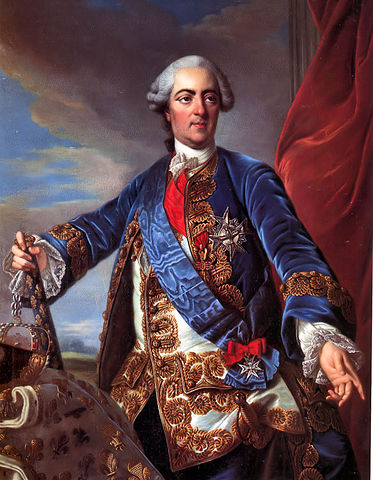
King Louis XV
King Louis XV

My apologies to the French and the late King Louis XV, for slightly reworking a phrase attributed to him, “Apres moi le deluge” (After me the deluge).  The king had it right.  Within 18 years of his death the French Revolution erupted.  A better word for “deluge” might be “cataclysm.”

Apres “Brexit” le deluge?

Based on the deluge of pundit commentary and the associated media freak-out surrounding the British referendum vote to exit the EU, one might have gotten the impression that it was a cataclysmic event.


Mr. "irrational exuberance?"
Mr. “irrational exuberance?”

Alan Greenspan (Friday June 24, 10:12 ET –DJII -400): “This is the worst period I can recall since I’ve been in public service.”  According to Greenspan, the only comparable was October 19, 1987 when the market plunged 23% in one day.  I am guessing the last half of 2008 was so traumatic that the former Fed Chair has developed a mental block (minus 57% in 0ne year, the precursor to a cataclysmic financial crisis–a bubble that inflated on his watch).  “Alan Greenspan says the British break from the EU ‘is just the tip of the iceberg’.”

Lawrence Summers
Lawrence Summers

Former Secretary of the Treasury Lawrence Summers was also very concerned about the possibility of the “Brexit” bringing down the order and stability Europe has seen since WW II and the creation of the economic union.  However, the folks at CNBC put up a headline on the attached article and videos that was a total hyperbole and misquote … “Brexit worst shock since WWII and central banks are out of ammo”  (7:08 ET, 6/28/16).

George Soros
George Soros

And then we have another bomb thrower.  George Soros, renowned hedge fund manager, weighed in Sunday, June 26, with a letter stating, “The consequences for the real economy (from brexit) will be comparable to the financial crisis of 2007-2009.”   What a cheery thought to take into the  opening on Monday morning.  Do you think Mr. Soros may have used Friday to get short the market?  By Thursday of last week it seems Soros had a change of heart: “The Brexit vote was a negative shock but the tragedy no longer looks like a fait accompli.”   Ya think he’s long again?

Enough of this deluge, this flood of  misguided opinion and misinformation.  Let us move on to a more pleasant prospect and question.

Could we be setting up for a summer rally?

Who knows?  Based on the recent action in the market responding to and recovering from the brexit surprise. anything seems possible.  Market sentiment continues in the dumper, regardless of the news, good or bad.  A strong summer rally, maybe to new highs, would be totally unexpected.  Here are a few thoughts from others on the subject:

Mark Hulbert
Mark Hulbert

Going into the brexit vote market sentiment was absolutely horrid, even though the S&P 500 was again knocking on the door of a new all-time high.  According to Mark Hulbert (Hulbert Financial Digest) negative sentiment as measured by his HNNSI (Hulbert Nasdaq Newsletter Sentiment Index) has turned extremely negative … “Stock-market timers turn shockingly bearish — and that’s good for the bulls.”  Hulbert’s index records and measures the recommended invested position carried by a series of short-term, market-timer letter writers.  It was reported the HNNSI was at a minus 55.6% reading as of last Friday (6/24).  That is a recommended 55.6% short allocation.  As of the close this Friday, even after a strong three-day rally, that recommended short position had INCREASED 8%.  This article is worth your time.  Also worth a look are the extremely hostile reader comments that follow it.

Jeff Miller NewArc Investments, Inc.
Jeff Miller
NewArc Investments, Inc.

Also worth your time is Jeff Miller‘s weekly post to SeekingAlpha (http://seekingalpha.com): “Weighing the week ahead: Seasonal strength ahead?”  I am a regular reader of Miller’s work, as it represents a balanced compendium of the reasoned opinions of others, market themes and Miller’s educated thought process.  Here are Miller’s  brief thoughts on the potential for upside:

“What about a summer rally? It is a good guess about the theme for the week. As is often the case for the weekly theme, I don’t know the answer and neither does anyone else. That said, I rate the possibility higher than most, and therefore another good contrarian play. We have had a long-time tight trading range, so a breakout would be meaningful for many. Rightly or wrongly, much will depend on the employment report.’

A final thought

Over time, the market has been a great wealth creator. In the short-run it is in the business of confounding most of the participants most of the time. While we have had a great run since the low in 2009, based on sentiment, it still seems most of the players are totally flummoxed. My perception is that with the current level of pessimism we might find ourselves in a really decent market as we move into the second half of 2016.

What’s  your take?

The information presented in kortsessions.com represents my own opinions and does not contain recommendations for any particular investment or securities.  I may, from time to time, mention certain securities for illustrative purpose, names where I personally hold positions.  These are not meant to be construed as recommendations to BUY or SELL.  All investments and strategies should be undertaken only after careful consideration of suitability based on the risks, tolerance for risk and personal financial situation. 
Categories
Financial, Stock Investment

Session 108–“I Have a sick feeling…”

Ralph Acampora
Ralph Acampora

This is how technician, Ralph Acampora, frames the type of performance that might be ahead for the Russell 2000 and Nasdaq composite indices over the next few months. (Acampora interview–5/15/14)  There is a part of me that finds his thinking very plausible, as the stock and bond markets have been acting very strangely of late.

Black Swans coming in for a landing?

549px-Black_Swans

This is a very tough post for me to write, as I don’t want to be too cavalier about the possibility of a real market meltdown due to some “black swan” event.  On the other hand, I don’t want to give too much credence to the irrational fears (the wall of worry) that have plagued this market all the way from its 2009 lows.  In my opinion the predominant emotion carried by most is ‘distrust’ and, at the extreme, ‘fear’.  Save the bubblet in the momentum stocks (social media, tech and biotech), at no time have we seen “irrational exuberance” rear its ugly head.  And, if you remember, when former Fed Chair, Alan Greenspan, first coined the term (Dec 5, 1996–S & P 500–744.38), the bull market of the 1990s had a full three and a quarter years left to run.

During that time in the late ’90s, we had some “black swans” glidding into the pond: the Asian Financial crisis of 1997 (Dec, 31, 1997–S & P 500–970.43), Long-Term Capital Management [LTCM] and the Russian Debt Crisis of 1998 (Dec, 31, 1998–S & P 500–1229.23).  All were very scary, potentially market life threatening events, at the time…precipitating short term slides.

The way the bond market is acting right now, with investors willing to accept no principal risk (willing to take a sub-2.5% return on a 10-year U.S. Treasury) is a bit disconcerting.  Maybe one of the very rare “black swans” is swimming in the pond; and, as usual, we will not see it until it is too late.

Having said this, we past  these three previous 1990’s crises successfully (not to mention the more horrific challenges we face in the 2000s) with the end of the decade seeing the S & P more than double the level it stood at when Mr. Greenspan first cautioned us about “irrational exuberance.”

By the way, all three events were met by bailouts.  In the case of LTCM it was a Fed-supervised bailout.  The International Monetary Fund (IMF) supervised Russia and Asia. Although I’m not prepared to argue for or against bailouts in this post, they have become de rigueur and are likely to come about as a response to future “black swan” events.  “What’s past is prologue.”  And, if past behavior of this nature leads to inflation, it will benefit the owners of asset and hurt those who lend money (the 2.5% 10-year crowd).

“It’s a good thing!”

320px-Martha_Stewart_2011_Shankbone

I guess my message is that our current skittish market, eerie as it seems, is normal and will be resolved.  If there is a “black swan” out there, it, too, will be resolved after some pain in equity prices.  The great thing about our current bull market is that we appear to be no where close to “irrational exuberance”: and, maybe we are a lot closer to irrational fear.  And, like Martha Stewart used to say, “It’s a good thing!”

What do you think?

The information presented in kortsessions.com represents my own opinions and does not contain recommendations for any particular investment or securities.  I may,  from time to time, mention certain securities for illustrative purpose, names where I personally hold positions.  These are not meant to be construed as recommendations to BUY or SELL.  All investments and strategies should be undertaken only after careful consideration of suitability based on the risks, tolerance for risk and personal financial situation.   


Categories
Financial, Stock Investment

Session 90-In StockMarket Land, the difference between apples and oranges is often hard to discern

Bill“Markets flooded with cash, should Fed prep to stamp out risk(Reuters via CNBC 2/21/2014)?”  First of all, this is a stupid question as their mandate deals with unemployment and inflation.  They are only the ‘risk police’ when it comes to risk of inflation. They can warn about “irrational exuberance”, but it is not their job to stop it, unless it is the indirect result of steps taken by the Fed to cool inflation (i.e. raising rates).  As inflation is rather muted and unemployment still a concern, Fed tightening does not seem very likely at this point.

Back to apples, oranges and other false equivalents…

488px-Czigány,_Dezső_-_Still-life_with_Apples_and_Oranges_(ca_1910)

The “Market flooded…” article tries to compare fed policies in the run-up to the ’08/’09 market collapse to their policies post-crash, and concludes we may be headed for a similar outcome.  The policies were easy money and low rates.  The outcome, according to the Reuters story, was the subprime mortgage debacle.  They forgot to mention Congressionally-mandated lower lending standards and Wall Street’s creation and proliferation of derivatives (“financial weapons of mass destruction”) used to package, insure and market them.  Oh yes, there were the banking and SEC regulators that were asleep at the switch.  Also, we must not forget the profound effect of the removal of Glass, Steagall restrictions on banks being in the securities business. These restrictions that had been in place since the Great Depression.

I think that this piece, lacking perspective (not untypical of most financial reporting), really failed to present an accurate picture of why the Fed kept rates low for so long in the first half of the decade.  The market and the economy were stunned by the ferocity of the bursting of the ‘Tech Bubble’ in 2000.  Ergo a more relaxed Fed policy was called for.  Then we were confronted by the 9/11 terror attacks. These really spooked the market and the economy.  Finally, we entered into two wars.  During the next few years the economy was limping along while oil and gasoline prices spiked to new all-time highs, acting as a counter to the loose monetary policy.  Many worried that the U.S. was becoming the next Japan (economic stagnation) with China ascendant.  Comparing now to then is comparing apples to oranges.

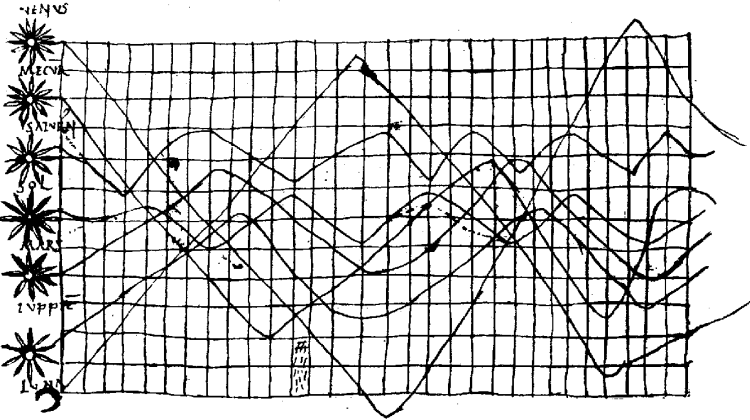
A follow-up on Session 89–From silly to really ridiculous.

Planetary_Movements

We featured a story in our last post (Session 89–Waiting For The Other Shoe To Drop) about a chart of the current Dow Jones Industrials, which eerily resembled the Dow in September of 1929.  This chart and considerable media commentary about it had raised significant fear and concern in certain circles (you know, “deja vu all over again”).  Well, not to worry, one of the eminent technicians focusing on the chart, Tom McClellan (McClellan Market Report–Chart) sounded the ‘all clear’.  Says McClellan in a column written February 11 (Ironically the same day Mark Hulbert posted a story indicating the chart correlation was drawing eerily more similar), the market had to stop going higher if the comparison were “to keep working.  Continuing higher from here would be a break from that pattern, and would constitute evidence that the analog was breaking correlation.”  Of course, the market did go up… spell broken. No matter, lots of people became overwrought about this as demonstrated in Jeff Saut’s comments in last week’s Barron’s(Dow-pocalypse Now).

Now, I don’t totally dismiss the usefulness of charts.  They are one tool, which coupled with fundamental analysis, can be helpful; but, from my perspective, they should not be used in a vacuum.

What do you think?

The information presented in kortsessions.com represents my own opinions and does not contain recommendations for any particular investment or securities.  I may,  from time to time, mention certain securities for illustrative purpose, names where I personally hold positions.  These are not meant to be construed as recommendations to BUY or SELL.  All investments and strategies should be undertaken only after careful consideration of suitability based on the risks, tolerance for risk and personal financial situation.