Categories
Financial, Stock Investment

Apres le deluge, Le Summer Rally?

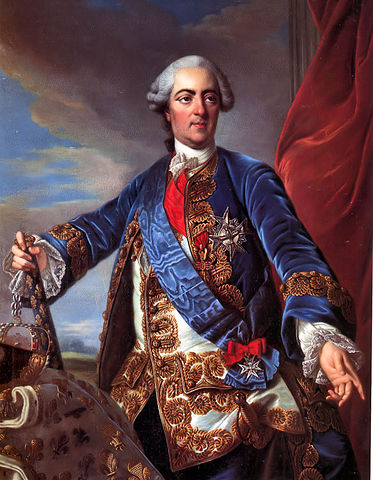
King Louis XV
King Louis XV

My apologies to the French and the late King Louis XV, for slightly reworking a phrase attributed to him, “Apres moi le deluge” (After me the deluge).  The king had it right.  Within 18 years of his death the French Revolution erupted.  A better word for “deluge” might be “cataclysm.”

Apres “Brexit” le deluge?

Based on the deluge of pundit commentary and the associated media freak-out surrounding the British referendum vote to exit the EU, one might have gotten the impression that it was a cataclysmic event.


Mr. "irrational exuberance?"
Mr. “irrational exuberance?”

Alan Greenspan (Friday June 24, 10:12 ET –DJII -400): “This is the worst period I can recall since I’ve been in public service.”  According to Greenspan, the only comparable was October 19, 1987 when the market plunged 23% in one day.  I am guessing the last half of 2008 was so traumatic that the former Fed Chair has developed a mental block (minus 57% in 0ne year, the precursor to a cataclysmic financial crisis–a bubble that inflated on his watch).  “Alan Greenspan says the British break from the EU ‘is just the tip of the iceberg’.”

Lawrence Summers
Lawrence Summers

Former Secretary of the Treasury Lawrence Summers was also very concerned about the possibility of the “Brexit” bringing down the order and stability Europe has seen since WW II and the creation of the economic union.  However, the folks at CNBC put up a headline on the attached article and videos that was a total hyperbole and misquote … “Brexit worst shock since WWII and central banks are out of ammo”  (7:08 ET, 6/28/16).

George Soros
George Soros

And then we have another bomb thrower.  George Soros, renowned hedge fund manager, weighed in Sunday, June 26, with a letter stating, “The consequences for the real economy (from brexit) will be comparable to the financial crisis of 2007-2009.”   What a cheery thought to take into the  opening on Monday morning.  Do you think Mr. Soros may have used Friday to get short the market?  By Thursday of last week it seems Soros had a change of heart: “The Brexit vote was a negative shock but the tragedy no longer looks like a fait accompli.”   Ya think he’s long again?

Enough of this deluge, this flood of  misguided opinion and misinformation.  Let us move on to a more pleasant prospect and question.

Could we be setting up for a summer rally?

Who knows?  Based on the recent action in the market responding to and recovering from the brexit surprise. anything seems possible.  Market sentiment continues in the dumper, regardless of the news, good or bad.  A strong summer rally, maybe to new highs, would be totally unexpected.  Here are a few thoughts from others on the subject:

Mark Hulbert
Mark Hulbert

Going into the brexit vote market sentiment was absolutely horrid, even though the S&P 500 was again knocking on the door of a new all-time high.  According to Mark Hulbert (Hulbert Financial Digest) negative sentiment as measured by his HNNSI (Hulbert Nasdaq Newsletter Sentiment Index) has turned extremely negative … “Stock-market timers turn shockingly bearish — and that’s good for the bulls.”  Hulbert’s index records and measures the recommended invested position carried by a series of short-term, market-timer letter writers.  It was reported the HNNSI was at a minus 55.6% reading as of last Friday (6/24).  That is a recommended 55.6% short allocation.  As of the close this Friday, even after a strong three-day rally, that recommended short position had INCREASED 8%.  This article is worth your time.  Also worth a look are the extremely hostile reader comments that follow it.

Jeff Miller NewArc Investments, Inc.
Jeff Miller
NewArc Investments, Inc.

Also worth your time is Jeff Miller‘s weekly post to SeekingAlpha (http://seekingalpha.com): “Weighing the week ahead: Seasonal strength ahead?”  I am a regular reader of Miller’s work, as it represents a balanced compendium of the reasoned opinions of others, market themes and Miller’s educated thought process.  Here are Miller’s  brief thoughts on the potential for upside:

“What about a summer rally? It is a good guess about the theme for the week. As is often the case for the weekly theme, I don’t know the answer and neither does anyone else. That said, I rate the possibility higher than most, and therefore another good contrarian play. We have had a long-time tight trading range, so a breakout would be meaningful for many. Rightly or wrongly, much will depend on the employment report.’

A final thought

Over time, the market has been a great wealth creator. In the short-run it is in the business of confounding most of the participants most of the time. While we have had a great run since the low in 2009, based on sentiment, it still seems most of the players are totally flummoxed. My perception is that with the current level of pessimism we might find ourselves in a really decent market as we move into the second half of 2016.

What’s  your take?

The information presented in kortsessions.com represents my own opinions and does not contain recommendations for any particular investment or securities.  I may, from time to time, mention certain securities for illustrative purpose, names where I personally hold positions.  These are not meant to be construed as recommendations to BUY or SELL.  All investments and strategies should be undertaken only after careful consideration of suitability based on the risks, tolerance for risk and personal financial situation. 

Categories
Financial, Stock Investment

Session 101–April is the new May?

page1-293px-April_Showers.pdf

Despite the title, session 101 is not about the weather or climate change.  It is about that old market saw, “Sell in May and go away”…a reference to a quirky market seasonal pattern  showing, on average, a greater propensity for market profits in the winter vs. less profits in the summer months.  Mark Hulbert (The Hulbert Financial Digest) commented on this Tuesday April 9th (“Should you sell in April and go away?  Opinion: Some advisors are getting a head start this year.”).  Hulbert points out that in the entire history of the Dow Jones Industrial Average (since 1896), the November thru April time period has had an average gain of 5.2% while May thru October has averaged 1.7% (with significantly greater volatility). The implication is that if you are an adept trader, you can pull out before the summer doldrums and re-buy on a dip, drastically improving your returns.  Problem is most people are not adept traders and, of course there are those May/ November periods like we had in 2013 (to get back in November 1st you would have had to pay up 11%). Also, if you just held on your combined return would have been nearly 7% (almost a double every 10 years) without the added friction of transaction costs, much higher commissions than exist now (+ no ETFs for most of the period) and much wider bid / ask spreads.  BTW, since 1950, the overall  stats on the Dow Jones Industrial’s return is more like 7.8%. The message is keep it simple…just hang in there. Unfortunately, sell in May or April is just noise, confusing what real investing is all about.

A gift to the Media

Gift

The week of April 7th and the carnage in the high momentum sector of the market (high flying tech, biotech and social media) was a gift to the media.  It got their precious bodily fluids pumping.  By the end of the week you had CNBC contributor sages, Art Cashin (Economy may be beginning to sputter) and Rick Santelli (recessionary pressures building), calling out the flight to safety exemplified by the drop in the 10-year U.S. Treasury yield to 2.62% as a harbinger of economic weakness, disinflation…maybe the dreaded “R” word.  This might have been a bit premature in light of subsequent economic releases (retail sales, new claims for unemployment benefits, the Philly Fed Beige Book and consumer confidence).

I believe the 2.62% reading on the 10-year (it subsequently trade at 2.58% with the 30-year below 3.5%) was purely a manifestation of the fear and distrust that has been pervasive in the market since the collapse of 2008.

It is all about FEAR!

The Face of Fear
The Face of Fear

I have a long-time friend (62 years), who like me over the years, looked for ways to make a killing in the market.  We took outsized positions in speculative names and routinely ended up losing our fannies.  Subsequently, I changed my ways, but still devote a portion of my portfolio to small-cap speculation.  Unlike me, the market was not the center of my friend’s  world, he made other investments in real estate, income-producing real estate in crummy neighborhoods (the only kind he could afford).  He used the cash flows to fund his creative interests.  Fast forward thirty years, that crummy neighborhood has become gentrified and my friend has a problem, where to invest the bundle he will make when he liquidates the properties. It is a problem, because he has become so traumatized by the events of 2008/2009 he is afraid to put the money in the bank, or give it to someone else to manage (thank you Bernard Madoff). I am told and believe to be true that there are lots of “boomers” out there like my friend, scared to death of investing and unable to know who to trust to invest with.  Ergo, there is a big ‘fear’ demand for Treasuries.

The Takeaway

Corrections in bull markets are normal, but secular bull markets normally do not end in periods of high skepticism and fear.  I believe, accept for the speculative fringe that is currently being pummeled, we are still in a period of fear and skepticism…a healthy sign that this bull has further to run.

What do you think?

The information presented in kortsessions.com represents my own opinions and does not contain recommendations for any particular investment or securities.  I may,  from time to time, mention certain securities for illustrative purpose, names where I personally hold positions.  These are not meant to be construed as recommendations to BUY or SELL.  All investments and strategies should be undertaken only after careful consideration of suitability based on the risks, tolerance for risk and personal financial situation. 

Categories
Financial, Stock Investment

Session 85–“When will they stop talking about ‘the taper’?”


BillChina is growing.  The ‘Dreaded Taper’ is growing.  Several emerging market currencies are sinking and the media finally has things to obsess on after a very dull fourth quarter, where most of the popular indices (save the NASDAQ) have made new all-time highs.

One of the key points that has developed out of this bearish bill-of-particulars is today’s Fed decision to take an additional $10 billion per month from the Quantitative Easing program.  In February, the Fed will only be buying $65 billion worth of Treasuries and agency mortgage backed securities (vs. $85 billion in December).

Now, common wisdom, pre-taper, was: ‘If you do this, rates will rise’.  This clip from CNBC’s “Closing Bell” gives a taste of that point of view from two of my favorite (NOT) purveyors, Peter Schiff and “bad news bearer”, Jeff Cox.  Incidentally, both claimed today’s taper action was not going to happen because the ‘economy was too weak’.  I am not sure, based on their track records, why either gets any air time.

What’s wrong with tapering?

According to the bears, rates will go up, not only hurting our economy; but it would really be bad for emerging countries, weakening their currencies as our higher rates would draw funds to the dollar.  Ergo, these countries would have to raise rates to counter our increase, thus weakening their economies.  Voila!  A world-wide downward spiral begins.  Well, tapering is not tightening.

Low and behold, rates did not rise!!

ZAP_lightning_bolt_icon

The U.S. Treasury 10-year note closed at a 2.69% yield Wednesday, January 29, down from 2.88% December 18, 2013.  Although I am certain that rates will go up over time, the taper of QE just may not be the trigger.

Having made this case, the market still went down today, and that downturn carried over to Asia, where the actual Chinese PMI was reported this evening at 49.5 (below 50 is considered a negative number).  My take on this is that you should not allow the media’s read on these events to press your “Panic Button.”  This may just be the normal correction that we have all been waiting for, not he end of the world.

Polite dinner conversation

Polite Dinner Conversation

I was out to dinner this weekend with friends. My friend Allen asked: “When will they stop talking about ‘the taper’?”  My answer: “I don’t know.”  It is hard to say because, even with rates down since the first (and now second) installment, they are still obsessing about it.

What do you think?

The information presented in kortsessions.com represents my own opinions and does not contain recommendations for any particular investment or securities.  I may,  from time to time, mention certain securities for illustrative purpose, names where I personally hold positions.  These are not meant to be construed as recommendations to BUY or SELL.  All investments and strategies should be undertaken only after careful consideration of suitability based on the risks, tolerance for risk and personal financial situation. 


Categories
Financial, Stock Investment

Session 29–Central Banks Can Buy Equities!! You learn something new every day.

BillI have been around this business for a long time.  In my entire career I have never heard of any central bank buying stocks.  Now, I did hear some wag on one of the political / entertainment shows a month or two ago asserting that the reason our stock market had done so well was that the Fed (using Q.E. funds) was buying stocks.  This was absolutely not true, as the Fed (as well as the Bank of England) has no mandate allowing equity purchases.  I just passed this off as another looney-tune malcontent venting his spleen.

After all, central bankers were supposed to be the most conscientious, conservative guardians of their reserves.  However, the media stories kept coming, culminating in plethora this last week.  Much to my chagrin (even though my grandson thinks I am the worlds smartest human), I have been wrong in this particular belief.  I have come to find out that certain central banks have authority to and have been buying (or planning to buy) common stocks (or ETFs).  In fact, the Bank of Japan has been in the market since last May buying equity ETFs, and they currently have authorization to purchase another $35 billion in equities by the end of 2014.  Turns out even some central banks are reaching for return in this low interest rate environment.

What is intriguing about this is that they (the central bankers) ought to have some handle on the course of interest rates, inflation and economic growth (they may be the illusive “smart money”).  Of course, there is no guarantee that they are smart or that this will not end badly.  For the time being it is something for the media to focus on.  As such, I will try to add a little perspective in the event that this becomes a bigger topic.

First and foremost, according to a Bloomberg article that our blog has linked you to, total central bank exchange reserves at year-end 2012, stood at about $11 trillion vs. total world equity markets valued at $55 trillion. So, reserves equaled about 20% of equity market value. There is no way that a large piece of the of the $11T makes it into equities, as 70% of the bankers surveyed in the Bloomberg article said using equities in the reserve account was “beyond the pale”, plus many do not have the mandate to own stocks.  Of those banks mentioned in the article, the Swiss National Bank appeared to have the largest allocation at 12 percent (most were well under !0 percent).  Decide for yourself if the Bloomberg headline didn’t smack of a little hyperbole….”Central Banks Load Up on Equities.”


A positive note was sounded on CNBC in an interview with Jim O’Neill, Chairman of Goldman Sachs Asset Management.  In the interview, Mr. O’Neill posits “‘It Makes Sense’ for central banks to own equities.”  Remember Goldman has much to gain (talking their own book) as they help these central bankers deploy assets.  Also it is unlikely, when the trade is reversed, that the folks at Goldman Sachs will be so open about their change in opinion.  Caveat Emptor!!

For now it may be one other reason to give for the market’s strength since November of last year.  And, it is not the public running to embrace stocks, as some have said; but, it is for the same reason motivating the central banks that the public may eventually care about stocks—prolonged low returns in fixed income investments.

You learn something new every day!!

P.S. For a little balance on today’s post we are including a link to Barron’s /Randall Forsyth’s “Up and Down Wall Street column—The Sinister Season”, where Mr. Forsyth talks about slowing growth in the spring and hints that Fed Chair Bernanke may be about end his career as chairman.  Were this true, the markets might really be roiled.

What do you think?

The information presented in kortsessions.com represents my own opinions and does not contain recommendations for any particular investment or securities.  I may,  from time to time, mention certain securities for illustrative purpose, names where I personally hold positions.  These are not meant to be construed as recommendations to BUY or SELL.  All investments and strategies should be undertaken only after careful consideration of suitability based on the risks, tolerance for risk and personal financial situation.