Categories
Financial, Stock Investment

‘Apocalypse Now’?

apocalypse then
apocalypse then

Sure, There are apocalyptic events in the stock market, but the media makes them sound almost routine even though they are few and far between. Market attention via the media has been wrapped around another Fed fund rate increase as a catalyst for such an event. It is very doubtful that a quarter point increase in the rate would be a disaster. In fact, worry over a Fed rate increase at this point is ‘much ado about nothing’.

With the financial media everything is apocalyptical

As an example, Europe has been a continuing media worry, something that might lead us into the abyss.  I’ve been in Europe the past two weeks. Much to my amazement, despite Brexit, the refugee crisis and terrorism the joint was jumpin’ … crawling with touristas spending money. Of course, neither the foreign media or the domestic sources I follow reported on this (much too uplifting). Their focus recently has been domestic centric. In the US it Has been all about TRUMP (a tragedy), the Olympics (sadly Ryan Lochte’s posse–a real tragedy) and in the financial media, Fed speak and interest rates.

I mean, man, like ‘its deja vu all over again,’ groundhog’s Day. The minutes of the July FOMC meeting came out last week and concerns over what Chairperson Yellen would say in her remarks at this week’s Kansas City Fed economic symposium in Jackson Hole began to bubble up.  A Wall Street Journal article reporting on the meeting was headlined: “Fed’s July Minutes Show A Split Central Bank Seeking to Keep Options Open.” You would think there was some major controversy here, but the actual vote was 9 to 1 for maintaining the current posture. By the end of the week this is all CNBC was talking about. They were blaming the market’s lackadaisical performance on uncertainty about when and how many quarter point bumps in the Fed funds rate we might have to endure. I blame the summer doldrums (many Wall Streeters at the shore in August). The real question should be, “why should we care care?” The obvious answer is WE SHOULDN’T. It is noise. Yet, here is the headline that greeted subscribers to CNBC’s web edition Monday morning: Yellin’s speech at Jackson Hole set to dominate the mood in Wall Street.”

Forecasters have been continually wrong about the impact of  policy changes

Remember the end of the infamous bond-buying binge, a.k.a. Quantitative Easing (QE)? That was going to be the end of the world as we knew it… it didn’t happen. When the taper of QE was announced in December of 2013, the ten-year US Treasury yield spiked to 3%. It is now 1.57%. The S&P 500 was 1573–1/1/14 (8/19/16 — 2183). I mean when this happened there were people absolutely screaming this would be the end of the bull. In December of last year the same rap was on regarding the first quarter point move in the FF rate. The S&P stood at 2029 (1/1/16) and the ten-year yield had spiked to 2.33% (again 1.57% right now with the S&P sitting at 2183). In both instances the fear, the flight-to-safety trade took over. People were so fearful of stocks that they were willing to accept little or no return in a bond with a guarantee of getting their principal back. This will probably be the case again as investors, fearing the impact of a minuscule rate increase, run to safety. This fear mindset augers well for stocks. It appears that even though we have attained new all-time highs, there is very little froth in equities. Meanwhile, those so-called ‘safe’ bonds will really get hurt when rates eventually turn up.

Let history be your guide on the pace and magnitude of rate increases

If history is any guide it would seem that it might take years to get the Fed funds rate back to even a 2% level, which would still be well below historical norms (Avg. annual FF rate over 5%+ the past 35 years). Meanwhile, earnings  would continue to grow along with dividends. Financing costs would continue to remain relatively stable on a gentle upward path.

To refresh your memory, the first step in normalization came in January 2014 when the Fed began to taper its Quantitative Easing bond-buying program. The taper was completed October 29, 2014. It took another 14 months (December 2015) before they made the first move raising the fed funds rate 1/4 point. Eight months later and we are still awaiting our second increase. Clearly the path upward is ‘low and slow.’ Even with all the evidence favoring this trajectory, every time the Fed speaks, monetary hawk or dove, the punditry goes crazy, much to the disadvantage of those who would pay attention.

Ergo, no apocalypse now. 

What’s your take?

P.S. ‘No apocalypse’ does not mean ‘no corrections’. Corrections are normal and you should expect them.  They can be violent and feel apocalyptic. Generally, most corrections are scary, but not the end of the world.

The information presented in kortsessions.com represents my own opinions and does not contain recommendations for any particular investment or securities.  I may, from time to time, mention certain securities for illustrative purpose, names where I personally hold positions.  These are not meant to be construed as recommendations to BUY or SELL.  All investments and strategies should be undertaken only after careful consideration of suitability based on the risks, tolerance for risk and personal financial situation. 

Categories
Financial, Stock Investment

Session 130–Regina Kort Saves Europe!!!

Regina saving Europe (Italy in particular)

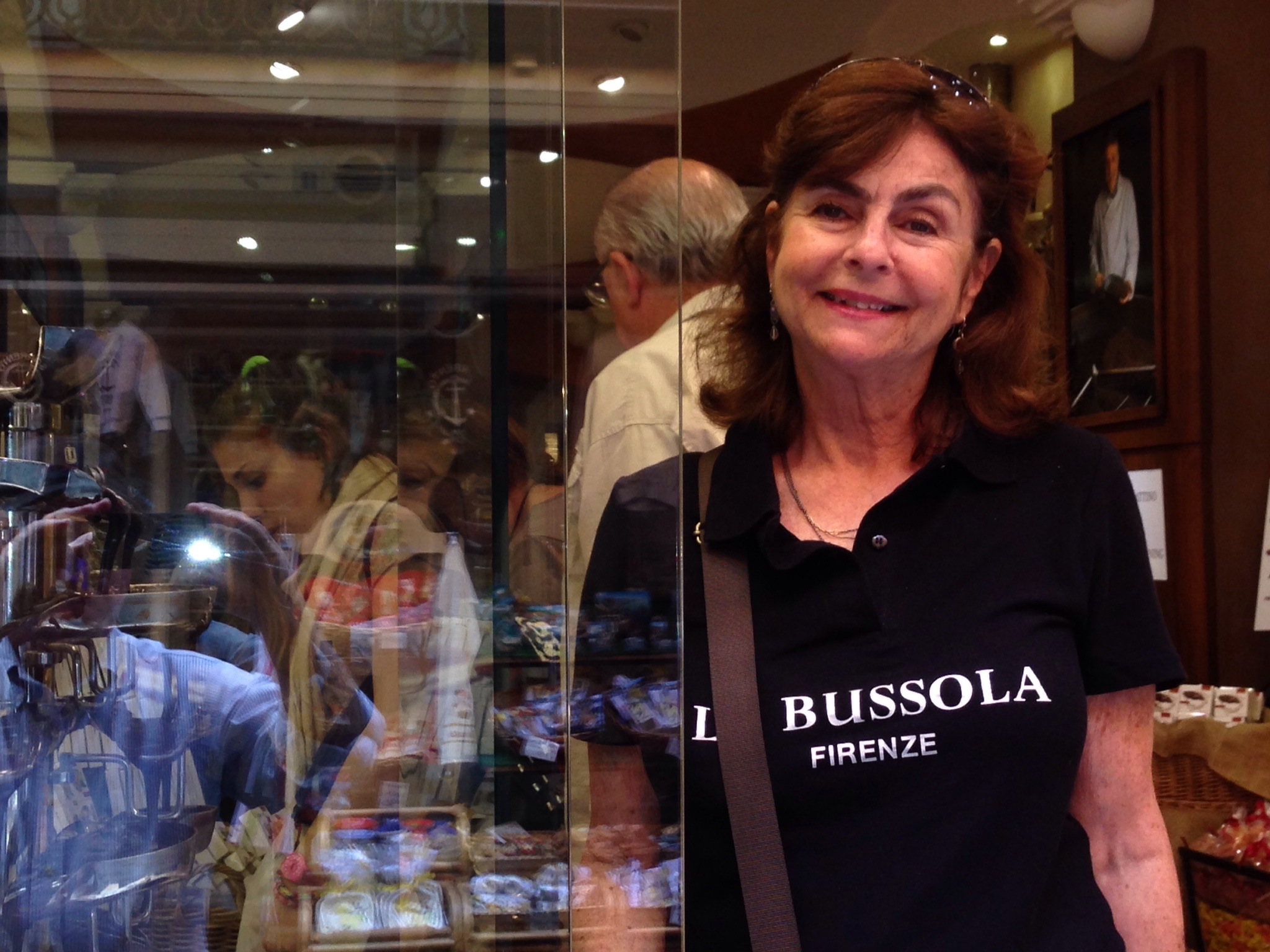
As you may have surmised by my lack of posting, I’ve been away for a few days. Before leaving for Europe October 11, I posted Session 129, “House of Pain.” The market was down big and in a tizzy about Europe and fear that recent signs of weakness there (especially in Germany) presaged their shallow recovery being undone. Of course, there was Ebola and ISIS weaving their negative magic in the background. This reversed immediately, as soon my wife, Regina (a one-woman economic stimulus program) hit the ground in Italy. Voila! Europe is saved and the market is on a tear. It would be unfair to give Regina all the credit. In truth, Venice, Firenze and the Amalfi coast were teeming with touristas spending money.

But, let’s not pop the corks on the champagne just yet.

Irrational Exuberance!

There’s that pesky Ebola that just keeps rearing its ugly head and the financial media is trying very hard to make it the new fear story (‘if it bleeds, it leads’). This is not to demean the fact that this horrible virus is an important story; only to say, at this point, it should not be a market mover … the new pandemic.

Importantly, Ebola is hard to catch. It is reported widely that you have to be in direct contact with bodily fluids emanating from a person manifesting symptoms to catch it. All of the U.S. cases were, in fact, in people who worked around the disease and had multiple opportunities for exposure. A second point I would make is that the world is finally beginning to take the disease seriously and resources are starting to flow (albeit in a not-too-timely fashion) to knock down this most recent West African flare.

Where’s the grief?

Real Grief
Real Grief

Well, it is mostly in the minds of the media (main-stream and financial), which deserves credit for getting the story out there, but not for stoking irrational fears. If you are in the market and you get your news from MarketWatch (an on-line service of The Wall Street Journal) or CNBC, you might get the impression every snippet of Ebola news could potentially blow up the market. Here are a few samples from the pre-opening headlines, Friday, October 24th:

From MarketWatch–“Wall Street set to open lower after New York Ebola news”

From CNBC–“Ebola in New York: Will U.S. follow Europe Lower?”

From CNBC–“U.S. stocks and sectors to watch after New York Ebola case”

Now, I bookmarked all the stories attached to these headlines. Interestingly, only the CNBC stories were recoverable. The MarketWatch headline had been replaced by another story, “S & P 500 posts biggest weekly gain of 2014.” Oh, the things you can do and say on the internet!

All I can say is, thank you Regina (and all your countless like-minded minions) for the big week in the market. Between Italy and my portfolio’s snap back, I more than broke even.

How did your portfolio do last week?

The information presented in kortsessions.com represents my own opinions and does not contain recommendations for any particular investment or securities.  I may, from time to time, mention certain securities for illustrative purpose, names where I personally hold positions.  These are not meant to be construed as recommendations to BUY or SELL.  All investments and strategies should be undertaken only after careful consideration of suitability based on the risks, tolerance for risk and personal financial situation.
Categories
Financial, Stock Investment

Session 129–The House of Pain

That’s what I call the small and mid-cap segment of my portfolio. BTW, “House of Pain” is a term most Cramer fans are familiar with. He did not invent it, but I think it is appropriate. I mean it has really gotten ugly out there, not to mention the return of volatility that some were bemoaning the loss of just a few short months ago. Truly this may be the “Big One”, that 10%+ correction many have been saying was ‘just around the corner’ for the past two years.

 House of Pain
House of Pain

What a difference a day made

From up 275 p0ints on the Dow Jones Industrials Wednesday, on nuanced Fed Speak stating their decision process would include consideration of global economic conditions (Europe comes to mind). Fast forward to Thursday, and due to some additional disappointing numbers out of Germany, comments by ECB Chief Mario Draghi and Fed Vice Chair, Stanley Fisher, the Dow reverses field and drops 335 points (1.97%). The damage in the small and mid-cap Russell 2000 was more extensive, down 2.66% (down almost 12% from its March peak).

Why the fuss?

Seems to me it’s all about Europe and fear that recent signs of weakness over there will undo our recovery, even if the weight of the evidence is less than compelling. It is a good excuse to sell things.

One thing that puzzles me is why the U.S. has to pay more than Spain (2.31% vs. 2.06%) to borrow money for ten years and why does Italy enjoy the same rate for 10-year money that we pay. You would think if things had gone so awry over there they would have to pay more. Remember, these are two of the PIGS …Ireland and Greece complete the quartet.” These were the sickest of Europa’s sisters two years ago.

Here is how CNBC contributor, Art Cashin, summed-up today’s action.  Not only did he cover Europe, but he threw in Ebola and ISIS for good measure. BTW, Art failed to mention more good news on the employment from earlier in the day, ignoring the fact that the initial Jobless claims rate came in for the 4th straight week under 300,000 (first time this has happened since 2006). The 287,000 number was 21% below the year-ago number.

“The only thing we have to fear is fear itself “

FDR
FDR

These words were spoken by our 32nd President, Franklin Delano Roosevelt, in his first inaugural address (1933) in the depths of the Great Depression. Those were really tough times. Before this, or future corrections end, the media will be working hard to convince you that these, too, are dire times. Roosevelt’s quote on fear is very applicable when investing in today’s media afflicted world. It is fear that makes us sell low and buy high. So, to finish this session, in a period of rising fear and agitation, I thought I would conclude with a bit more of this wonderful quote;

“….let me assert my firm belief the only thing we have to fear is fear itself –nameless, unreasoning, unjustified terror which paralyzes needed efforts to convert retreat into advance.” 

ONE LAST ITEM: The stock market is the only place that I know of where the concept of ‘The Price Elasticity of Demand” seems to fall apart. Normally lower prices increase demand. However, in the stock market lower prices often create supply, while higher prices create demand. For whatever it is worth, no matter how many solid reasons one can present for higher or lower valuations, these anomalies can persist some time without resolution.

So, enjoy the House of Pain the best you can. It may be with us for a spell.

The information presented in kortsessions.com represents my own opinions and does not contain recommendations for any particular investment or securities.  I may, from time to time, mention certain securities for illustrative purpose, names where I personally hold positions.  These are not meant to be construed as recommendations to BUY or SELL.  All investments and strategies should be undertaken only after careful consideration of suitability based on the risks, tolerance for risk and personal financial situation.