Categories
Financial, Stock Investment

A Look Into The Belly Of The Bear

Irrational Pessimism

Before moving on to a more complete discussion of ‘the belly of the bear’, I thought a real-time view of ‘irrational pessimism’ might be in order. I have one and it is a doozy. Now a ‘doozy’, loosely defined, is “something unique.” Unfortunately, or fortunately for those left with money to buy, there are many doozy values out there in the market these days.

My doozy of the the day is Energy Transfer Partners (ET-$12.24, NYSE). ET closed last Friday, December 14, at $14.57. It was recommended in last week’s edition of Barron’s Magazine as one its top 10 best investment ideas for 2019. Last week the stock dropped $2.33 on absolutely no news.  It currently yields a hair under 10%. Just on a yield basis the stock, when it was recommended last week, was very attractive at an 8% yield versus 2.78% on the 10-yr. Treasury. Why would  you sell this stock with a 10%  yield and improving fundamentals versus 2.78% on the 10-yr. Treasury when the 10% yield has a possibility of growing over time? Look’s like irrational pessimism to me. Meanwhile, there are situations like this showing up in many other sectors of the market

BTW, that 10-year yield was in place when the Fed moved the rate on Fed funds up to 2.5%. Also, I might point out the yield on the 10-year has dropped  almost 1/2 of one percent since the Fed’s last quarter point bump in the funds rate (September 27, 2018). How does this square with all the pundits screaming that the Fed’s aggressive moves would cause a spike in rates that would kill the economy?

A look into the belly of the bear

If you are looking for perspective on the market, a discernment between what is real and what is imagined, I highly recommend  the work of Fear and Greed Trader and this week’s post, “The Oracles Have Spoken, Can Anything Save The Bulls?”

He makes the following point in his current article:

“So many investors seemingly HAVE to do something (sell) because recency bias is still in place. The financial crisis and 2008 are still embedded in many minds out there, and the heat is turned up. Many believe they will be burned again, and that is all about FEAR …  Every correction does not morph into a bear market, and not every bear market morphs into a crisis. In 2016, the S&P 500 fell 15+%. Just like today many stocks dropped much more than that, and the bull market was declared dead. Of course, when poor judgement took over then it was accompanied by what is around today, FEAR.”

I would concur that FEAR not FACT fills the belly of this beastly correction.

“So, first of all, let me assert my firm belief that the only thing we have to fear is fear itself—nameless, unreasoning, unjustified terror which paralyzes needed efforts to convert retreat into advance.” (Franklin Delano Roosevelt — First Inaugural Address, 1933)

FDR -1933

I’m afraid “nameless, unreasoning, unjustified terror” has overtaken the market in the last couple of months. It has been fanned by persistent negative commentary from a parade of media and punditry shouting ‘look out below’ coupled with a strong dose of recency bias.

There is another element at work in this decline…

A crisis in confidence in our national body politic

I touched on this a couple of weeks ago in my post “A ‘bad trip’ down memory lane.” At the bottom in 1974, as we awaited the impeachment or final resolution of the Watergate Coverup, the buyers left the field and the sellers were left with ridiculous bids, which they accepted because they were so fearful. That fear was more understandable then because we were faced with the double whammy of then sky-high interest rates and inflation plus we had a developing constitutional crisis with President Nixon’s resistance to the rule of law.

Today we are up against another such crisis in our national political establishment. This has to be affecting investor psyches. My sense is that we will weather this storm and come out the other side a stronger democracy: or, as FDR so eloquently put it, “In every dark hour of our national life a leadership of frankness and vigor has met with that understanding and support of the people themselves which is essential to victory.”

The best advice I’ve heard for times like this —


“Be fearful are when others are greedy and greedy when others are fearful.”

Warren Buffett

That’s it for Kort Sessions this year. Best wishes to you and yours for a Wonderful Holiday Season and a Happy, Healthy and Prosperous New Year!


The information presented in kortsessions.com represents my own opinions and does not contain recommendations for any particular investment or securities.  I may, from time to time, mention certain securities for illustrative purpose, names where I personally hold positions.  These are not meant to be construed as recommendations to BUY or SELL.  All investments and strategies should be undertaken only after careful consideration of suitability based on the risks, tolerance for risk and personal financial situation. 
Categories
Financial, Stock Investment

A ‘Bad Trip’ Down Memory Lane

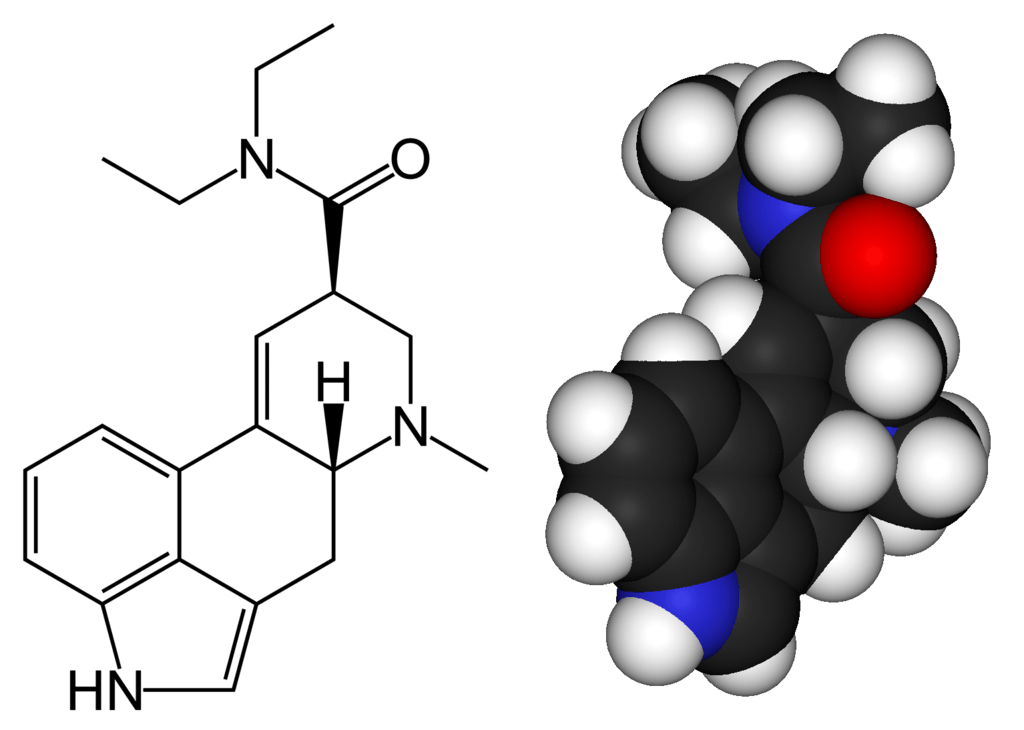
LSD 2D & 3D

The ‘bad trip’ I’m alluding to in my title was the type some substance experimenters used to get from self-administered  hallucinogenic drugs like LSD (Lysergic Acid Diethylamide). This was the preferred trip-inducing substance of Harvard psychology professor Dr. Timothy Leary who thought it might have great potential in psychotherapy.  “He used LSD himself and developed a philosophy of mind expansion and personal truth through LSD”. As such, he became an icon of the hippie counterculture of the 1960’s along with his catchphrase, “turn on, tune in, drop out.” Anyone ingesting LSD was said to be going on a trip. I guess for the most part these trips were pleasurable, mind-expanding voyages. But sometimes they went bad and became terrifying horrible experiences.

Last week was flashback to a bad trip (in the market) I took in the summer of 1974

Richard Nixon circa 1968

Only I was not on drugs. January, 1973, the S&P 500 peaked at 119.87. Twenty-one months later (Oct., ’74) it bottomed at 62.28, down 48%. It was a slow, awful bleed. By the time we got to the summer of 1974 you could not give common stocks away, let alone sell them to people. It was even a struggle to get people to buy electric utility stocks yielding 10%, 11%, 12% because their debt laden balance sheets were so terrible. This was a major problem because, unlike today with the 10-yr US Treasury note yielding 2.9%, back then that note was yielding nearly 8% (on its way to 15% in 1982). Consumer price index inflation was 11.01% in 1974 (on its way to 13.5% in 1980).

Richard Nixon had just resigned in disgrace in the wake of the Watergate break-in and coverup. And after trading between $2.50 and $3.00 barrel for the previous 32 years the price of crude oil spiked as a result of the 1973 Arab Oil Embargo. In 1974 crude averaged $12.52 per barrel. I humbly submit things were a mess. It was THE BOTTOM, born in fear and total distrust of the market. It was the bottom, even though interest rates would almost double over the next seven years and inflation would continue to rip. Keep this in mind the next time you hear a pundit or read an article about the scourge of higher rates and inflation. Also, history would indicate, in the stock market ‘bad trips’ always turn into ‘good trips’ eventually.

What about our current ‘bad trip?’

Yikes!

It reminds me of that time long ago. Like the summer of ’74 we have a president under extreme duress. In the summer of ’74, sitting at our desks in the main office of K.C. based H. O. Peet & Co., Inc., colleagues across aisle and I would comment on how cheap certain stocks had gotten only to come in the next day, or the next week, as the market probed for a bottom to see those names even lower.  Cheap doesn’t make any difference when emotions take over. Don’t confuse me with the facts. Nobody wanted to own stocks.This is eerily similar (to a much smaller extent) to what we are seeing in today’s market. There is no panic. It just goes down every day. The end of last week felt very similar. Even the 2%+ drop in the Dow and S&P seemed calm and orderly. Regardless, it scares people even though there is nothing in the current fundamentals remotely as frightening as those we saw in the summer of 1974.

The pain, however, is real. It has been most prevalent in small cap stocks as evidenced by a 19% drop in the Russell 2000 index since September 1st. Though the S&P 500 is down 10% since September, there are many stocks in the index down over 20%.

 So, what is scaring the market? (perspective in order here)

  • Growth concerns: US growth will slow. It should. A significant part of the growth in corporate earnings this year came as a one-time benefit from the tax cut. There will be NO additional tax cut in 2019
  • Global Growth Concerns: China, OMG! Chinese November retail sales miss estimates by 2/10ths percent coming in at 8.6%. Chinese GDP grew at 6.5% 3Q ’18 over 3Q’17. 6.6% was the so-called consensus. Another metric, November industrial production came in below expectation at 5.4%, 1/2% below consensus. I mean, give me a break! We are dealing with the 2nd largest economy in the world ($13+ Trillion vs. the US near $20 Trillion in 2018). Despite the sackcloth and ashes (see link above) donned by the prognosticators these are not bad numbers considering the size of this economy. Oh yeah, it’s the Trade War.
  • Worry about Fed policy and rates . Fed says we are almost there. According to the Wall Street Journal ... “Still, many investors say that, even with the possibility of a more gradual rate path, they remain cautious heading into 2019. The yield curve, the gap between two- and 10-year Treasury yields, has continued to flatten in the fourth quarter. Historically, that has signaled trouble ahead for the U.S. economy.” (you need a subscription to access). I would advise anyone in this quandary to reread paragraphs two and three of this post.
  • Political uncertainty: Regardless of the outcome of Mueller investigation we will have a divided government, remember gridlock is good. They can’t do anything to hurt us!
  • Government Shutdown. this too will pass if it happens at all.
  • Falling oil prices. It is not about demand. Demand is growing. It is about supplies which look like they are being reeled in by Saudi Arabia and Russia. falling oil prices, while they last, are a good thing.

Turning a ‘bad trip’ into a good one (maybe)

I seldom make recommendations in Kort Sessions (not my mission), but sometimes I see a ‘fat pitch’ I just can’t resist. The trigger for this recommendation came from this week’s edition of Barron’s and an article covering their “Top 10 stock picks for 2019.” One of the top 10 is Energy Transfer Partners (ET).(you need a subscription to view). The Barron’s article talks about the group, which has been very much out of favor for several years: “Master limited partnerships in the U.S. have been getting their act together by setting sustainable distributions (equivalent to dividends) rather than maximizing them, and by ending investor-unfriendly structures that hurt MLP holders and made institutions reluctant to buy.”  I completely concur with the premise of the article. The way I have chosen to participate is through a closed-end, leveraged fund that invests in the MLP sector, the Tortoise MLP fund fund (NTG-$12.77-NYSE). The fund sponsor/manager is Tortoise Capital Advisors. Oh yes ET is NTG’s largest holding.

Caveat Emptor. I own this fund and view it as a long-term income alternative. My most recent purchase was at $13.75. From time to time I may trade around this position, buy more or lighten up as the position moves up or down in the market. I will not be publishing on any of my buys or sells.  Also, as we’ve seen over the past couple of weeks, this stock and may get cheaper. Consider your temperament and suitability for this investment … investigate before you invest.

Thank you for your readership. I hope my ‘bad trip’ will give some perspective and comfort in what has been a pretty difficult market.

bk

The information presented in kortsessions.com represents my own opinions and does not contain recommendations for any particular investment or securities.  I may, from time to time, mention certain securities for illustrative purpose, names where I personally hold positions.  These are not meant to be construed as recommendations to BUY or SELL.  All investments and strategies should be undertaken only after careful consideration of suitability based on the risks, tolerance for risk and personal financial situation. 


Categories
Financial, Stock Investment

Irrational Pessimism–Throwing the baby out with the bath water

Since first publishing kortsessions.com in February of 2013, I have tried not to get into the weeds on individual stocks ideas. We are all about the media and the adverse outcomes in store for those who rest their investment policy on their pronouncements. When I did mention a name for illustrative purpose, I did my best to make certain that I acknowledged my fallibility and ownership position (if I had one), and to advise all readers consuming my work to make certain companies mentioned were suitable to their own investment circumstance and tolerance for risk before they considered purchase … caveat emptor.

Today’s post is going to sound like a recommendation. But, because of the irrational pessimism surrounding a certain segment of the market, the securities covered have great illustrative value. None-the-less, I urge you refer to the admonition in paragraph one before rushing out and buying any of the two names that I will refer to. I own positions in both names.

Background of the craziness

Dr. Freud We need help!
Dr. Freud
We need help!

My example today comes from a former client, Tortoise Capital Advisors. As their name implies, ‘slow and steady wins the race.’ They are not trying to hit the ball out of the park every time they come to the plate. Singles do just fine.  Tortoise manages both separate accounts, closed-end, exchange-traded funds  and open-ended funds (AUM–$13 billion), the majority of which specialize in the shares of Master Limited Partnerships (MLPs). I have owned their shares in the past and recently initiated positions in their flagship fund, Tortoise Energy Infrastructure Corporation (TYG) and Tortoise MLP fund (NTG). These two funds, in particular, are midstream (processing, storage and pipelines–NOT PRODUCTION) oriented. They are conduits and not terribly sensitive to commodity prices.

The management at Tortoise is very conservative. I can vouch for this from personal experience. As an institutional broker with both A.G. Edwards and Wells Fargo, I had the opportunity to bring managements in for meetings with their PMs and analysts. I will attest that they were an extremely tough sell. They have scrupulously avoided commodity risk and the risk of anything questionable in financing plans/needs and capitol structures (excessive leverage). They looked for simple businesses with long-term repeatable revenue streams. They did their homework.

Both TYG ($23.58, yielding 11%, a/o-2/26) and NTG ($15.20, yield 11%, a/o- 2/26), after making all-time highs in 2013 ($50.64 and $30.18 respectively) began precipitous declines in 2014. Interestingly, TYG, because it had the word ‘Energy’ in its name, began to plummet first; even though none of their MLP investments owned oil and gas reserves or production. Their holdings were all fee-based conduits, storage or processors, whose prices had collapsed due to oversupply issues in commodities that they transported; but, whose demand (ergo, fee generating capacity) continued to grow. This was crazy, but par for the course for the stock market.

Linn Energy LLC (LINE) and Kinder Morgan, Inc. (KMI) exacerbate matters

In the case of LINE, it is an upstream (ergo, highly exposed to commodity risk via owned oil and gas production) MLP that came under bear attack for its hedge accounting (completely unwarranted). They made a large acquisition, with the idea they could swap out pieces for lower risk producing assets and sell equity to finance the rest. They did this on the credit card.  The crude market turned. They could not sell or swap assets. When oil collapsed, their stock price collapsed. They could not sell equity to pay down debt. Linn’s stock, which at one time traded as high as $42, is now less than $.50 per share. Importantly, Linn and the upstream partnerships are outliers. Though midstream MLPs, for the most part, have little commodity exposure, investors did not want to be confused with the facts and sold.

Kinder-morgan-logo

KMI was another case of a bear attack on, what was considered at one time, ‘best of breed’ in the midstream MLP space. It was also a situation where an acquisition was made in a market that was not sympathetic to financing MLPs. Ergo, to put itself back on sound financial footing (which it did-see this link) the company slashed its dividend 75%,  proving the naysayers correct and causing further group-wide liquidation … throwing the babies out with the bathwater.

The Elephant in the Room: Is the MLP model broken?

The Broken
The Broken

According to Tortoise portfolio manager, Matt Sallee …Looking at the facts, midstream MLPs, their fundamentals are not broken. Our portfolio has average cash flow growth of 20% year over year looking at EBITDA, 10% per unit. And while not every company has announced their 4th quarter distributions, north of half of our portfolio has, and that weighted average distribution as I mentioned previously is up about 3% over the prior quarter, so we feel pretty good about that …  Along with that, our MLP portfolio companies, have not experienced any distribution cuts. You read that? Over half their portfolio companies in the last year increased distributions with no distribution cuts!

(Full transcript of Tortoise first quarter 2016 conference call)

(Additional context-Link to video Presentation by Tortoise CEO, Kevin Birzer)

How irrational has the pessimism been in the MLP space?

My favorite recent example came January 20, 2016. In the wake of a horrific (pardon my sarcasm) 1/4 point increase in the Fed Funds rate, a continuing collapse in the price of oil, the Chinese market in free fall, a potential European banking crisis (punctuated by rumors of problems a Deutsche Bank AG — DB), the market opened and fell, almost immediately 550 Dow points. During the panicky selling that ensued, TYG hit a low of $18.50 (yielding 14%) and NTG fell to $11.60 (yielding 14.5%). Don’t confuse us with the facts! We can’t stand this anymore! Get us out!

FDR -1933
FDR -1933

The above panic is a descriptive of what one normally sees at a market bottom, not at a top … an example of —”… nameless, unreasoning, unjustified terror… (FDR).” It is Irrational Pessimism of the highest order.

I believe that the MLP space is a good proxy for much of the craziness afoot in today’s market … healthy babies being tossed out with the bath water.

What is your take?

The information presented in kortsessions.com represents my own opinions and does not contain recommendations for any particular investment or securities.  I may, from time to time, mention certain securities for illustrative purpose, names where I personally hold positions.  These are not meant to be construed as recommendations to BUY or SELL.  All investments and strategies should be undertaken only after careful consideration of suitability based on the risks, tolerance for risk and personal financial situation. 


Categories
Financial, Stock Investment

“Eve of Destruction”

No 5 Army Film & Photographic Unit, Wilkes A (Sergeant) - This is photograph BU 8604 from the collections of the Imperial War Museums (collection no. 4700-30) Scene of destruction in a Berlin street just off the Unter den Linden. Permission details This artistic work created by the United Kingdom Government is in the public domain. This is because it is one of the following: It is a photograph created by the United Kingdom Government and taken prior to 1 June 1957; or It was commercially published prior to 1965; or It is an artistic work other than a photograph or engraving (e.g. a painting) which was created by the United Kingdom Government prior to 1965. HMSO has declared that the expiry of Crown Copyrights applies worldwide (ref: HMSO Email Reply) More information. See also Copyright and Crown copyright artistic works. Deutsch | English | suomi | français | italiano | 日本語 | македонски | മലയാളം | Nederlands | português | slovenščina | Türkçe | 中文 | +/− View more Public Domainview terms File:Destruction in a Berlin street.jpg Uploaded by Hohum Created: 3 July 1945
Berlin 1945
Apres Destruction
No 5 Army Film & Photographic Unit, Wilkes A (Sergeant) –Imperial War Museum

Eve of Destruction

“Eve of Destruction ” was the cheery title of Barry McGuire’s chart-topping single of September 1965, words and music by P. F. Sloan. This war protest song shot to the top of the charts almost overnight. Take a listen, and I bet you have to agree the more things change the more they stay the same … at least in the past 50 years (the past 75 years considering the visual above).

We had one of those “Eve of Destruction” moments Monday, August 24 (the recent low). In fact, things were so grim I felt compelled to post a counterpoint August 23, (though the title may not confer that intent), “Abandon All Hope Ye Who Enter Here.” It had appeared that on Friday, August 21, many had abandoned hope when panic set in, as oil had collapsed (breaking briefly below $40.00) and China melt-down fears erupted after a slight devaluation in the Yuan.  The Dow Jones Industrial Average is up nearly 15% from the panic low it hit that Monday. My final thought in the post:

Maybe I am missing something, but I am have trouble seeing the current situation as dire and warranting the panic that has surfaced in the market. Regarding everything that I know to be true and holy, bull markets do not end in panic. They are born in PANIC (which is what we have been seeing the last few days). Bear markets are bred and born in EUPHORIA, of which we have seen little, or none, since 2008/2009.

Ergo, I am not Abandoning hope. I am embracing it!

My Friend Allen

My friend Allen, who does me the honor of reading these posts, continues to puzzle over the lack of any long-term commentary on the part of the media, especially encouragement to those, not necessarily investing for growth, but those investing for income. He suggests that in the absence of good fixed income alternatives or the prospect of a strong resurgence in inflation (in this slow growth world) that there are many great income oriented equities out there.

These offer relative safety, modest growth in income and superior yield…stocks you don’t plan to trade…stocks that anyone with a long term outlook would be happy to hold. Who cares about $30. oil, a weak China or a quarter point bump in the Fed Funds rate when you are sitting on a domestic REIT with a 6% or 7% yield ? These events are just not material to their rent collections. Same holds true for master limited partnerships (MLPs) that do not produce energy (just transport it) yielding 7%+. And, there are scores of utility and good general equity names yielding way-in-excess of the 10-year treasury (whose dividends should also grow over time). All you have to do is be willing to accept volatility and hold over time.

My Answer (and Allen’s): It’s the media and their constant micro focus on the next big trade, inane news items speculated to be affecting the market, and what’s hot and what’s not… totally unproductive babble.

The stocks I listed above are just too dull to merit their attention. But, for investors looking for income, they are truly interesting.

My advice: Think about my friend Allen’s puzzlement. It presents you with an opportunity. 

What is your take?

The information presented in kortsessions.com represents my own opinions and does not contain recommendations for any particular investment or securities.  I may, from time to time, mention certain securities for illustrative purpose, names where I personally hold positions.  These are not meant to be construed as recommendations to BUY or SELL.  All investments and strategies should be undertaken only after careful consideration of suitability based on the risks, tolerance for risk and personal financial situation.