Categories
Financial, Stock Investment Uncategorized

The Death of Oil

Rest In Peace
  • Energy stocks have taken a beating the last few weeks
  • Concerns about a worldwide resurgence of Covid 19 have raised the specter of declining economic activity and the negative potential impact on oil demand
  • Longer-term two news items last month, one from the governor of California and one from China, probably pushed the sentiment surrounding the group even lower.
  • There continues to be an ill conceived media narrative perpetuating this tale of woe.
  • I DO believe climate change is real and a threat to our planet, but the feared demise of oil as a primary energy source now and into the foreseeable future seems a bit overdone.

Oil demand and the Covid 19 (the narrative)

Here’s the narrative (straight from the CNBC website): “Oil declines, post third consecutive negative week in four on demand concerns.”

“Oil slipped on Friday and was on track for a more than 2% weekly decline due to mounting worries about resurgent coronavirus infections crushing fuel demand and as Libyan crude exports resume.”

One of the negatives cited in this article was an uptick in the working drill rig count. It rose 6 to 261. Of course, as usual, there was no context given to this number or why it was so concerning.

Here is the context:

  • Since 1940, when Baker Hughes began to keep track of rig counts, the all-time low was 253. THIS OCCURRED JULY 20, 2020, just a little over two and a half month ago.
  • The peak drill rig count EVER occurred December 28, 1981. That number was 4530 active drilling units (this coincided with oil prices peaking at about $40/barrel in the late 70s).
  • In recent history, thanks to more efficient drilling technology and $100/barrel oil, the count peaked at 1920 units in December 2014.

A MOVE OFF A RECORD 80-YEAR LOW OF 8 RIGS SHOULD NOT CREATE CONCERN ABOUT OVER-SUPPLYING A MARKET WHERE WEST TEXAS INTERMEDIATE CRUDE IS SELLING AT $40/BARREL.

Meanwhile, in the near term (one year or less) oil demand is likely to build in the advent of new vaccines and therapeutics to treat Covid 19. This virus is not a secular issue. We will put it behind us.


Governor Newsom and The Chinese speak

Gavin Newsom Governor of California

On top of the economic concerns fostered by a potential resurgence of Covid 19 (which has happened) there were two news items that I believed particularly roiled oil stocks the week of September 21, one from Gavin Newsom, the governor of California and one from Xi Jinping.

The one that seemed to cause the most damage was the signing of an executive order by Governor Newsom banning the sale of new gasoline or diesel powered vehicles in 2035(though the sale and purchase of used vehicles of this type will continue to be permitted).

Adding insult to injury there was a story out on China citing Xi Jinping’s goal to make China carbon neutral by 2060. More lip service or do they really mean what they say? Unless someone discovers the fountain of youth I will not be here to hold them accountable.

I can absolutely see why the California governor signed his executive order given the devastation his state has suffered from the recent fires. I get it, but the devil is in the details. As one of my favorite reads, Steve Wells (a.k.a. “The Fear and Greed Trader) aptly puts it:

“Alternative energy is the wave of the future. In what can only be described as ironic, the state that has a power grid that doesn’t work tells everyone they have to drive electric cars.

Therein lies a potential opportunity. If the “leaders” promoting the green energy world are serious, it will take a lot of money and infrastructure to make those kinds of ‘announcements’ come to fruition.”

Meanwhile Chevron, the integrated oil company formerly known as Standard oil of California (CVX-$72.95–10/14/2020 closing price) traded down 7% after the governor’s announcement, finally closing that day down just under 5%. Some of the upstream E&P companies fared far worse, and they had been acting poorly in the preceding days. You think the word might have gotten out in advance that this was coming?

Conclusions

  • If you believe the solutions to the globe’s environmental issues are coming much sooner than 2035, thanks for your attention. You may stop reading here because you will find the rest of my post immaterial.
  • I believe that even if Governor Newsom’s ambitious plans come to fruition there may still be a significant opportunity availing itself in the energy sector between now and then.
  • Demand will snap back after covid-19. IT ALREADY APPEARS TO HAVE DONE THIS IN CHINA–THE WORLD’S BIGGEST CRUDE IMPORTER..“

“China, the world’s top crude oil importer, took in 11.8 million barrels per day (bpd) of oil in September, up 5.5% from August and up 17.5% from a year earlier, but still below the record high level of 12.94 mln bpd in June, customs data showed.” (CNBC 10/14/20)

Remember, it was fear about China emploding due to the virus back in April that sent oil plummeting. For some reason nobody is exited by the fact they are reporting a pre-covid, year-over-year increase in demand.


  • Over time oil demand will continue to grow because the infrastructure (clean or otherwise) does not exist now in most parts of the world, especially the developing world, to support widespread use of electric vehicles. Again, this includes California.
  • This happens even as covid rebounds and even if Saudi Arabia and Russia (plus OPEC) start a measured reintroduction of the production that they have been holding off the market. It happens because we are not drilling to replace our fast depleting shale reserves. Why would you invest with WTI at $40/barrel with green energy knocking at the door?
  • The psychology and sentiment now surfacing will drive investment away from oil exploration and the replacement of a depleting asset. Supplies will dwindle. This will only be reversed if oil prices snap back convincingly over a long period.

This is a cycle that has been repeated many times in the past 150 years. Remember, we went from oil glut in the early 1990s to peak oil forecasts in 2005. WTI traded as high as $140 barrel in June of 2008.

Caveat Emptor: I am Long energy stocks

This is my take. What’s yours?

The information presented in kortsessions.com represents my own opinions and does not contain recommendations for any particular investment or securities.  I may,  from time to time, mention certain securities for illustrative purpose, names where I personally hold positions.  These are not meant to be construed as recommendations to BUY or SELL.  All investments and strategies should be undertaken only after careful consideration of suitability based on the risks, tolerance for risk and personal financial situation.


Categories
Financial, Stock Investment

“In a Stock Market Like This, Anything Could Cause The Next Panic”

“It’s a race against time …

Barron’s Ben Levisohn proclaims —“no one knows who is winning.” (Barron’s or WSJ subscription needed to read more) May I suggest, based on this headline, I would say fear is winning and if you have read this far my use of the Barron’s headline effectively drew you into this post. If you stick around I will present a slightly less fearful point of view.

But to get back to Mr. Levisohn’s fearful assessment, he asserts, “we all know, though, everything isn’t all right.” He goes on to say that the fiscal and monetary stimulus is but a stop gap. We need to impede the virus and get back to work. If we don’t, pressure on the financial markets will continue to bring us more events like the the workings of the oil market last week.

He wrote , “We can talk all we want about how it was just one futures contract, that it was caused by technical factors due to that contract’s expiration and the lack of storage for the oil that owners of those contracts would have to take delivery of. But just think about how strange that is: If you owned oil, you had to pay someone to take it from you.”

What is amazing to me is Levisohn’s follow-up commentary below. I find it totally incredible coming from the pen of any experienced market observer. Yet, this was front page commentary and opinion from Barron’s this weekend.

“The stock market’s reaction was even stranger. Stocks fell hard for two days (S&P -5% peak to trough)*—first, ones with the most exposure to oil, then everything else—then started to bounce back. By the end of the week, the energy sector had turned positive for the week, and oil was an almost afterthought. It should be considered a warning. “When assets like oil swing wildly, we pay attention,” writes Lindsey Bell, chief investment strategist at Ally Invest.”

(*my addition)

What’s wrong with this picture?

Hmmmmm…

For one thing the set up for the crude disaster in the commodity market has been happening in plain sight for months with China in lock-down earlier in the year (the second largest oil consuming country in the world with smog-free air in Beijing), the Russo-Saudi price war and U.S. producers running at full tilt. The surplus production found its way into quickly evaporating storage capacity. OPEC, with most of the production cuts to fall on the back of the Saudis and the Russians, agreed to a 9.5 million barrel per day cut to begin May 1. This was to be no help easing the pressure on storage. I’m sure there were speculators in the oil market (with no intention of ever taking physical delivery) assuming this massive cut would push prices up. It did not. With limited storage available the April West Texas Intermediate (WTI) contact became a ‘towhomer’ (to whom do you sell it?). So if you were long one Nymex WTI April contract and not particularly interested in having 1000 barrels delivered to your front lawn, you had to find a buyer with storage. Those buyers drove a hard bargain, in some cases requiring the seller to pay as much as $40.00 per barrel to take the physical oil off their hands. The explanation of the ‘why’ for the crash and burn of WTI April seems pretty self evident

Back to my critique of Mr. Levishon and his article. I would say last week was no shock or surprise to the market nor should it have been a surprise to Ben. Oil stock prices reflected this disaster a month ago.

lowFriday (4/24)
Exxon Mobil (XON)$ 30.11 (3/24)$ 43.77
Chevron (CHV)$ 51.60 (3/19)$ 87.02
Apache* (APA)$ 3.68 (4/01)$ 10.69
*bill kort holding

Last week’s oil stock and market ho-hum response to negative crude prices looks to me as though the glut is in the process of reversing itself. Remember, an OPEC 9.5 million barrel per day cut is about to begin Friday May 1. Continental Resources, Inc. (a major Bakken shale player) announced Friday that it was halting all shale production and canceling sales contracts, stating it would not sell its oil at these prices. On top of this many companies have slashed capital spending plans. This all seems to have been lost on the author of the the Barron’s article.

Will we go from surplus to shortage overnight? Of course not but the seeds are being sown. Production is being pared. Investment is being withdrawn. China is coming back on line with the rest of the world to follow … maybe slowly. but things will open up again.

This post is not about the ethics or secular role of oil and fossil fuels.

Is fossil fuel consumption good for the environment?… probably not. Can we flip a switch and do without oil and natural gas today… no. Can we do more with alternatives? … Yes. How long will the process take to displace our dependence on oil and natural gas? I don’t know. My sense is that it will take some time, maybe decades. In the meantime we are stuck with fossil fuels. Does this appear to be a long-term secular growth industry? No. It is not Amazon, Alphabet or Netflix. … It is a very cyclical, boom-bust industry and this characteristic makes the group interesting from time to time. This may be one of those times.

I also make this statement to head off a lot of commentary about the evils of big oil or the concept that the oil and gas industry is ‘a dead man walking.’ Remember before the advent of COVID-19 as a market factor world oil demand was growing at about a 1% annual clip. There are just too many people out there, newly minted middle-classes around the world, who want to live like you and me.

The purpose of this post was to give perspective & highlight bad behavior… bad media behavior

This was our Barron’s headline:

“In a Stock Market Like This, Anything Could Cause the Next Panic. Here’s What to Watch”

face of panic

The story is a compendium of all the bad things that could happen in the economy and market. It leads with a scary recount of all the bad things happening to oil. Zero perspective was given to what appears now to be the general self-correcting nature of the oil industry’s problem or the fact that the oil stocks have had a huge bounce unimpeded by the plunge to negative prices in the oil futures market last week. This is very reminiscent of the kind of stories you would see at the bottom in 2009. The article was not designed to inform, which most of the main stream media try to do (unfortunately, there are some mis-steps into editorial license–opinion). It is not ‘fake news’ because it is really not news. It is opinion designed to scare and reel you in. It is a prime example of media misbehavior. Again, I make the point that the media is not your friend when it comes to charting an investment course.

What’s your take?

The information presented in kortsessions.com represents my own opinions and does not contain recommendations for any particular investment or securities.  I may, from time to time, mention certain securities for illustrative purpose, names where I personally hold positions.  These are not meant to be construed as recommendations to BUY or SELL.  All investments and strategies should be undertaken only after careful consideration of suitability based on the risks, tolerance for risk and personal financial situation.

Categories
Financial, Stock Investment

“I’m done with fossil fuel” stocks

— When I see comments like this, especially from the likes of Jim Cramer (Squawk on the Street, 2/7/20), it gives me pause.

— Cramer’s ‘big call’ history is more than a bit spotty.

— Flawed as the much-heralded concept of ‘peak oil’ was back in 2008, writing the obituary for thefossil fuels industry may be a bit premature. 

When the going gets tough, Cramer cuts and runs

Booyah Jim!

Things were tough in the market October 7, 2008, so tough that Mr. Cramer went on the Today Show and poured gasoline on the fire by telling the assembled masses that if they needed “the money (currently in the market) any time in the next five years” that they “should sell now!” I wonder how many who took his advice and sold ever put the money back in.

I see his call on energy to be in exactly in the same vein. The fossil fuel stocks have continued to shed value in a super (equity) bull market (not doing what he expected he had expect them to do– catch a bid). They can’t seem to get out of their own way and now we face more bad news (uncertain coronavirus impact on Chinese demand). With WTI poised to break support at 50$/barrel why bother? I believe Cramer’s call on energy is being made out of frustration and emotion … not a wise way to invest.

Things to consider before cutting and running

cut and run expert

—  “Commodities still ‘knee-deep” in ‘supercyle bear market’ yet to run its course, analyst warns” (CRB index peak 2008 at 470.17 vs, Friday Feb 7 close 170.48 — down 4.45% on the year and 64% from the peak). My definition of secular bull market endings and beginnings goes as follow: A secular market ends at a record high on an index after which the market trades much lower over a period of years (a secular bear market). A secular bull begins on a strong breakout above the previous bull’s record high. .

— The two secular stock bears that I’ve seen in my career, 1966-1982 (44% peak to trough) and 2000 -2013 (57% peak to trough) took many years to unwind. The bottom on the 1966 bear came in 1974 (around 560 on the DJII). 2000 bottomed in 2009 (666 on the S&P 500). The emergence from these lows to new all-time highs (which would mark the beginning of a new secular bull) took years (1982 and 2013 respectively). The critique above, warning that the ‘super cycle commodity bear’ may have years to run, is misleading because those years could be on the upside on the way to a breakout. The current low on the CRB could be close to marking the nadir of a secular commodity bear market.

— Re. Fossil Fuels: “Both supply and consumption grow in 2020 in this forecast. EIA expects global oil supply will rise by 1.6 million barrels per day (b/d) in 2020 and global oil consumption will rise by 1.3 million b/d, contributing to global oil inventories rising at a pace of 0.3 million b/d.Jan 14, 2020″

— There is a common misconception that demand is not growing or in decline. This is not the case. The problem is that we continue producing more than we need.

— The problem is US … The United States and its bourgeoning shale oil production. This problem is solved by lower oil prices and higher finding costs putting a crimp in energy investment. On top of this decline rates in the permian basin continue to increase. Going up the down escalator gets tougher and tougher. “The shale boom is slowing just when the world needs oil the most.”

— History would indicate that the oil and gas industry is very cyclical. Higher prices create over investment and excess supplies that drive prices and investment down. Production falls because oil and gas wells have natural production decline curves. You have to keep finding more or shortages develop. Since the producers become so badly burned in the down cycle, they are reluctant to invest immediately. Prices begin to rise. Money begins to comeback cautiously, shortages grow and prices continue to trend higher because once investments are committed there is lag to the point of new production. Prices rise even more. Finally, very much like the stock market, everybody will want a piece of the action. This cyclical behavior phenomenon exists in all commodities.

The Elephant in The Room — Renewables

Yes, I know that in the final analysis renewables will play a significant and valued role in the future generation of electricity, but as you can see below, natural gas generation, as we move away from coal, is a going to continue to be a player.

Approximately 330,000 MW of new generation capacity is under development in the United States — 85,718 MW under construction or permitted, and 244,120 MW proposed or pending application. Almost half of the capacity currently under construction or permitted to begin construction will be fueled by natural gas. American Public Power Assn (2019).

I’m having trouble understanding how the 48% of the current homes in the US using natural gas for heating are going to make the switch to solar or electric heating any time in the next couple of decades. Also, how you heat your home depends very much on where you live, not the availability of alternate energy sources.

Then there is the continuing development of the undeveloped world (like the 1 billion Chinese that are not part of the middle class) and the demand that will generate. It will not be all renewable!

“Expansion in the gas and LNG markets continues, with LNG demand expected to increase 3.6 percent per year to 2035.” –McKinsey & company

Bottom Line: Mr. Cramer being “done with fossil fuel” is bottom talk born out of years of frustration. I think it maybe time to lean against his dark vision of the future of oil and gas.

What do you think?

he information presented in kortsessions.com represents my own opinions and does not contain recommendations for any particular investment or securities.  I may, from time to time, mention certain securities for illustrative purpose, names where I personally hold positions.  These are not meant to be construed as recommendations to BUY or SELL.  All investments and strategies should be undertaken only after careful consideration of suitability based on the risks, tolerance for risk and personal financial situation. 

Categories
Financial, Stock Investment

Is the United States a “Stupid Country?”

People on both sides of the political spectrum, including our president, have made that assertion. Since I try not to do politics in kortsessions.com I will refrain from comment, other than to say what I see on the political front is very worrisome and that “stupid” (maybe even dangerous) could easily be used as a descriptor of much that is going on.

The Stock Market may provide answers

Watching the stock market and the media that lives off it may provide some clarity and answers to the above question. By my personal observations over the past fifty years I would say that the answer is an unequivocal “YES.” History is replete with examples of the media urging caution when aggressive buying was in order and investors heeding their advice, zigging when they should have been zagging. At market tops the media becomes part of the bullish choir chanting the virtue of stock ownership. It is a pattern that his been repeated over and over again and just may be part of human nature. One can only assume that it is behavior based on a lack of historical perspective. I guess you could call that stupidity on the part of investors, but on the part of the media the lack of perspective in their reporting is unforgivable. Kortsessions does perspective.

Current Perspectives

The 600 pound Gorilla–We are overdue for a correction

This is a fact. It would be normal and it would not be the end of the world. Also, a correction of any magnitude will give the media an opportunity to go very negative (bad news sells) and therefore scare people out of their investments. This also would be totally normal behavior. Don’t be spooked. Based on what still seems to be a lack lack of euphoria in the market, continued low interest rates and inflation, the continuing synchronized worldwide recovery and absence of any sign of a recession, it would seem that this secular bull has further to run. As for now we’ve been in a time correction (another way to work off steam, i.e. an overbought condition) with the markets moving sideway since late January. This is my favorite kind of correction since I am already in the market. For those looking to invest time corrections can be very frustrating.

Looking for the dark cloud in every silver lining

Secretary Mnuchin

We don’t have look too far. I saw an interesting flash from the folks at CNBC back on July 16 —  “Oil falls as Mnuchin says oil buyers may get Iran sanction waivers.”

The story was reported later as a fait accompli. The net effect on the oil market was as follows:

“U.S. West Texas Intermediate crude oil prices ended Monday’s session (7/16/18) down $2.95, or 4.2 percent, at $68.06. WTI has fallen for two weeks in a row, dropping from a 3½-year high above $75 a barrel.”
This reaction was kind of amazing since everyone else who had signed the Iran nuclear deal did not reinstate sanctions. On top of that oil is fungible, barrel of crude from Iran could easily be replaced by a similar grade barrel from elsewhere in the world. One thing the trump administration has threatened is that those countries continuing to purchase Iranian crude would be barred from doing business in US credit markets. I’m certain that the international banking community will be delighted to bid on the business.
Likewise granting special waivers to certain buyers would not likely add to worldwide crude supplies. One thing that the article failed to mention is that oil demand has currently outstripped supply growth and this may be the case for some time into the future.
”Why oil could top $100 a barrel” from this week’s edition of Barron’s (You need a subscription to view) adds significant perspective.

Now, on almost a daily basis, our president roils the markets with his tweets and pronouncements (especially on trade). These market moves appear to be knee-jerk, computer-trading generated reactions. Now he’s going after the Fed.  My opinion is that much of this is done to distract and deflect the flack on political faux pas and feed the base… a giant effort to change the subject as daily revelations on indictments and developments in the Russia probe that continue to dog the president. This is stupid and not helpful to the market, the economy or our relationships around the world and, eventually, it may be the undoing of much of the progress we’ve made since the depths of March 2009. All need to be careful vis a vis current tax and regulatory relief that they don’t miss the dark side of this bargain.


No, The United States is not a “Stupid Country.” But, like every country, it has its share of really stupid people.

What’s your take?

P.S. Wouldn’t you rather have not awakened to this tweet this morning?

The information presented in kortsessions.com represents my own opinions and does not contain recommendations for any particular investment strategies or securities.  I may, from time to time, mention certain securities for illustrative purpose, names where I personally hold positions.  These are not meant to be construed as recommendations to BUY or SELL.  All investments and strategies should be undertaken only after careful consideration of suitability based on the risks, tolerance for risk and personal financial situation. 


Categories
Financial, Stock Investment

I Love the media!

If you can’t spin a story negative, don’t spin it at all.

“Oil’s poised for an ugly start to 2016: analyst”

http://kortsessions.com/wp-content/uploads/2015/12/Lucas_gusher.jpg
Lucas_gusher.jpg

This was the teaser to a story in CNBC on-line: “Oil to fall under $30 before rebounding: Analyst”. Of course, this all depends on whether you are buying or selling. Since the vast majority of the world’s population buys oil and oil by-products and does not sell it, I believe a more apt teaser should be:

Oil’s poised for a great start to 2016: Bill Kort

Thank you for your readership and best wishes for a

Happy, Healthy and Prosperous 

2016!

http://www.kor9px-Felle_Uniformierter_mit_Sektflaschen.jpg

Felle_Uniformierter_mit_Sektflaschen.jpg

The information presented in kortsessions.com represents my own opinions and does not contain recommendations for any particular investment or securities.  I may, from time to time, mention certain securities for illustrative purpose, names where I personally hold positions.  These are not meant to be construed as recommendations to BUY or SELL.  All investments and strategies should be undertaken only after careful consideration of suitability based on the risks, tolerance for risk and personal financial situation. 


Categories
Financial, Stock Investment

Session 141– What really worries me (1/12/15)

It is not the prospect of a global recession some say is lurking as evidenced by the recent sharp drop in crude oil prices. As I have said before in kortsessions, I simply don’t buy this. Lower oil prices are a huge benefit to for everyone on the planet not involved in  production or supporting the production of crude oil.

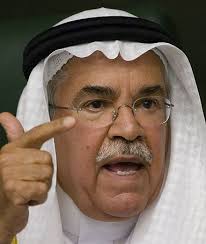
What does bother me is the unforeseen consequences of the continual, intentional over-production of crude oil by Saudi Arabia and the cavalier attitude they have taken on their policy. This is evidenced by statements like, “Why should we cut? Why?”–Ali Al Naimi, Saudi Oil Minister. This statement was made December 11, 2014, as the price of West Texas Intermendiate closed below $60/barrel. As of this post it was $48.36.

“Why should we cut?”

Al Naimi "Why should we cut? Why?"
Al Naimi
“Why should we cut? Why?”

Because you are destabilizing an already unstable world!

In particular, Russia, which is already reeling from sanctions leveled on their incursion into the Ukraine, needs (according to BloombergBusiness Week) “$100 per barrel (to sustain itself): Its budget loses $2 billion for every dollar it drops below that price … ”  We are below $50 today and the Russian economy is severely wounded. Like a wounded animal, these low oil prices might drive their fearless (somewhat unpredictable) leader to lash out with other military diversions to move the Russian public’s attention away from their economic woes.

And Russia is not the only potential hot spot. Others include Libya, Egypt, Iran, Iraq and Venezuela … all unstable and potentially able to turn their maleficence back on the Saudis. Bottom line: I think in their attempt to exert economic punishment on Russia and Iran, retain market share and shut down the U.S. shale oil boom, the Saudi’s are playing a dangerous game of ‘chicken’, where they could unleash dangerous consequences on a regional and, maybe, global basis. This is what worries me and I’m not sure the market, with its constant short-term focus, is even close to this worry.

What is your opinion?

A parting shot at economic weakness

Parting Shot
Parting Shot

Here is on last thought for those still worried about the equation: Falling Oil Prices = Global Weakness and a falling market. Ben Levinsohn’s Streetwise column in this week’s (1/12/15) Barron’s (“Plunging Oil: What the past tells us”) makes a pretty good case to the contrary.

STREETWISE

Plunging Oil: What the Past Tells Us

Oil price plunges in the past haven’t been bad for stocks. Since 1984, oil has seen three similar drops, and each time stocks traded higher a year later.

 By
Jan. 10, 2015 1:11 a.m. ET
In Ghostbusters, Bill Murray and his crew of paranormal investigators listed signs suggesting that the end of the world was near that included everything from fire and brimstone to cats and dogs living together. With a reboot of the hit film in the works, you have to wonder if they’ll now include $50 a barrel oil on that list.
Some in the market seem to believe they should. Last week, the price of a barrel of crude dropped below $50 for the first time since the financial crisis, and that caused all kinds of consternation, with the weakness in oil said to be pointing to a global economic collapse. As a result, the Standard & Poor’s 500 index fell each of the first three days of the year, the first time that’s happened since 2005.
The only problem: Just as there’s no proof that ghosts actually exist, there’s little evidence that tumbling oil is bad for the stock market—or for the U.S. economy. In fact, the very opposite might be true.
Now don’t get me wrong: The plunge in oil shouldn’t be taken lightly. At the end of last week, a barrel of crude changed hands at $48.36, less than half of what it had traded for six months ago, among the fastest drops of the past 30 years. In the U.S. alone, oil’s precipitous drop has had a sizable impact on expectations for corporate profits: Analysts have cut their fourth-quarter earnings forecasts for S&P 500 energy stocks by more than a quarter since the end of September, while total S&P 500 earnings forecasts have come down by more than 7%.
The good news, however, should outweigh the bad. Citigroup economist William Lee notes that the U.S. still gets about a quarter of its oil from overseas, so lower oil prices should benefit the economy to the tune of $140 billion, while every household should have an extra $1,400 or so to spend. No wonder, then, analysts expect consumer discretionary stocks—companies like Walt Disney (ticker: DIS) and Home Depot (HD) that benefit when Americans have extra cash to spend—to post record earnings in 2015.
But here’s the thing: Such plunges haven’t been bad for stocks—or the U.S. economy, for that matter. Since 1984, oil has experienced three similar drops, and each time the S&P 500 traded higher 12 months later. In 1986, for instance, oil plunged 46% as the oil embargo of the 1970s spurred conservation and new production, ultimately leading to a supply glut. Did the plunge in oil prices bring down the U.S.? Far from it. Real gross domestic product grew at a 2.9% clip, while the S&P 500 gained 15% that year. Evercore ISI’s Ed Hyman calls that year “a good road map for the U.S….We doubt [oil’s decline signals] the beginning of a major deterioration in the economy or equity markets.
”Don’t bet on a rapid rebound in oil prices, however. Many observers act as if it’s just a matter of time before oil trades at $100 again. But a look at history shows just how extreme that is. Consider: From 1982 to 2002 oil generally traded in a range between $20 a barrel and $40 a barrel, with the top end only being hit during the Gulf War in 1990, when the supply of oil from the Middle East was under a direct threat. In fact, that $40 oil was enough to send the U.S. spiraling into recession.
BUT SOMETHING HAPPENED IN 2002 that would change how the market thought of oil—and pushed the price of crude to previously unprecedented levels. That something was China. From 2001 through 2006, its rate of growth nearly doubled, from 6.6% to 12.4%, as China entered a so-called supercycle as it rapidly modernized its economy. Double-digit growth in the world’s second-largest economy, however, is now a thing of the past—and with it one of the forces that drove oil prices ever higher.
The price of oil also got a boost from its use as an “investment.” The easiest way to bet on rising oil prices is with futures contracts, and the number held by speculators increased 17-fold from 2002 through 2014’s peak in crude prices. And despite the rapid decline in oil, the number is still 10 times higher than it was at the start of the period, notes Gluskin Sheff economist David Rosenberg. “Those were the forces driving $100 oil,” Rosenberg says. “It was never going to be sustainable.” And it probably won’t get there again—at least not for a very long time. Rosenberg suspects that oil will eventually settle into a range between $40 and $60 a barrel.
With that in mind, and with many investors digging through the wreckage searching for bargains in a beaten-down energy sector, BMO strategist Brian Belski warns against moving too quickly. His reasons: Slowing profit growth and dwindling free cash flow makes the energy sector, he says, “a classic value trap. We recommend that investors proceed with extreme caution.”
Otherwise, a feel-good story could quickly morph into a horror show.
The information presented in kortsessions.com represents my own opinions and does not contain recommendations for any particular investment or securities.  I may, from time to time, mention certain securities for illustrative purpose, names where I personally hold positions.  These are not meant to be construed as recommendations to BUY or SELL.  All investments and strategies should be undertaken only after careful consideration of suitability based on the risks, tolerance for risk and personal financial situation.