Categories
Financial, Stock Investment

Session 126–“Say the secret word(s) and win $100!”

Groucho Marx circa 1950
Groucho Marx
circa 1950

This is how the great twentieth century comedian and serial wisecracker, Groucho Marx, would begin every guest interview on his 1950s television quiz show, “You Bet Your Life!” If someone did make that magical utterance, sirens would sound and a stuffed duck with mustache and Groucho glasses would drop from the ceiling with a one-hundred dollar check in its mouth. For those looking for a little nostalgia, or those too young to remember Groucho, I’m attaching a YouTube clip (about 4 minutes and 30 seconds into it the contestant says the “secret”/magic word, but something other than a duck drops in).

Similar silliness has crept over the market in the past few days, and it has to do with media and punditry obsession over two other “magic” words…”considerable time.” You see, in past Fed pronouncements about when they might begin to raise interest rates, Dr. Yellen and Co. have used wording to the effect that they did not expect rates to move up for a considerable time after the end of Quantitative Easing. Well, QE is supposed to end in the next 45 days and someone or something has gotten them worried that the Fed might drop magic words considerable and time, indicating rates might go up sooner rather than later.

What’ the big deal?

my muse
my muse

Most fully functioning financial types (those who have not been living under a rock) are already expecting rates on the UST 10-year to move higher in the not-to-distant future…maybe to three or three and one-half percent. This would be normal in an improving economy. As I pointed out earlier in session 124 (What’s wrong  with this picture?), the withdrawal of 75% of QE has not been the disaster many predicted, so why should a more normal interest rate picture typical of an improving economy be terrifying? The last time the S&P 500 traded at a 30 multiple (YTK) the 10-year U.S. Treasury was trading to yield over 6%. Is it possible we should welcome higher rates? The attached clip from CNBC’s “Closing Bell Exchange yesterday gives a good run down on the silliness.  If you do watch, please note how CNBC co-anchor, Kelly Evans, tries to steer the conversation in a negative direction…she fails.

Bottom Line

Regardless of the outcome of the Fed announcement, “considerable time” or no “considerable time”, media assertions that rising rates or language signaling as much, is a big deal or something to worry about, are overblown and ridiculous.

What do you think?

The information presented in kortsessions.com represents my own opinions and does not contain recommendations for any particular investment or securities.  I may, from time to time, mention certain securities for illustrative purpose, names where I personally hold positions.  These are not meant to be construed as recommendations to BUY or SELL.  All investments and strategies should be undertaken only after careful consideration of suitability based on the risks, tolerance for risk and personal financial situation.  

Categories
Financial, Stock Investment

Session 110–“If anything can go wrong, it will.”

Bill‘Hoist by one’s own petard’ (blown up by one’s own bomb) is Murphy’s Law at work and the pundit’s worst enemy.  Because, as soon as you put a prophecy out there, strange mechanisms go into play that make it very difficult for you to look anything but stupid. Yet there is a flock of people willing to, on a daily basis, put themselves out there with forecasts that, from experience, they know have a good chance of being wrong.  To say the least, it is not easy being a pundit.  Predicting, especially the economy or the stock market, is no mean feat!

Let’s reconnoiter. 

Grant reconnoitering at Vicksburg

One of the real ‘biggies’ that has confounded the majority of these fearless prognosticators, not only this year, but for the past five years is: contrary to their popular belief that it would not, the market has gone up.  It’s gone up a lot.  This was definitely not in the tarot cards.

For this, most blame the Fed for providing massive liquidity to the economy via three rounds of Quantitative Easing (QE) in what many refer to as a ‘zero interest rate policy’ (ZIRP).  Through this, the Fed has expanded its balance sheet to over four trillion dollars.  Problem is that the banking system is not using these reserves to expand lending…one reason for our less-than-robust economic recovery.  It has, however, pushed investors toward stocks where returns are more attractive than bonds in a ZIRP environment.

So, let me see.  The Fed has been on this well-telegraphed path for the past five years, keeping rates low to bolster a skittish, less-than-robust economy (post a financial panic), making stocks and other assets more attractive.  They made nosecret about it.  How is it so many of these folks didn’t urge us to buy stocks years ago?  The answer is simple, seers and pundits look ahead.  They surmised that QE would end badly.  Why take the risk of a bad ending?  They missed the point that QE might last for years while the investor waited for bad things to happen.

The unhappy ending (maybe for the pundits)

200px-High-contrast-face-sad.svg

According to the pundits, QE would end with higher inflation, asset bubbles, skyrocketing interest rates and a tumbling stock market…no ifs, ands or buts about it.  I mean, who in their right mind would buy stocks into this scenario? You probably wouldn’t, if you assumed this to be the right conclusion.

But, was it?

Evidently the punditry influenced many investors in that direction.  Ergo, a lot of equity money remains on the sideline waiting for the ‘all clear’, willing to accept a sub-2.5% return for guaranteed safety.  Strangely, the chorus of negative calls by the media and their cast of experts maybe working against the ‘bad ending’ by keeping people in their low-yielding, safe alternatives.

Another factor present, as we unwind QE, is foreign demand for our bonds.  At 2.48 % our 10-year Treasury looks like a real deal compared to the German 10-year Bund at 1.36% or a Japanese 10-year at 0.57% (the Japanese know the meaning of ZIRP).

There are other factors working to keep rates low.  One is the fact that Treasury issuance of new debt is way down because the size of our recent deficits have declined markedly.  Also, because the market has been so strong it has caused pension funds with specific equity holding targets to sell stocks to get equity positions back into line with target-acceptable levels…the proceeds went into bonds.

You see what I’m getting at…that the ‘QE bad ending’ may be coming into question.  Consider we broke below a 2.5 yield on the 10- year again last week (week ending 5/30/2014) with the S & P 500 closing the week at a new record high of 1923.57.

Exit question:  Will Murphy’s Law continue to make punditry’s common wisdom a great contrary indicator?

What do you think?

The information presented in kortsessions.com represents my own opinions and does not contain recommendations for any particular investment or securities.  I may, from time to time, mention certain securities for illustrative purpose, names where I personally hold positions.  These are not meant to be construed as recommendations to BUY or SELL.  All investments and strategies should be undertaken only after careful consideration of suitability based on the risks, tolerance for risk and personal financial situation.  


Categories
Uncategorized

Session 109–Fear and Loathing on Wall Street

It never ceases to amaze me how rapidly market sentiment can shift.  Last week was a perfect example; from ‘Fear and Loathing’ at the beginning of the week to a “Calm sea and Prosperous Voyage” at weekend (May 23, 2014).  Of course, when this happens it is usually the media driving the train, picking news items and guru pronouncements, magnifying them and obsessing on them.

The week before, sharp weakness in the small cap and momentum sectors created fears that this weakness would spread to the large caps of the S & P.  This was amplified by cautionary comments from the likes of hedge fund guru, David Tepper.  Layer on the fear generated by the spike upward in long treasury prices, pushing the yield on the ten-year note below 2.5% (It closed this week at 2.54%).  This flight to safety brought fears that there was something lurking out there that might be ready to tank the economy, or that the economy was much weaker than we thought and was heading back into recession. This was the backdrop as we moved into last week when the market and media were confronted with comments from New York Fed President, Bill Dudley, and Philly Fed President, Charles Plosser.  Neither said anything new or varied from their past positions, but the media and market focused on the negative implications of each comment. Dudley (the dove) said he expected rates to remain low for a long time (presaging a continued weak economy).  Plosser (the hawk) urged a more rapid withdrawal of Quantitative Easing (which would weaken an already perceived soft economy).

Speaking of Recession

Douglas Borthwick
Douglas Borthwick

Here is an interesting clip featuring Doulas Borthwick, Head of Foreign Exchange at Chapdelaine (Tuesday, May 20. 2014), who claims that the U.S. is already in recession. (Borthwick Bio)

Abigail Doolittle Perma-bear
Abigail Doolittle
Perma-bear

If this exchange does not bring a smile to your face, I guarantee that the next clip from CNBC’s “Closing Bell” (Wednesday May 21, 2014) will.  It features anchor, Kelly Evans, actually doing her job, going after perma-bear, Abigail Doolittle (Founder, Peak Theories), on her consistently bearish (consistently wrong) market call.  This is followed by always-bearish, always-wrong and always-obnoxious bond maven, Rick Santelli, going after another guest (who has been right) for being wrong (at least, up to now) on the possibility of a “great rotation” out of bonds into stocks.  Seriously, Santelli is so rude and looks so stupid in this exchange, I am surprised CNBC allowed it to be part of their video highlights.

Well, that was the week that was, and despite all the “sturm und drang,” the S & P 500 closed at a new all-time high of 1900.53.

“Maybe There’s Life in the Old Bull Market Yet”

Laszlo Birinyi Not Noise
Laszlo Birinyi
Not Noise

Jeff Sommer, in his “Strategies” column today (NY Times, 5/25/2014) reports out on an interview with frequently kortsession quoted source, Laszlo Birinyi (Birinyi Associates, Wesport, Conn).

Birinyi believes “we are in the last stage of a great bull market…it’s the exuberant phase.”  Sommer adds, to paraphrase Birinyi, “Yet investors aren’t acting exuberantly, which is good, he says, because the long rally underway since 2009, is likely to end only after the party becomes dangerously wild.  From that perspective a dose of sobriety is salutary, a good sign.  It suggests the bull market has plenty of room to run.”

Here is one last quote from the article, which is worth your time to read in its entirety: “Most of what passes for news about the market is noise.”  I wholeheartedly agree!

What do you think?

The information presented in kortsessions.com represents my own opinions and does not contain recommendations for any particular investment or securities.  I may,  from time to time, mention certain securities for illustrative purpose, names where I personally hold positions.  These are not meant to be construed as recommendations to BUY or SELL.  All investments and strategies should be undertaken only after careful consideration of suitability based on the risks, tolerance for risk and personal financial situation.   


Categories
Financial, Stock Investment

Session 108–“I Have a sick feeling…”

Ralph Acampora
Ralph Acampora

This is how technician, Ralph Acampora, frames the type of performance that might be ahead for the Russell 2000 and Nasdaq composite indices over the next few months. (Acampora interview–5/15/14)  There is a part of me that finds his thinking very plausible, as the stock and bond markets have been acting very strangely of late.

Black Swans coming in for a landing?

549px-Black_Swans

This is a very tough post for me to write, as I don’t want to be too cavalier about the possibility of a real market meltdown due to some “black swan” event.  On the other hand, I don’t want to give too much credence to the irrational fears (the wall of worry) that have plagued this market all the way from its 2009 lows.  In my opinion the predominant emotion carried by most is ‘distrust’ and, at the extreme, ‘fear’.  Save the bubblet in the momentum stocks (social media, tech and biotech), at no time have we seen “irrational exuberance” rear its ugly head.  And, if you remember, when former Fed Chair, Alan Greenspan, first coined the term (Dec 5, 1996–S & P 500–744.38), the bull market of the 1990s had a full three and a quarter years left to run.

During that time in the late ’90s, we had some “black swans” glidding into the pond: the Asian Financial crisis of 1997 (Dec, 31, 1997–S & P 500–970.43), Long-Term Capital Management [LTCM] and the Russian Debt Crisis of 1998 (Dec, 31, 1998–S & P 500–1229.23).  All were very scary, potentially market life threatening events, at the time…precipitating short term slides.

The way the bond market is acting right now, with investors willing to accept no principal risk (willing to take a sub-2.5% return on a 10-year U.S. Treasury) is a bit disconcerting.  Maybe one of the very rare “black swans” is swimming in the pond; and, as usual, we will not see it until it is too late.

Having said this, we past  these three previous 1990’s crises successfully (not to mention the more horrific challenges we face in the 2000s) with the end of the decade seeing the S & P more than double the level it stood at when Mr. Greenspan first cautioned us about “irrational exuberance.”

By the way, all three events were met by bailouts.  In the case of LTCM it was a Fed-supervised bailout.  The International Monetary Fund (IMF) supervised Russia and Asia. Although I’m not prepared to argue for or against bailouts in this post, they have become de rigueur and are likely to come about as a response to future “black swan” events.  “What’s past is prologue.”  And, if past behavior of this nature leads to inflation, it will benefit the owners of asset and hurt those who lend money (the 2.5% 10-year crowd).

“It’s a good thing!”

320px-Martha_Stewart_2011_Shankbone

I guess my message is that our current skittish market, eerie as it seems, is normal and will be resolved.  If there is a “black swan” out there, it, too, will be resolved after some pain in equity prices.  The great thing about our current bull market is that we appear to be no where close to “irrational exuberance”: and, maybe we are a lot closer to irrational fear.  And, like Martha Stewart used to say, “It’s a good thing!”

What do you think?

The information presented in kortsessions.com represents my own opinions and does not contain recommendations for any particular investment or securities.  I may,  from time to time, mention certain securities for illustrative purpose, names where I personally hold positions.  These are not meant to be construed as recommendations to BUY or SELL.  All investments and strategies should be undertaken only after careful consideration of suitability based on the risks, tolerance for risk and personal financial situation.   


Categories
Financial, Stock Investment

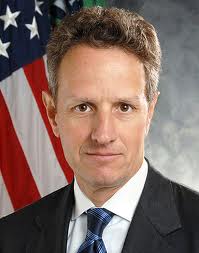
Session 107–Geithner’s Book

images-5

Although I have yet to read former Treasury Secretary, Timothy Geithner’s book, “Stress Test: Reflections on a financial crises,” by virtue of the significant publicity generated and in-depth interviews conducted with Mr. Geithner (Charlie Rose), I do feel competent to comment on issues raised about the book and a persistent critique to the effect that the bailouts did everything to benefit Wall Street with little at all trickling down to Main Street.

Let the banks fail!

Sen. Richard Shelby, "let 'em fail"
Sen. Richard Shelby, “let ’em fail”

As a working institutional broker at the time, I can attest to the severity of the situation and, really how close we were to a “China Syndrome” melt down of our (and the world’s) financial system.  It was an extraordinary time, calling for extraordinary measures.  I believe the measures taken by Paulson, Bernanke and Geithner were absolutely necessary and proper.  They successfully brought us through the eye of the storm avoiding “Great Depression” number two.  However, then, as is the case now there are those, both on the Right and the Left, who believe that these interventions were an overreach.    “Let the banks fail…recalibrate.  We need a good purge.  All will be well in the end.”   There are also those who point to the bailouts (TARP et.al.) as only beneficial to the ‘fat cat’ bankers with little or no help for the little guy.  Neil Barofsky is one of those guys.

Who is Neil Barofsky and why is he misguided?

Neil Barofsky
Neil Barofsky

Neil Barofsky is a Geithner critic, former Special Inspector General for the Troubled Asset Relief Program (TARP), who had two years of oversight responsibility for that $700 billion dollar program.  In the end, Barofsky felt that the program was terribly mismanaged and wrote a book about it “Bailout: An Inside Account of How Washington Abandoned Main Street While Rescuing Wall Street.”  Unfortunately, no where in Mr. Barofsky’s thought process does he consider the idea that stabilizing a financial system that was spinning out of control to be the equivalent of rescuing Main Street.  This is plumb stupid.

Just a modicum of sophistication and knowledge of economic history would have probably made a difference in Barofsky’s conclusion.  If he’d just remembered that they did not bail out those sinister banks that failed by the droves in the early 1930s.  The result was the “The Great Depression.”  And, if you lived on Main Street back then you had a one in four chance of being unemployed (vs. one in ten in 2009).  Also, you had a really good chance of having your life savings wiped out by one of those bank failures. Oh yes, chances are you would have stayed unemployed for a much longer time with NO benefits.

BTW, The $700 billion bailout has been completely repaid with interest.  See, now that wasn’t so painful.  Was it?

Please, don’t tell me tarp was no help to Main Street!

This is a fantasy harbored only by the economically ignorant, or those politically motivated to denigrate the accomplishments of both the Bush and Obama administrations in dealing with the crisis.  The concept is ludicrous.

Regrettably, there remains a chorus of naysayers, who in the presence of overwhelming evidence, continue to deny the efficacy of these measures…The “world is flat crowd.”

Finally, there is much indignation about the fact that none of the captains of finance that perpetrated this disaster went to jail.  We have to separate that from the reality of saving the economy.  On that account Geithner and Co made the right moves.  Regarding the perps going before the bar of justice?–They should have.  But, then, as in post-World War II Germany, who would have been left to keep the trains running on time.

What do you think?

The information presented in kortsessions.com represents my own opinions and does not contain recommendations for any particular investment or securities.  I may,  from time to time, mention certain securities for illustrative purpose, names where I personally hold positions.  These are not meant to be construed as recommendations to BUY or SELL.  All investments and strategies should be undertaken only after careful consideration of suitability based on the risks, tolerance for risk and personal financial situation.   


Categories
Financial, Stock Investment

Session 106–What’s up with the ten-year U.S Treasury Note?

BillWell, for one thing, the price is up.  Conversely, the yield is down.  As of 9:30 PM CDT, 5/8/14 the yield stood at 2.61%, down from 3% at the end of 2013.  This, according to the media wonks and pundits, was not supposed to happen.  Rates were supposed to go up as people fled the safety of bonds on the tapering of Quantitative Easing (QE).  I mean QE was why rates had gotten so low, right? Not so fast, it may be just as much about fear… the fear of a double-dip recession two years ago, Europe imploding, a Chinese bust and geopolitical concerns (Session 53–“Hyper Low Interest Rates: Was it QE or just plain fear?”).  And, now of course, the ever-present fears; we have gone too far, too fast, the economy is weaker than we imagined and that we have created another bubble on the verge of bursting.  Recent market action correcting the bubblet (a mini-bubble) in tech, social media, biotech and a score of momentum plays, has reinforced this fear. Although the precipitous drops in some of these names are very scary, it is important to note that it is not the whole market being kicked to the curb, just a small (and maybe deserving) subset.

The Dow Jones Industrial and S & P 500 continue near record highs

This fact also scares a lot of people who watched the meteoric rise off the lows of 2009.  And, many think this, too, will end badly (a crushing bear market).  I might point out to the fearful that the first time the S & P 500 approached the 1550 level was in March of 2000.  It briefly broke through that level closing at 1565.15 , October 9, 2007.  In 2013 it finally broke out to new all-time highs in the 1885 area. We closed on May 9th at 1875, up 325 points in 14 years (compounding, ex-dividends at a whopping 1.37%). What may to some look like a bubble off the bottom in ’09, looks to me like severe/ below-trend-line performance in the last 14 years.  Oh yes, the index PE is 40% below the March 2000 peak and the dividend yield has almost doubled vs. a ten-year yield that has more than halved.

The Media piles on the fear fest

Maria Bartiromo reuters

Here are a few examples from yesterday (5/8/2014):

1)  From our friends at Fox Business Channel and that legendary, groundbreaking broadcaster, Maria Bartiromo (A.K.A “The Money Honey”), we give you an interview with one-shot-wonder, Nouriel Roubini–“We are at the very beginning of a great bubble.”  Roubini called for a market collapse several years before the 2008 blow-up, but never got positive as we moved out of the crisis.

Nouriel Roubini
Nouriel Roubini

2)  From MarketWatch Paul Farrell presented us with this headline–“Ten peaking mega-bubbles signal impending stock market crash,”which for a large part of yesterday was the #1 most popular story sourced on their website. It remains in the top 5 today. This shows you where people’s heads are.

Paul Farrell
Paul Farrell

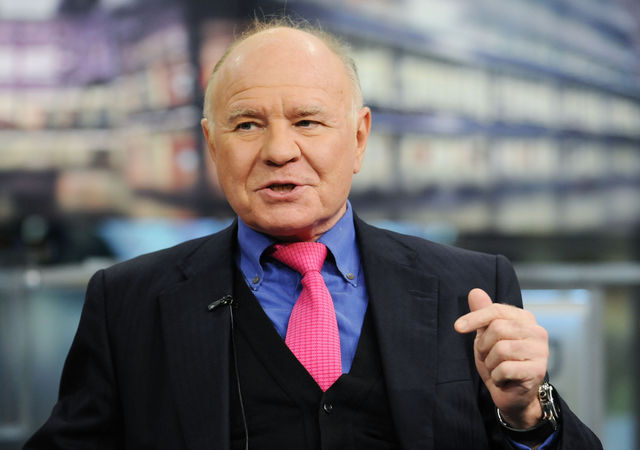
3)  Finally, from CNBC, perma-bear, Marc Faber, provided this: “I’m worried about a crisis bigger than 2008.“

Marc Faber
Marc Faber

You never see the bubble that takes you down

A Bubble
A Bubble

Ergo, all of the above may not be helpful guides to the next big disaster.  Rest assured there will be a next big disaster.  There always is.  I would temper this by saying 2008 and 1929 were financial panics and panics like this are few and far between.  Bear markets will happen and they will be scary, but they won’t be near-death experiences such as we just went through.

On a lighter note

Mark Hulbert in MarketWatch (May 7, 2014) gives us a ray of hope–-“Investors get bearish, suggesting stocks will rise. ” Hulbert contends that contrarian analysis of sentiment would suggest an upturn might be eminent.”

In the final analysis the strong 10-year points me to the idea that a healthy fear and skepticism exists in the market and that is a good thing.

What do you think?

The information presented in kortsessions.com represents my own opinions and does not contain recommendations for any particular investment or securities.  I may,  from time to time, mention certain securities for illustrative purpose, names where I personally hold positions.  These are not meant to be construed as recommendations to BUY or SELL.  All investments and strategies should be undertaken only after careful consideration of suitability based on the risks, tolerance for risk and personal financial situation.   

Categories
Financial, Stock Investment

Session 91–“Born Under A Bad Sign”

Bill“Born under a bad sign.

I’ve been down since I began to crawl.

If it wasn’t for bad luck,

I wouldn’t have no luck at all.”

120px-Cream_Clapton_Bruce_Baker_1960s

This is one of my favorite tunes from one of the finest rock bands to come out of the 1960’s, “Cream”, music and lyrics by William Bell and Booker T. Jones, Jr.   “Born…” is a quintessential example of the blues and being REALLY DOWN.  What brought “Born Under a Bad Sign” to mind, was a post-close segment on CNBC’s Closing Bell having to do with the lack of enthusiasm a new, all-time closing  high on the S&P 500 met.

Hoist by my own petard

800px-Petard

To make my point today I was hoping that the on-line edition of CNBC would post a copy of the video to back up my comments.  It was evidently so stupid and irrelevant that the editors decided not to put it on the site.  Not only that, but they couldn’t even edit to give it some semblance of intelligence.  Well, I’m writing about it anyway, even though I can’t provide direct proof of this less-than-stellar exchange.

In a nutshell, the discussion question was “Why, with the S&P 500 at a new all-time high, is no one happy or celebrating the event?” The answer from the panel (especially our old foil, Jeff Cox, “The Bad News Bearer”) was that things really weren’t that good.  Why should we be celebrating? I mean these guys were negative, “Born Under A Bad Sign.”

The panel was obviously asleep for the past five years, or they require nirvana to make them happy.  By the way, it is safe to say that this panel, CNBC and most of the financial media have been arguing against this bull market upturn since its inception, five years ago.  They have provided a perfect ‘wall of worry’ for the market to scale. I am thankful that they are still negative, a good sign that the market advance remains on solid footing, sentiment-wise.

I’m no Pollyanna.

Pollyanna-still

But, it looks to me like an environment that is more a ‘glass half full’.  Plus, fixed income alternatives are not providing adequate competition for equities.  It is encouraging that the media is subdued, cautious and in some cases, downright bearish.  “There is no joy in Mudville” and Casey didn’t even strike out.  He hit a homer!

Watch out when the fans in the stands start cheering!

What do you think?

The information presented in kortsessions.com represents my own opinions and does not contain recommendations for any particular investment or securities.  I may,  from time to time, mention certain securities for illustrative purpose, names where I personally hold positions.  These are not meant to be construed as recommendations to BUY or SELL.  All investments and strategies should be undertaken only after careful consideration of suitability based on the risks, tolerance for risk and personal financial situation.


Categories
Financial, Stock Investment

Session 88–“The Boy Who Cried Wolf”

BillYou know the story about the shepherd boy who thought it was a kick to, on a whim, cry “wolf” alerting his village to a wolf attack on the flock that wasn’t really happening.  When a wolf finally did attack, no one paid any attention to his pleas for help.

I think we have recently seen a comparable situation in the stock market, and it has to do with the weather.  For years we have heard weather used as an excuse for poor corporate or economic performance, and like cries of “wolf” market participants have begun to ignore it as a lame explanation. Back in January, when the first really-below-par jobs number was issued, the market tanked.  Weather was ignored as the culprit and everyone started speculating on the beginning of a U.S. economic slowdown. Like the boy’s cries, weather was dismissed as a causal factor.  Bill Saporito was one voice crying for calm and reason in “Why Today’s Miserable Job Numbers Are Probably Wrong” (Time-Business and Markets-January 10,2014).  I think Saporito had it right and had it early.

At any rate these economic fears were magnified by threats of certain emerging market countries (a la Turkey) being on the ropes.  As we melted, those emerging markets, as well as, China and Japan melted…Voila, the long-awaited correction begins!

“Is That All There Is?”

A very young Peggy Lee

I’m not sure.  Since the market break at the beginning of the year, the Dow trimmed of 7%, the S&P 6% and NASDAQ 6%.  All have bounced significantly off their lows.  In fact, the NASDAQ made a new 52-week high today.  If the market holds true to recent form, not giving really attractive entry points to those with money to invest, while crushing the shorts, with due deference to Leiber and Stoller and Ms. Peggy Lee, this may be “All There Is.”

The Yellen Factor

480px-Janet_Yellen_official_portrait

I am willing to accept the weather as a primary culprit in the recent soft economic data, but there was one other uncertainty facing the beleaguered  market, the new Fed Chair, Janet Yellen. We had to start to worry about what her policies were and how she would acquit herself during her first House and Senate Finance Committee hearings.  She aced the House examination. Her Senate grilling was postponed (weather related).  I’m sure she will do just fine in front of that illustrious body.

Ms. Yellen basically said …’No change’.  The economy is OK, could be better. The taper will continue as planned, barring any unforeseen economic or geopolitical event that might call for re-examination of the policy (pretty much what Mr. Bernanke would have said).  As of this post (2/14/14), the ten-year U.S. Treasury note is at a 2.75 % yield…and they said tapering would drive rates up.  Here we are two turns ($10 billion turns) into the taper and rates are down.  When the first round of tapering was announced (12/18/13), the Ten-Year was trading at 2.88%, 13 basis points higher in yield.

One of these days, like “the Boy Who Cried Wolf,” these guys are going to be right.  Let us hope we are paying attention.

What do you think?

The information presented in kortsessions.com represents my own opinions and does not contain recommendations for any particular investment or securities.  I may,  from time to time, mention certain securities for illustrative purpose, names where I personally hold positions.  These are not meant to be construed as recommendations to BUY or SELL.  All investments and strategies should be undertaken only after careful consideration of suitability based on the risks, tolerance for risk and personal financial situation.


Categories
Financial, Stock Investment

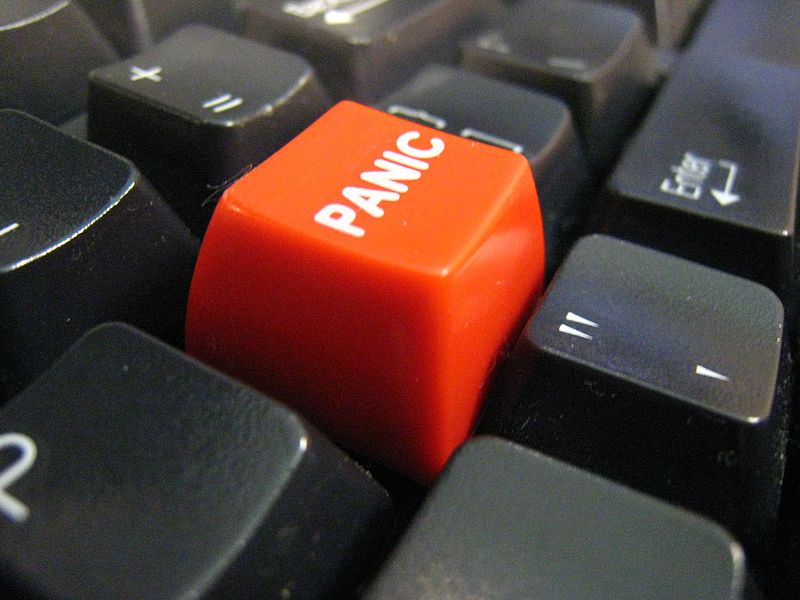
Session 87–One Foot Out the Door, One Finger on the Panic Button

BillI think this describes the mindset of many market participants, suspicious of how far we’ve come since the crash of 2008.  The ghost of that era still haunts investors; so much so, many cut their equity holdings dramatically or totally avoided stocks (sideline money=buying power).  The recent mini-correction has reinforced this skepticism and the media has seized upon this to continue to foment fear and trepidation.  It keeps eyes on the paper, the web sites and, of course, the tube…corrections being a gift that jars investors from the easy complacency of a gradually up-trending market.

Recently, I spotted a couple of particularly egregious reports, specifically designed to draw investors closer to the panic button. Pieces, that if you did not know the background or track record of the presenter, could be very disconcerting.  One of these features the always convivial, always ranting, always negative and never right, CNBC ‘Bond Maven’, Rick Santelli.

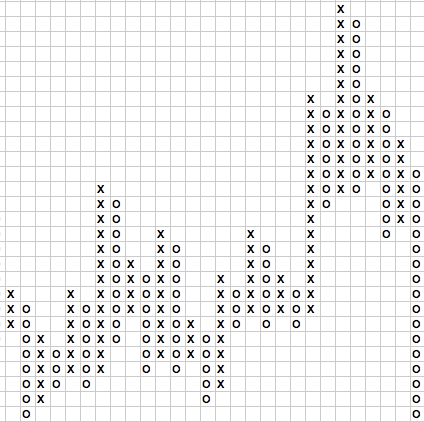
The Chartist

SamplePNFillustration1

Even though Santelli is supposed to be the ‘Bond Maven’, his commentaries and guests range far afield (including heavy political overtones).  On January 27, Rick’s guest was technician, Tom DeMark.  Chartist DeMark is well-known and a consultant to many high-powered institutional investors and he has had some good calls in his long career.  Having said this, his methods are extremely complex and require many things to fall into place before he makes a call (not always correct).  The reason Santelli had him on was that DeMark recently published a negative piece comparing the chart formation of 1929 to that of 2013.  You see where Santelli is going with this.  The market is down 5% or 6% after a great run and, all of a sudden, we are looking down the barrel at a 40% correction.  This is scary stuff.  Get ready to hit the exits!  Then again, maybe it is just ‘fair and balanced’.  But, wait a minute, Santelli is always negative. (DeMark clip)

800px-Panic_button

The Old Timer

Art Cashin epitomizes the class guys who used to populate the floor of the non-automated New York Stock Exchange.  Although Art has been a cautionary voice for the past few years, he usually is a moderate voice and a voice of market wisdom and experience.

It was very disappointing to me when, at the height of Monday’s (2/3/2014) sell off, Art decided to compare the recent ‘flight to safety’ demonstrated by the strong upward move in the 10-year U.S. Treasury Note to the moves we saw in 2008/2009.  That he made this analogy was bothersome, and that he did while the market was under severe selling pressure was even more disconcerting.  Methinks he’s been hanging with the CNBC crowd too long.

Art’s concern was that rates were supposed to go up after the Fed began its taper of Quantitative Easing.  Instead, they were going down.  Ergo, something really bad was happening under the surface.  What Art seems to have forgotten or may not know, is that QE, even at its height, was just a small part of the daily trading in long-dated treasuries; and, oh by the way, they are still buying $65 billion per month (1/2 treasuries, 1/2 AMBS).  We detail this in session–52.  Anyway, Art was overwrought.  He cautioned if we broke 2.6% on the 10-year it might signal real problems ahead. We did break to 2.58% later that day and closed today (2/5/2014) 2.67%.  It is the safety trade Art, not Armageddon!

I still believe that most investors are not, nor have they been euphoric, that they have one foot out the door and one finger on the panic button. This is a constructive psychological backdrop for the market.

What do you think?

The information presented in kortsessions.com represents my own opinions and does not contain recommendations for any particular investment or securities.  I may,  from time to time, mention certain securities for illustrative purpose, names where I personally hold positions.  These are not meant to be construed as recommendations to BUY or SELL.  All investments and strategies should be undertaken only after careful consideration of suitability based on the risks, tolerance for risk and personal financial situation.

 

Categories
Financial, Stock Investment

Session 85–“When will they stop talking about ‘the taper’?”


BillChina is growing.  The ‘Dreaded Taper’ is growing.  Several emerging market currencies are sinking and the media finally has things to obsess on after a very dull fourth quarter, where most of the popular indices (save the NASDAQ) have made new all-time highs.

One of the key points that has developed out of this bearish bill-of-particulars is today’s Fed decision to take an additional $10 billion per month from the Quantitative Easing program.  In February, the Fed will only be buying $65 billion worth of Treasuries and agency mortgage backed securities (vs. $85 billion in December).

Now, common wisdom, pre-taper, was: ‘If you do this, rates will rise’.  This clip from CNBC’s “Closing Bell” gives a taste of that point of view from two of my favorite (NOT) purveyors, Peter Schiff and “bad news bearer”, Jeff Cox.  Incidentally, both claimed today’s taper action was not going to happen because the ‘economy was too weak’.  I am not sure, based on their track records, why either gets any air time.

What’s wrong with tapering?

According to the bears, rates will go up, not only hurting our economy; but it would really be bad for emerging countries, weakening their currencies as our higher rates would draw funds to the dollar.  Ergo, these countries would have to raise rates to counter our increase, thus weakening their economies.  Voila!  A world-wide downward spiral begins.  Well, tapering is not tightening.

Low and behold, rates did not rise!!

ZAP_lightning_bolt_icon

The U.S. Treasury 10-year note closed at a 2.69% yield Wednesday, January 29, down from 2.88% December 18, 2013.  Although I am certain that rates will go up over time, the taper of QE just may not be the trigger.

Having made this case, the market still went down today, and that downturn carried over to Asia, where the actual Chinese PMI was reported this evening at 49.5 (below 50 is considered a negative number).  My take on this is that you should not allow the media’s read on these events to press your “Panic Button.”  This may just be the normal correction that we have all been waiting for, not he end of the world.

Polite dinner conversation

Polite Dinner Conversation

I was out to dinner this weekend with friends. My friend Allen asked: “When will they stop talking about ‘the taper’?”  My answer: “I don’t know.”  It is hard to say because, even with rates down since the first (and now second) installment, they are still obsessing about it.

What do you think?

The information presented in kortsessions.com represents my own opinions and does not contain recommendations for any particular investment or securities.  I may,  from time to time, mention certain securities for illustrative purpose, names where I personally hold positions.  These are not meant to be construed as recommendations to BUY or SELL.  All investments and strategies should be undertaken only after careful consideration of suitability based on the risks, tolerance for risk and personal financial situation.